











































October-June 2017 Blog Archives
|
|
|
||||||||
|
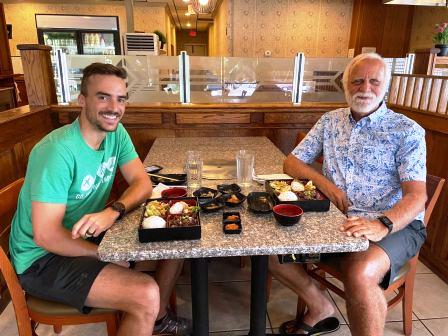
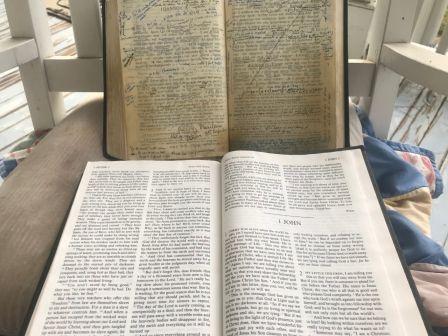
Thursday, July 29 7:22 PM Guess what? Our new website over at Blogger has been launched! Please go here to read all future blog posts. I know I said we'd do this on Sunday but my weekend is going to be very full, plus we're already getting page views from as faraway as France and Argentina so I'd say the cat is out of the bag anyway. Our old website will still be up for now, but I'll only be posting to the new one. As always, thanks for your readership! Wednesday, July 28 5:38 PM Can you hear the farm gate creaking open? Only 3 more days until this old horse is put out to pasture. He spent the day on campus putting the final touches on his new website, spoiling his assistant (this time we enjoyed my favorite cuisine in the whole wide world -- Korean), and ordering a new computer for his home office.
Then he made his airline reservations for Dallas (the funeral is on Monday) and also let people know that this Saturday they are welcome to drop by the farm to give the old horse a few carrots before he trots off into the sunset. Dad has been on my mind for much of the day. I know the stages of grief that mom has begun to go through. Trials -- who wants them? But then there's that little section in James chapter 1 that we can't escape. We accept the trails of life because we know they
Oh my, you can't beat that combination. But, says James, all these things come by way of trials -- things we would normally not have chosen for ourselves. Ruth Graham once said that faith and pain are not mutually exclusive, that we can have pain and have faith in God at the same time. She's right. Thankfully, just when life seems too difficult to manage, God steps in and meets us right where we are. All I know for sure is that last night God was waiting for dad to be with him. He was waiting to embrace him and welcome him home. Now dad and Becky and all the others will spend eternity giving God praise. He is a loving and merciful God. He sees our struggles and our striving. Even when we are too worn out to hold on to him, he holds on to us with his everlasting arms. Grieving friend, we need him to do that work in our hearts today. Live in the awareness of his embrace. Allow yourself time to grieve. Allow your heart to break if necessary. Even if life does not get easier, we can move on in strength as we learn to trust him. Mom, eager to see you and the rest of the family on Sunday. Know that life will feel pretty different for a long time. Keep your heads up and do the best you can. See you all soon. 6:40 AM Last night Brad Lapsley went home to be with the Lord.
I had the blessing of marrying his eldest daughter. He raised her far from our shores, in a place he called, not Ethiopia, but Utopia.
He loved Ethiopia. So did Becky. I'll have more on his life and legacy soon.
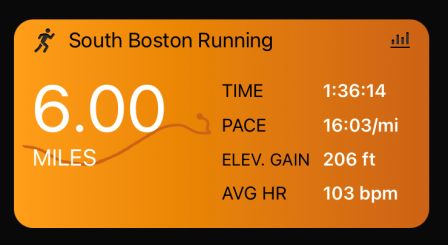
I love you dad. I'll miss you. Please give Becky a big hug for me. Tuesday, July 27 8:32 PM Here's another running update for those who might be interested. It's not like I'm obsessed with the sport or anything like that. I love the event shown below so much I'm doing it for the fourth time.
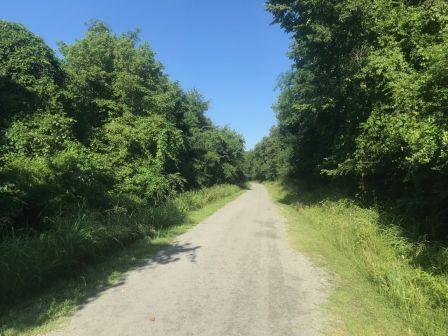
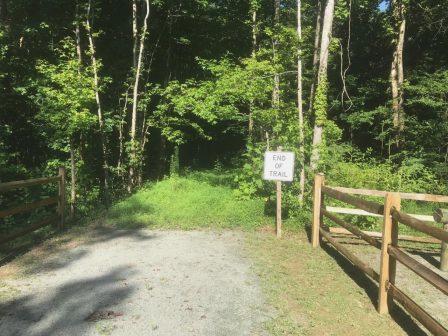
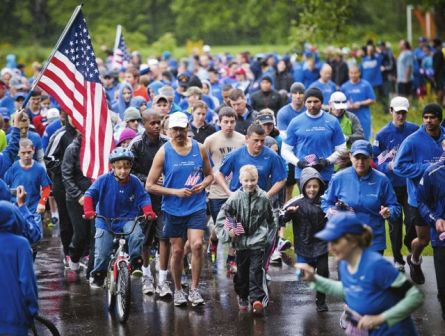
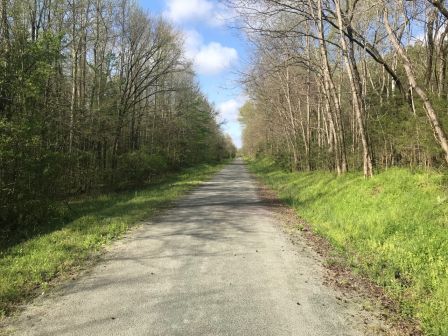
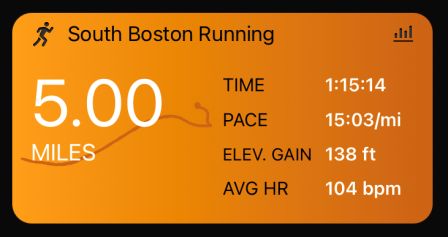
It's an evening run (or you can bike if you like) in downtown Durham and all proceeds go to support a really great cause, the Durham Habitat for Humanity. Right now they are turning Plum St. and Morning Glory Ave. into a community of 21 affordable homes. I might move in myself. The event will take place on Saturday evening, Aug. 14. I can tell you, there is no post-race street party quite like the one you'll experience after this event. Earlier today I went for a short run on the local trail.
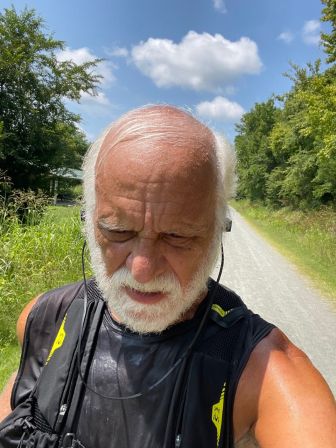
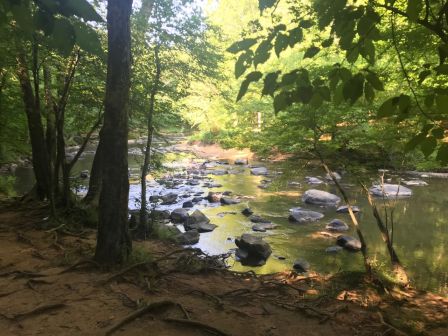
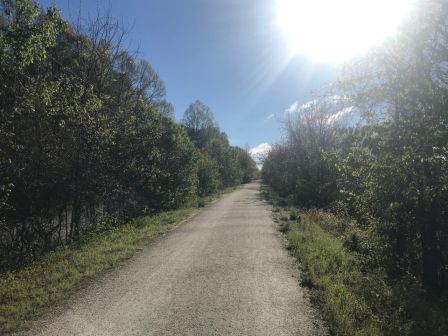
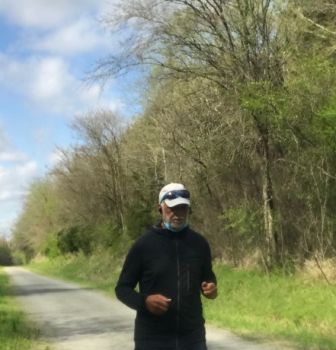
It was HOT out there.
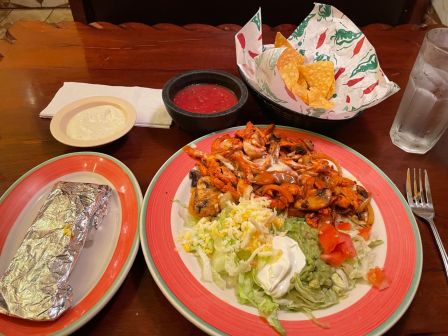
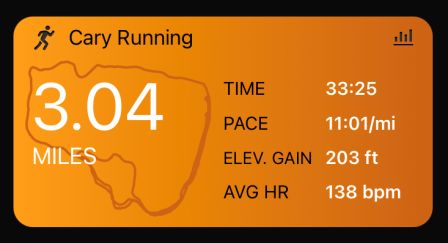
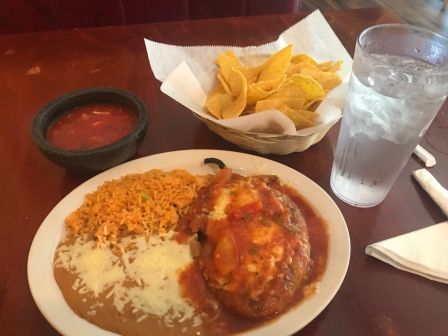
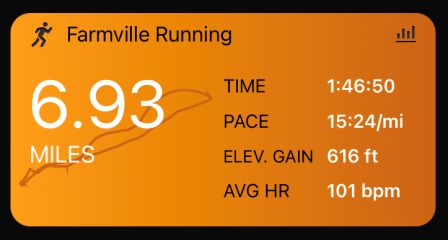
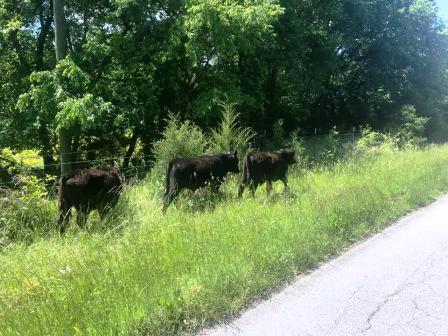
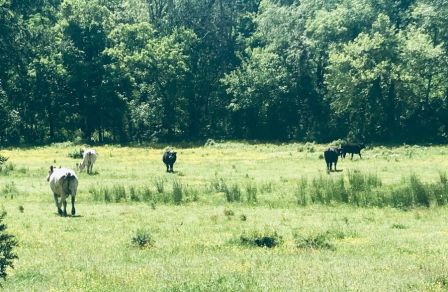
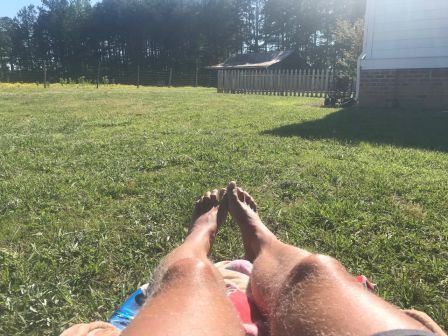
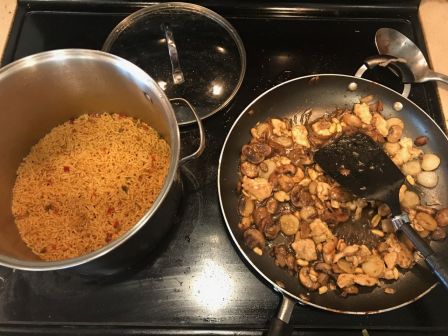
How hot was it? It was so hot the cows were giving evaporated milk. It was so hot the chickens were laying hard-boiled eggs. It was so hot I saw a bird pull a worm out of the ground with an oven mitt. Holy moly, I said to myself, how in the world am I going to run 27 miles (44K) on Thursday in this heat? All I know is that it is going to be much harder than I thought it was going to be. I'm not sure how I'm going to pull it off but I will because I said I would. I have a plan that I think will work. This plan starts Thursday. This means I have one more day to slack off. My legs feel great, and I can handle the heat as long as I can stay hydrated. As you can see, I pampered my body today after my run.
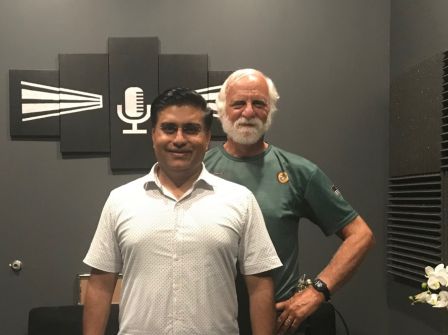
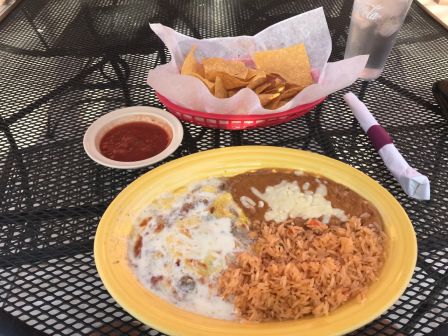
It asked for arroz con pollo, and arroz con pollo it got. (I am very co-dependent, as you know.) Really, I tend to pamper this old body of mine. It never once complains. Some of you know what I'm talking about. Congrats to all of you tough and gritty runners out there with a huge heart. Don't let nothin' stop you. As for the rest of you, I know you must be sick of my running updates, so thanks for sticking with me on this journey. 6:40 PM My latest Hoi Polloi interview with Abidan Shah of Clearview Church has just been posted online. If you're really, really bored, you can go here to listen in.
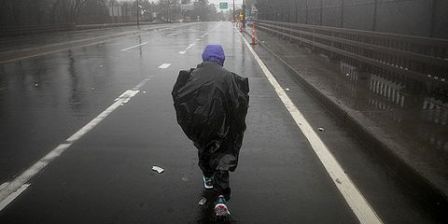
7:20 AM Meet Katherine Beiers. At 85 years of age, she was one of the last runners to cross the finish line at the Boston Marathon in 2018 amidst horrid conditions. It took her 7 hours and 50 minutes.
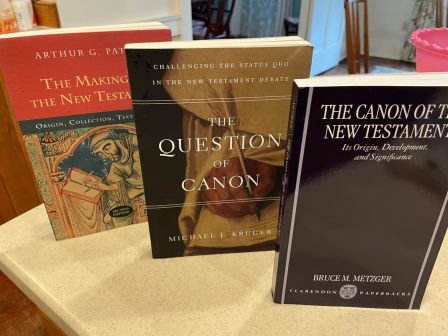
She showed as much courage as the first place finishers. You can read her story here. Suffice it to to say that over the past 69 years of life I've run through some pretty turbulent weather. So have you. Life never gets boring. There's always a new adventure right around the corner. People have asked me, "What are going to do after you retire?" I realize that my retirement is very minor in the larger scheme of things, but it alters MY life and I'm allowed to have a response to it. My answer is always, "Just keep moving forward." Really, the trick is to accept your lot in life and stop dwelling on it. Yes, I will continue to teach (about two classes a semester). I'll continue to write and blog and travel and speak in churches. The farm work will remain another constant. I am also very excited about my upcoming races. I know I can't run forever, but maybe, just maybe, I will qualify for Boston when I'm 85. Even if I don't, Katherine Beiers has shown all of us the way we should choose to live. It's not in the limited world of living in the past but in the open-ended world of optimism, faith, hope, and personal choice. Don't sit. Don't stand still. Keep moving forward. Run with endurance your race. Monday, July 26 5:22 PM These arrived today.
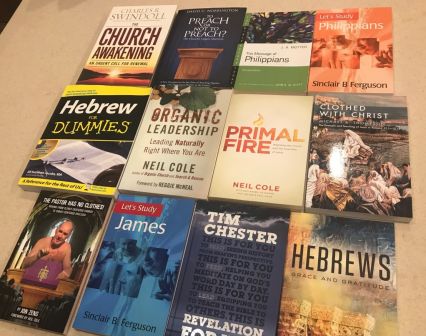
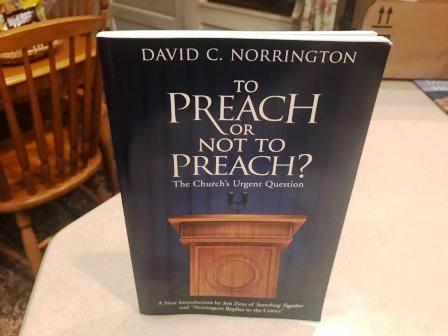
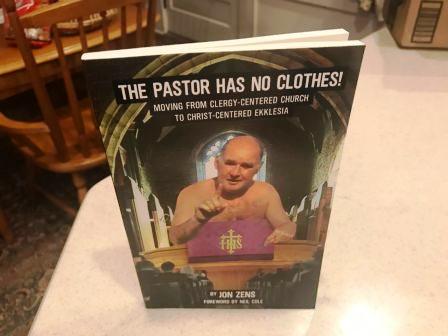
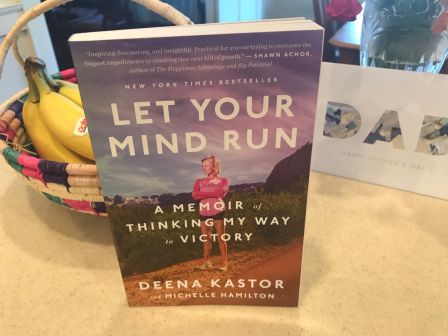
And yes, I am embarrassed to say I've never read these classics before. Plan to take care of that little matter this week. Oh, this bombshell also came in today's mail.
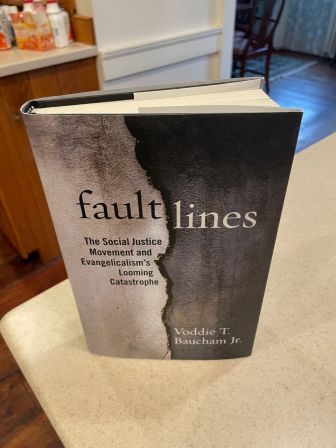
They must have sent it to the wrong address. I would never get involved in the latest brouhaha in evangelicalism, now would I? 5:14 PM Was up early this morning.
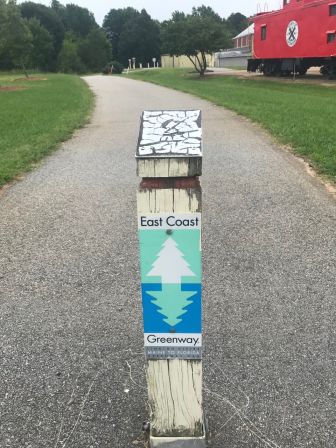
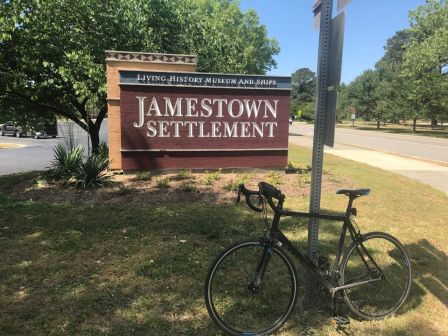
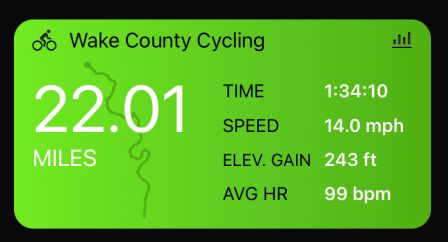
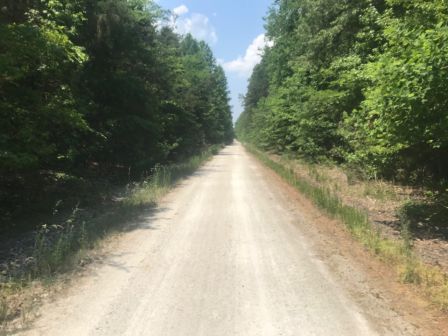
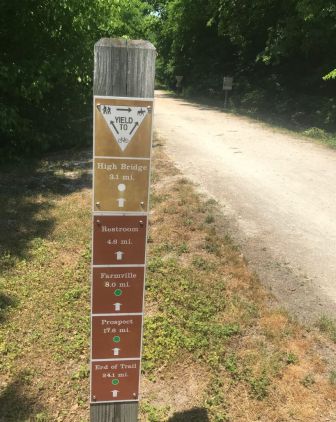
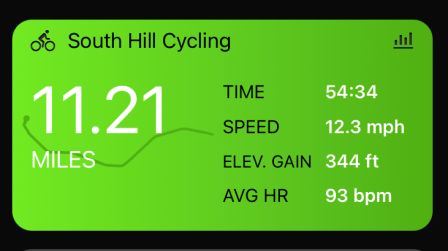
My plan was to drive to the East Coast Greenway for a short little ride.
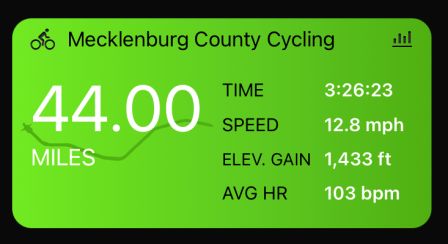
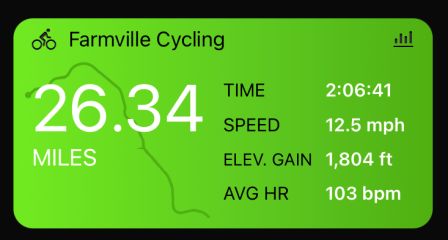
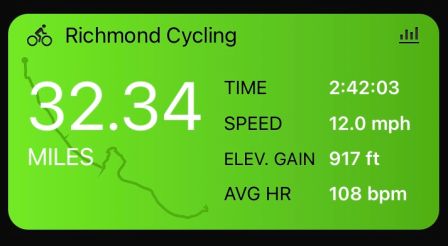
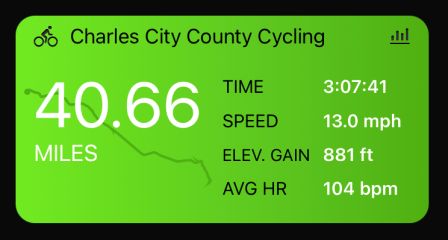
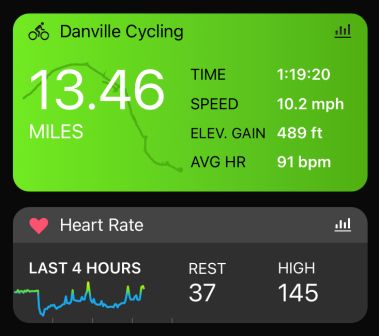
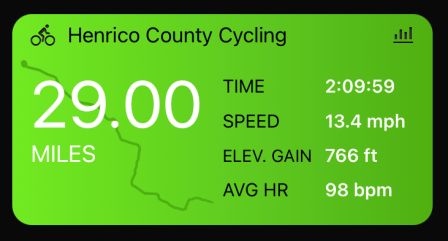
I did 44 miles in honor of 44 years of teaching.
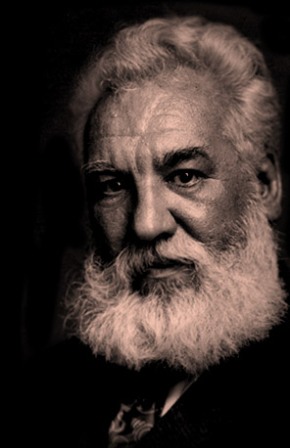
This is proof that retirement warps one's mental capacity and makes you do dumb things. On Thursday it will get crazier when I attempt to run 44K in one shot. That's 27.34 miles for us Muricans. I'm still trying to think how I'll explain all of this to my therapist. Granted, I don't have a therapist, but I'm pretty sure I'll need one before the week is out. Please tell me you do crazy things too. Sunday, July 25 8:15 AM One week from today it will be over. On August 1st, the Lord and I will begin writing a brand new chapter of my life, post-retirement. There's so much I want to accomplish this week, but one of the most important is best expressed in a quote by Alexander Graham Bell, the inventor of the telephone:
Hence this post. There are so many I want to thank:
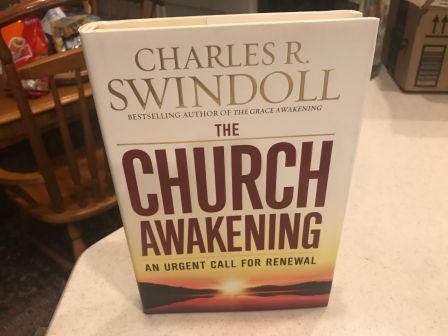
Steve Jobs once said, "My model for business is the Beatles. They were four guys who kept each other's negative tendencies in check. They balanced each other and the total was greater than the sum of the parts. That's how I see business: Great things in business are never done by one person; they're done by a team of people." Accordingly, the last word of thanks must go to the one with whom I've been co-yoked since I put my faith and trust in him at the age of 8. My story has been weaved into his every step of the way. Jesus, you are still the model to which I aspire. I love you. 7:45 AM Here are 5 random things from my week.+ 1. Loved this quote by Chuck Swindoll in his book The Church Awakening:
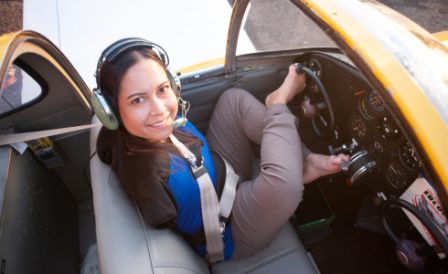
Now remember, this isn't Jon Zens talking, It isn't Neil Cole. It isn't Frank Viola. This is Chuck Swindoll for crying out loud. Maybe there's hope for our churches yet. 2. On YouTube I've been watching the ACCA meeting this week in Illinois. The ACCA is a group of airline content creators on YouTube. One of them, Dan Gryder, posted a video interview entitled No Arms? No Problem! In it I was introduced to a pilot you absolutely need to meet. Jessica Cox was born without arms and yet she flies an airplane (as well as scuba dives, surfs, has a black belt in Tae Kwan Do, etc.) and travels all over the world speaking to children who were born limbless. Jessica, you are an inspiration and a walking example for all of us who are full of excuses. The simple decision to change our mindset from "I can't do it" to "I need to figure out how to do it" is super empowering. By the way, Jessica flies an ERCO Ercoupe that uses a two-control system that links the rudder and aileron systems. In other words, this plane does not have rudder pedals and therefore Jessica can use her feet for the throttle and yoke. Jessica, you are one amazing lady!
3. I made a significant change to the syllabus for my Advanced Greek Grammar course this fall. I've cut out the busy work and put all their eggs in one basket: a term paper on any topic in the teeny little book of 3 John. Here are some possible topics:
Here I am reverting to the philosophy of education I experienced when I got my doctorate from Basel: No quizzes, no exams, not even any required courses. You just researched and wrote. There will, of course, be lots of reading (A. T. Robertson, Runge, Porter, etc.). 4. We are one step closer to getting Harry Sturz's The Byzantine Text-Type and New Testament Textual Criticism back into print. The publisher likes the idea and all that's left is to write an acceptable proposal. This book is a definite must read. 5. Did I tell you I'm planning on biking 44 miles to commemorate my retirement this month after 44 years of teaching? I also hope to run 44 kilometers this week (not miles!). I am so incredibly inspired to do this. Wish me well! Saturday, July 24 12:55 PM I realize I've referred many times on this blog to my usual morning Bible time on the front porch. God is the only one who understands my circumstances, struggles, and seasons of life, and so he alone gets to direct my paths. After my Bible study this morning the Lord invited me to attend a worship service during my 5-mile run today. The venue was the great outdoors, the music was amply provided by the sound of chirping birds, and the morning message was brought by the one and only John Stott in a sermon from Philippians 4 entitled Rejoicing in Christ. In it Stott talked about the need to find stability in the Lord, unity in the Lord, peace in the Lord, and contentment in the Lord. He zeroed in on verse 5: "Let your graciousness [reasonableness, gentleness, big-heartedness, serenity, equanimity, cheerfulness, calmness, composure, etc.] be known to everyone."
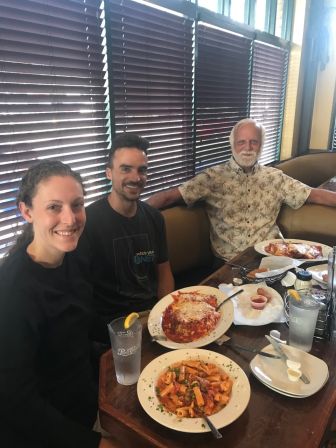
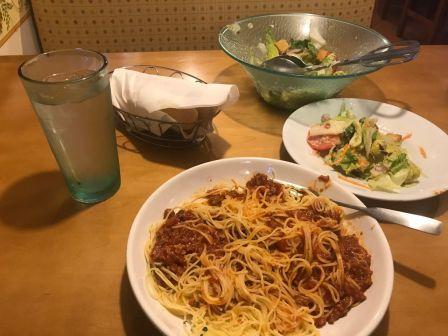
Okay, okay. That message was just for me. Lately I've been working very hard on what the Germans call Gelassenheit, or calmness (gentleness) of spirit. No person can be considered truly Christian without this trait being a major component of their personality. The person who loves God will be a person who is kind and gentle to all. Kindness is the outward manifestation of a heart that is filled with compassion, generosity, cordiality, and gentleness. People who are committed to being big-hearted don't sweat the small stuff. Their greatest delight is when others feel welcome in their presence. While they recognize that conflict is an unavoidable part of life, they handle that conflict in the least abrasive, biting, and brusque way possible. They know that their overall reputation for goodness and kindness will give them extra credibility when the time comes when they have to use assertiveness. Even when they are in conflict with others, they genuinely desire to maintain a positive presence in the lives of those around them. Gelassenheit includes the feeling of contentment, peacefulness, and deep inner satisfaction. But note: It is possible to appear contented and yet to be without true Gelassenheit. The demeanor of people with Gelassenheit is consistently uplifting and never demeaning. They recognize that it's possible to speak forthrightly without any hint of condescension. They enjoy giving sincere compliments and commenting on the successes of others. They say, "This is my life, so I'll need to make the most of my choices even if others around me do not." They are overcomers, people who refuse to be defeated when faced with adversity. Rather than being threatened by conflict, they recognize that interpersonal conflict represents an opportunity to display goodness and fairness. This is, I believe, exactly what Paul means by the Greek word epieikes in Phil. 4:5. Convicted yet? I am! Just think of how applicable Paul's command here is. A healthy Christian wants nothing to do with the desire to verbally conquer others. They stop attempting to force change in the other person. They are able to balance assertion and forgiveness. They take appropriate responsibility for their own emotional life. Today I felt like John Stott was speaking directly to me. My love for others has to be much more than a feeling. It has to be a commitment to prioritize encouragement over criticism and to find what is good in the other person even when that task seems so unnatural. I know I'm not saying anything you haven't heard before. All of us have had to come to terms with our own deep wounds in life. By accepting the negative circumstances in our lives, we are not letting go of our legitimate concerns or convictions. Instead, in our relationships we have chosen to establish a new life that incorporates the hard lessons learned and that is careful to establish clear boundaries. What I want for us is not to be trapped by emotional dependency on others. Don't let your problems be an excuse to engage in fruitless debate or discussion. Show genuine tolerance for others' flaws and recognize when not to press an issue. Above all, drop the unrealistic requirement that everyone has to line up with your ideal standards. That's never going to happen nor should it. The Bible teaches that we will not get everything we want in life. But that's okay, because "the Lord is near" (Phil. 4:5). So be kind. Be gentle. Be bighearted. Be gracious. And for God's sake don't use your kindness as a subtle means of manipulating others to appease your yearnings. Be real. From the land of outdoor sermons, Dave 7:25 AM Yesterday I spent the day on campus hard at work on various projects. Then I took my assistant and his wife out for dinner at a local Italian eatery.
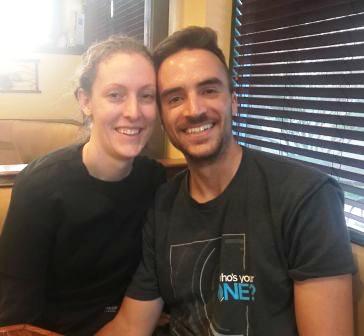
I consider my life as a teacher to be a privilege and I feel so honored each time individuals choose to take my classes in the quest for personal improvement. But none of this would be possible without the help of others. For the past two years Rodolfo has been my personal assistant. I am indebted to him in so many ways. I am blessed to have had him at my side. What a fine team he and Lauren make!
They have a strong sense of purpose as servants of the Lord and their infectious passion inspires me to be the most conscientious teacher I can possible become. Yesterday Rodolfo was putting the final touches on a little secret project we've been working on.
That's right. May we have the DRUM ROLL please!!! Dave Black Online is going to be re-launched! I know, I know, I'm way behind the curve. My website has been a dinosaur almost since the day I launched it back in 2003. People, I never said I was tech-savvy. Anyhoo, I think you'll like the new site that Rodolfo designed. In fact, I know you will like it. Thanks for letting me be me during the past 18 years of blogging. (Has it really been that long??) Thanks also for putting up with an out-dated website and for being so gentle and sensitive in telling me about it ("Dear Dave, I really love your website! Now, there's this little thing about not being able to link to your posts ....") You, dear readers, are wise in every way. Look for the new blog to be released on August 1st. 7:10 AM More often than not, I'm reading books. Who am I kidding -- I'm a book junkie. I read for any number of reasons. I read primarily to grow as a person and in my walk with the Lord. This means I read mostly non-fiction books about life issues, the Bible, and about great people. While I can get much of this information online, I know for a fact that my personality is best suited when the reading experience is tangible. The goal is to hopefully understand life better and, as a consequence, to live better. My criteria for choosing a book are very simple. It's either a book I feel I need to read (as in a "must" read), or it's a book that seems like an amazing read because of its author or title or both. When I read, I'm always analyzing. You can always learn something new by reading a good book, especially when it gives you a different perspective than the one you're used to. The more provocative, the better. This year's stash includes the following tomes that appeared on my porch yesterday thanks to Mr. FedEx. I'll comment on a couple of them later, but for now I need to be about my chores and then get in a run. Love you guys!
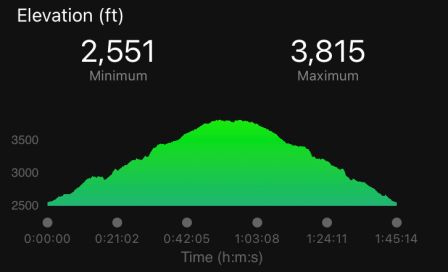
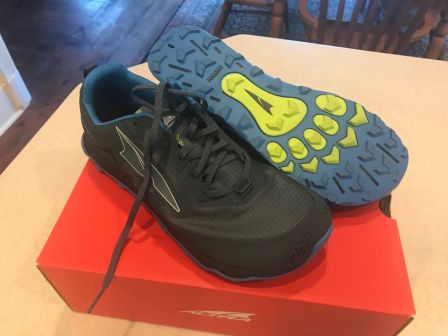
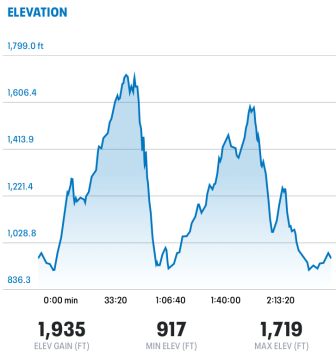
Thursday, July 22 6:54 PM As I sit here typing this, my quads are burning. This morning, after my Bible time in James, I decided to drive up to the Blue Ridge and try out my new Altra Lone Peak 5s on a hike. I already knew they were great on the trails and even on hard surfaces. But how would they do on a really challenging mountain climb? As per usual, I took the back roads through scenic Southside Virginia.
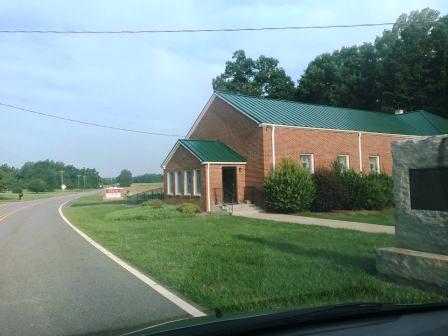
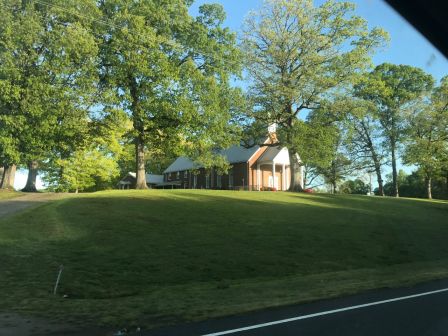
This is some of the most beautiful and bucolic country in all of the Eastern Seaboard. Funny thing, despite being out in the boonies, I kept passing churches I have spoken in, like this one on the border between Halifax and Chatham Counties.
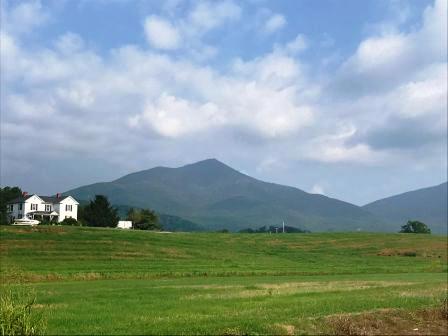
I finally arrived in Bedford where I caught my first glimpse of Sharp Top, one of the famous Peaks of Otter (the other being Flat Top Mountain).
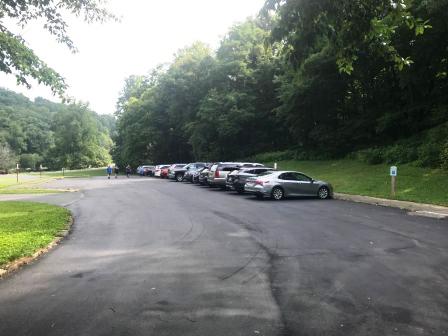
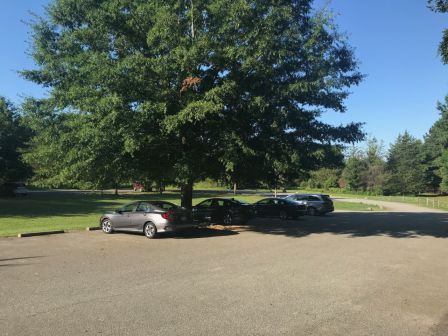
When I began my hike at around 9:30 am, the weather was slightly overcast with a perfect temperature of 70 degrees. The parking lot, which is usually packed, was almost vacant.
Since I saw very few hikers out on the trail I assume that most of these people had taken the shuttle to the top and back. Before I tell you how the shoes did, let me walk you through the hike today. The trail starts out looking like it will be a piece of cake.
The opposite is actually true. Here in the mountains of Virginia, a hike can be classified as either Easy, Moderate, or Strenuous. Sharp Top is definitely a strenuous hike. The hike up was relentless.
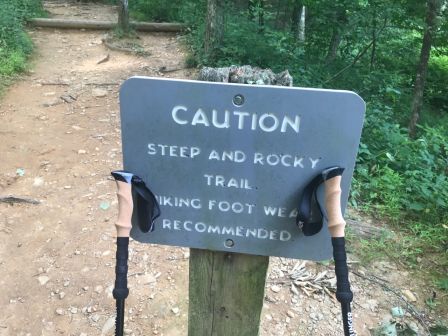
The climb is a never-ending trek over rocks and boulders until you arrive at the summit. Not only is hiking footwear recommended, but I would also recommend you take along some trekking poles since the climb up and back is brutal.
At first the trail ascends gradually.
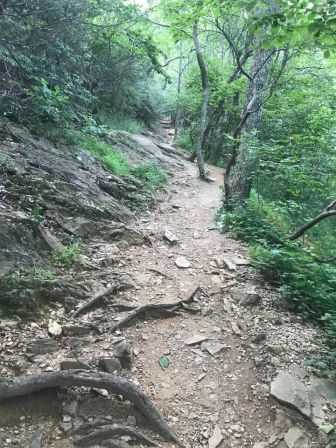
But then you find yourself in the midst of a real climb where the danger of tripping on a rock or root is very real.
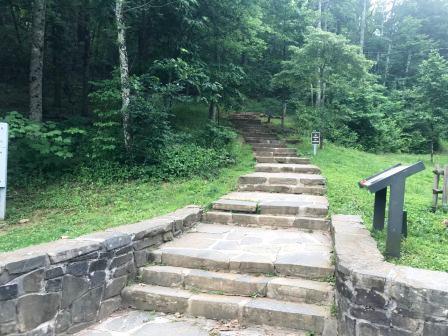
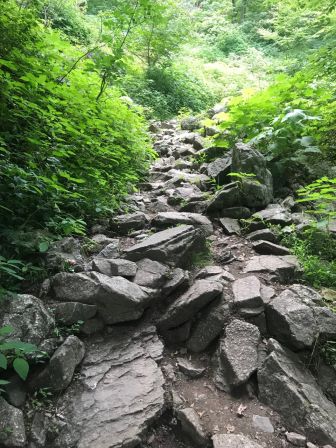
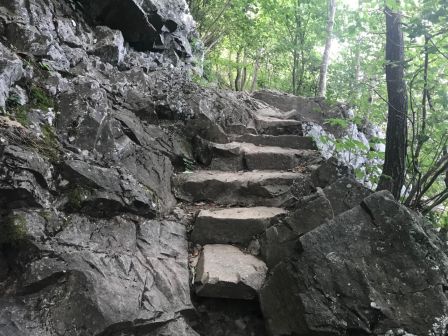
The final third of the climb consists of ascending an endless number of stair steps that are cut out of the rocks.
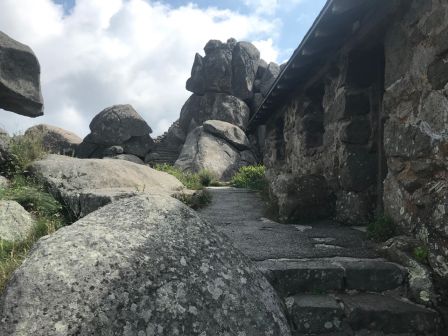
All I can say is thank God for my trekking poles because my shoes were not very helpful for maintaining balance. When you reach this stone shelter you know you have just about arrived at the summit of Sharp Top Mountain.
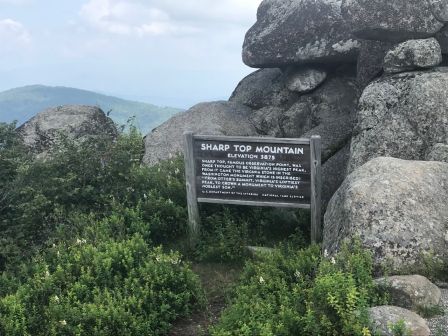
This marker tells you that you've finally made it.
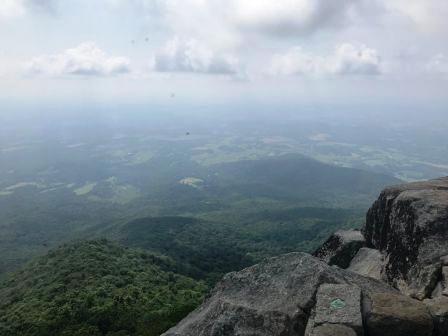
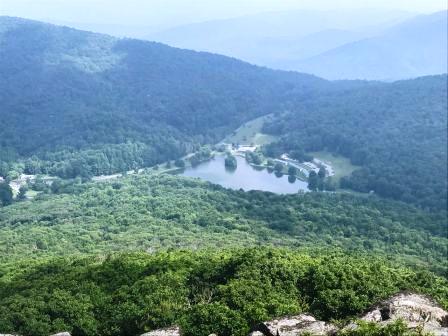
The haze meant that the views weren't quite as spectacular as they usually are, but you could still see a long ways down into Bedford County.
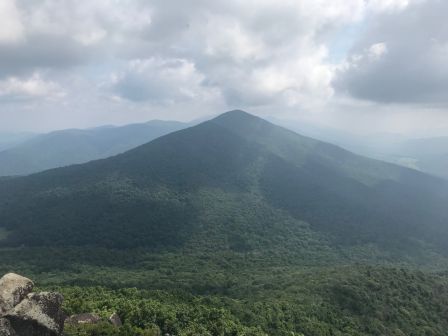
And just to the north is Sharp Top's twin, Flat Top. Gorgeous.
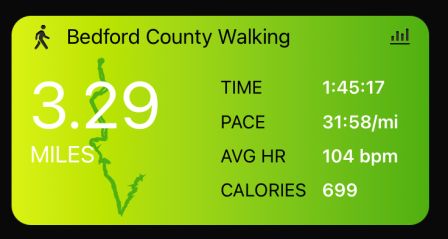
So how did the shoes do? I've climbed Sharp Top multiple times but today's hike was by far the most challenging (and slowest) of them all.
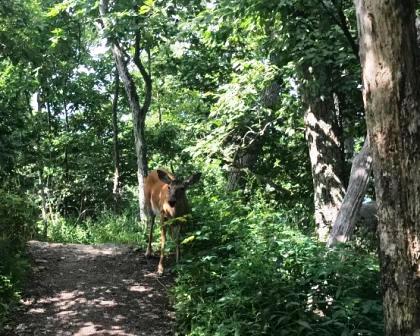
I'll give the shoes an A+ for traction -- I never felt like I would slip on wet ground or on scree. On the other hand, I'm sorry to have to give the shoes a solid D- when it comes to comfort and safety. With almost every step I could feel the rocks pushing into the soles of my feet. Furthermore, the shoes were much too loosey-goosey to provide a sense of security. The heel counter is too soft to give you protection from twisting an ankle, which I almost did several times. The only solution was to climb slowly and use your poles as a security backup for any surprises your shoes might throw at you. All this to say that I will definitely not be able to use my Lone Peaks on hikes that are in the moderate to strenuous range. They offer plenty of support for non-technical trails, but they are definitely not meant for more strenuous climbs. I might look into the Nike Wildhorse 6s instead. I can't recommend this hike enough if you're ever in the Bedford area. But plan for it to be gnarly and do bring your trekking poles -- as well as shoes with a strong heel counter and thick soles. Not only is the view from the summit amazing, you might also run into some wildlife on your trek.
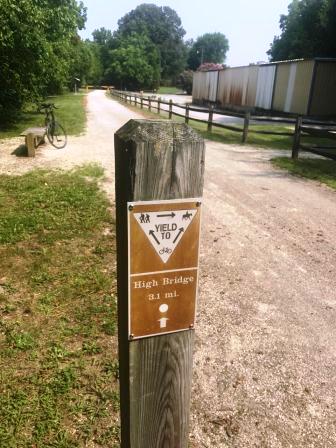
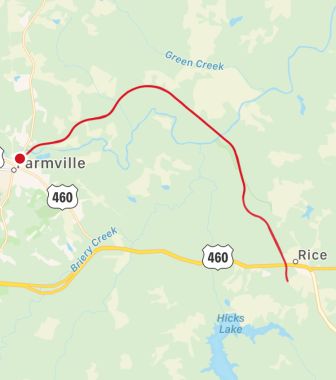
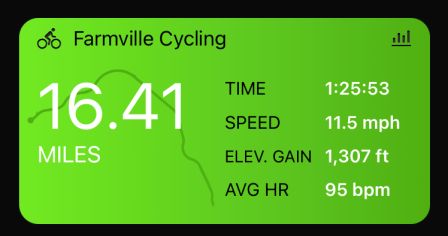
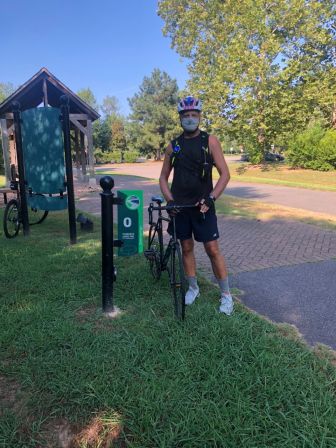
Wednesday, July 21 5:42 PM Hey there blog family. Today's bike took me from Farmville to the little depot town of Rice, VA.
As you can see, about midway I crossed the Appomattox.
Once in Rice I turned around. My total mileage was just over 16 miles.
As I rode along my mind went to this past weekend. I still can't get over the event in Virginia Beach last Saturday. I still can't get Team Hoyt out of my mind. These wonderful athletes competed in wheelchairs pushed by their loved ones. What stood out most to me were their smiles. They weren't whining about their lot in life. They weren't complaining about what could have been. I hope I can be more like them. I want to stop complaining about my weaknesses. I want to turn them into strengths, like the apostle Paul did. I want to work hard for the things I value and believe in. I want to smile more and gripe less. It's not that I don't believe in God. I do -- provided he meets my expectations and doles out health and happiness. How much of a God is he if can't solve all of my problems? The amazing thing is that it's in my power to decide what my attitude will be. In fact, that's what the Lord was convicting me of during my Bible time this morning in Philippians 4. The fact is, most of the problems we major on are mere annoyances. They're hardly worth complaining about yet we dwell on them. That's why Paul says we are to dwell instead on the positives -- things that are true, honorable, right, pure, lovely, admirable, excellent, and worthy of praise. A lot of these virtues were on full display at last Saturday's race. There the Lord provided me with a big enough peek into the goings on of a good and loving God to occupy me till he comes. Which is another reason I love to run and I love to compete. A race is a reminder that I'm not quite "there" yet. I don't even come close to Paul's standards of contentment in Philippians 4. Only Jesus can help me get off of failure's merry-go-round. I just have to take his outstretched hand. Tuesday, July 20 8:42 PM Tomorrow it's time for another bike ride. I'm not a cyclist who wants to do running, I'm a runner who likes to do cycling. Biking the 52-mile Virginia Capital Trail during Covid last year.
I have found that running involves a different motor skill set from cycling. And believe me, my legs know the difference. With cycling you work your quads differently and you're not blowing out your knee joints as much with the high gravitational knee force you get while running. Cycling, I'm told, is also great for weight loss and general conditioning. As I have often said, I want to get to the starting line of my next marathon as fit, fresh, and healthy as possible. Especially for a newbie runner like me, crosstraining (cycling, walking, hiking, swimming, etc.) is necessary to keep me from overtraining as a marathoner. I think it's great training to have one or two rides a week. If you're not totally dialed into the sport of running, why not consider cycling? I do both and I personally find that they complement each other nicely. Cycling is a great aerobic workout and you can get your heart rate up for long periods of time while not pushing into the red heart rate zone. It's also a way to build generally strong quads. At 69 I am cycling better than ever thanks to the advice of Rob "the Bike Guy" in Wake Forest. Of course, I prefer running because you can do it almost anywhere with limited gear, it's super time efficient, and it works your cardiovascular system in a slightly different way than cycling. That said, having cycled for the past couple of years, I feel that my cardiovascular health has improved no end. In short, cycling without a doubt can make you a fitter and faster runner. Onward and upward through the highs and lows we runners endure! 12:08 PM Today's run was a casual out and back at the local trail.
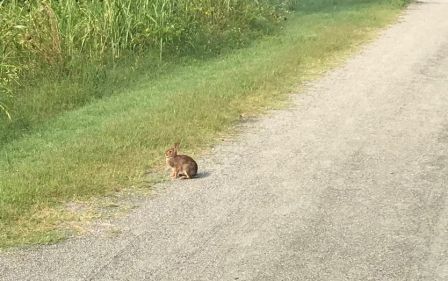
It was just me, the Lord, and this little guy.
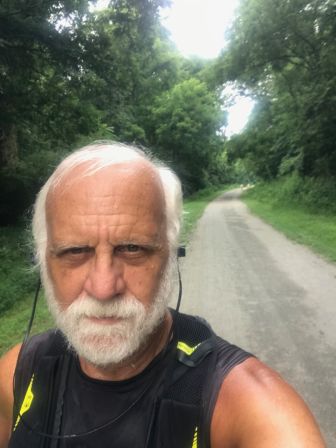
Don't know why I'm lookin' so serious here.
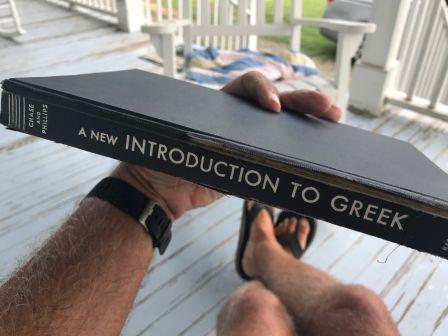
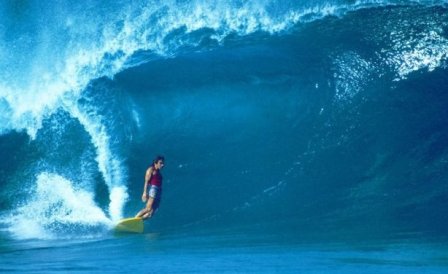
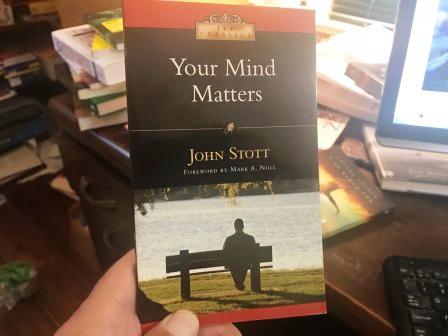
I think it was during the time I was pondering the significance of the present imperatives in Rom. 12:2 (a passage I was studying this morning in my Bible time). Anyway, I am so thankful for my blessings and grateful that I can get outdoors and enjoy God's creation. So far I couldn't have asked for a better week. How's yours going? Monday, July 19 6:54 PM Having spent the day on campus I am ready to engage in some YouTube viewing -- you know, surfing at Pipeline, or the finish line at the Hardrock 100 mile race out in Colorado. I love watching videos in the evening, especially when I'm tired and need some mindless entertainment. But I'm never happier than when I'm reading a book. Allow me to introduce you to one -- an old friend, if you will, that I met in college back in 1975.
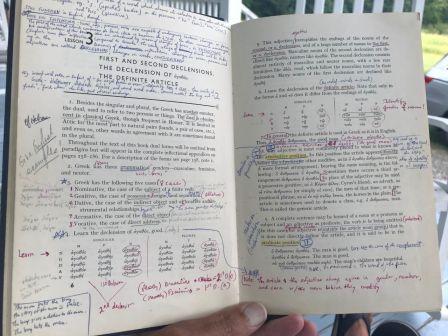
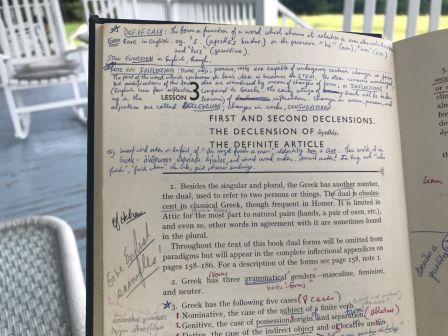
Yes, this was THE textbook I had for beginning Greek at Biola -- you know, the class I lasted a grand total of 3 weeks in before dropping. "Chase and Phillips" it was called by some students (and "that horrible textbook" by others). It was designed for one semester at Harvard but, since Biola wasn't exactly the Harvard of the West, students took two semesters to trudge through its verbose, garrulous, blathering, pedantic pages.
By chapter 2, you felt like somebody had smacked you over the head with a 2 by 4. Here you're introduced to Greek accents, which means you have the joy of learning terms that nobody can remember and nobody understands, terms such as oxytone, paroxytone, ultima, penult, antepenult, paroxytone, proparoxytone, perispomenon, and properispomenon. In that chapter the authors actually had the gall to write, "These terms, though formidable, will save much laborious periphrasis." Well, sirs, I'll tell you what else will save much laborious periphrasis. How about I just drop the class??!! Dave Black is the exact opposite of a natural-born language learner. That's why I love this book. I love this book because it reminds me of how close I came to missing my calling in life. I almost changed my major from Bible to Christian Ed like everyone else who couldn't handle the rigors of proparoxytones and antepunults. But in what has got to be the irony of the century, yours truly -- ye olde drop-out Doofus, the language imbecile -- was hired to teach Greek from this very textbook exactly 2 years after he had dropped the class. Today I teach, not because I want to, but because I have to. It's what I am. I know of no other way to live. Despite my absolute lack of language acumen, I found myself on a career track that has brought me incredible joy and satisfaction in life. Today I can say the same thing about running. The heart and soul of running is fighting through adversities, pushing hard, and being determined. I haven't forgotten the triumph I felt when I finished my first marathon 5 years ago. Nor have I forgotten the absolute thrill of entering the classroom for the first time as a teacher in 1976. Chase and Phillips, I owe you everything. Because of you, my life changed. Your book helped me to hone my craft as a teacher. You taught me what to do and what to avoid doing in the classroom. You reminded me that Biolans were not Harvardites, and that they needed a textbook that was written for kids from Hawaii. (Hmm, eventually a kid from Hawaii did write that book.) Greek isn't all about suffering and pain and going hard and pushing through. If you're going to stick with it, it better be fun. It's impossible to be unhappy while digging into the Greek New Testament on your own. Friend, if something is worth doing, then it's worth doing now. Don't wait for tomorrow. If there is a goal you want to achieve, start working toward it. How completely amazing is it that a 69-year old man should have come so close to missing what became his life's calling? It goes to show that your background doesn't have to be a limiting factor in going after your dreams. When I told a friend of mine that I had done the run-swim-run in Virginia Beach last Saturday, he asked, "Did you finish?" I wanted to quit a least a hundred times. My finishing time was slower than most. But what I lack in talent I make up in tenacity and pure stubbornness. Whatever you're facing in life today, it's completely normal to feel bad. But whining and bellyaching won't help matters. Instead of complaining about how difficult life is, focus on what it's going to take to get you to the finish line. Remember: It's not about perfection. It's about relentless forward progress. Just ask my buddies Chase and Phillips.
6:25 AM What did I learn by swimming in the open ocean last Saturday in Virginia Beach? The first and most important lesson: You have to stay relaxed and comfortable during your swim. Not being comfortable while you're breathing during a swim is probably the most self-defeating thing you can do during a competition. Then, be sure to blow bubbles out of your mouth as soon as your face enters the water after breathing. Don't hold your breath. Relax and have faith in your training and your stroke. Finally, find your pace. Once you have found it, you can turn it up a notch if you want to. But don't try and swim as fast as everyone else. Let them be them and you be you. So how did I do? I have to admit that I started the swim leg of the race uptight. I was worried about the distance, about the current, and about the waves. I was also frazzled because I had never done an open water swim before in a race. It took me a while before I could relax to the point where I would exhale as soon as my face re-entered the water. My tendency was to look up to see where I was. But when I discovered that I could reliably follow the more experienced swimmers for direction control, I could relax. Finally, once I found my rhythm it was smooth sailing for the most part. I had heard that you should count from 1 to 10 repeatedly while swimming. I did this mental trick and it worked wonders. As long as I could keep counting to 10 I knew I would be okay. I didn't need to kick exceptionally hard because of the buoyancy of the salt water. I just remained focused on my breathing, taking consistent deep breaths in and out. 1 to 10. 1 to 10. 1 to 10. One thing that helped me greatly was the presence of lifeguards on paddle boards along the course. Occasionally one would ask me how I was doing. Just knowing that help was nearby if needed was an incredible confidence booster. In the end, I simply concentrated on three things: A calm spirit, a regular inhaling and exhaling pattern, and a relaxed stroke. Pace didn't matter since I wasn't in the race to compete. Swimming in the ocean is so NOT like swimming in a pool. I am told it gets easier with experience. I hope so.
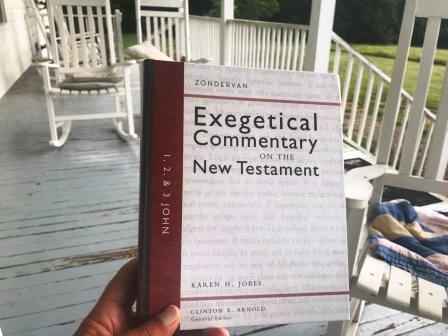
6:05 AM In exactly one month -- August 19th to be exact -- the new fall semester begins on campus. Fellow teachers, God values the hard work you do every day. I once heard someone say that teaching is CRAZY: C = Care for your students. Speak with your students. Listen to them. Let them know that you care. And for crying out loud, answer their emails promptly. R = Real world examples that relate to your students' lives. Keep classes relevant. Understand the issues and pressures your students are facing. A = Actual experiences in your life that relate to your topic. Z = Zeal! Make your classes energetic and interesting. Add some vigor to your rigor. Y = You. You make the difference in the classroom. Remember, Jesus said that we become just like our teachers (Luke 6:40). I would add: Be yourself. (Your best self, of course.) Enjoy the ride. Teaching is a wonderful calling. Education liberates us from the prison of ignorance. It finds its glory in sharing and serving. This is the kind of teacher I want to be. These are the kinds of students I want to raise up. This fall I'm teaching Greek 2 and Advanced Greek Grammar. If I teach well, I will create a household of grace filled with happy Jesus followers who love and serve him with their whole heart. Sunday, July 18 6:44 AM If we are to love each other like Jesus loves us, then we have to understand the little letter called 1 John. This book is all about fellowship -- sharing the burdens of life, making them easier for everyone to carry. "We must love one another," said Jesus. It's true. We really must. Here Karen Jobes reminds us that the book of 1 John probably originated as a sermon the apostle gave to his congregation.
That would explain the lack of any mention of the author at the beginning. The focus is not on John, it's on Jesus, "the life-giving message." Can you imagine for a moment what it must have been like to have heard, IN PERSON, the apostle John himself as he spoke the opening words of this letter:
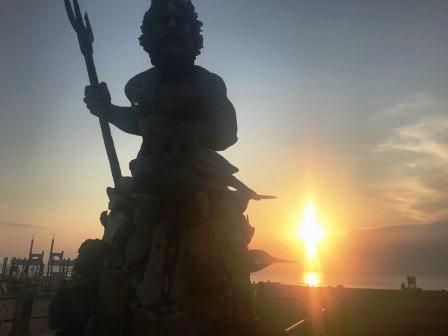
None of us is perfect, and we need each other desperately. Yes, we will fail each other. We will disappoint even those closest to us. We must look at our church family and see their value before their failures, must forgive and forgive and forgive. In this, we are merely demonstrating the mercy shown to us by Christ. Saturday, July 17 5:32 PM I can totally get it when people say they don't like to run, especially when you have to get up early in the morning. I mean, who wants to see sunrises like this one?
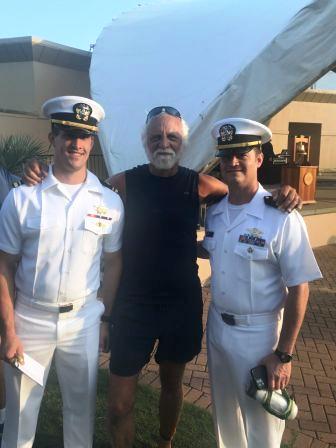
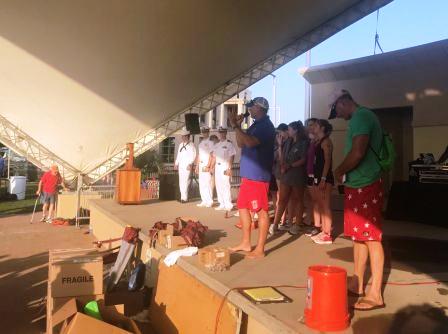
Of course, if you've ever been to Virginia Beach you recognize this as the one-and-only Neptune statue (aka Poseidon). He's supposed to be the god of the sea and the protector of those who venture out on her. Much good he did today. As you know, I was in Virginia Beach to participate in the 22nd annual Allan Stone Memorial 5K and Run-Swim-Run. Allan Stone was a Navy Seal who was tragically killed during a training exercise. Today he was honored along with other Navy Seals who died in the line of duty. Officiating were these two Naval officers.
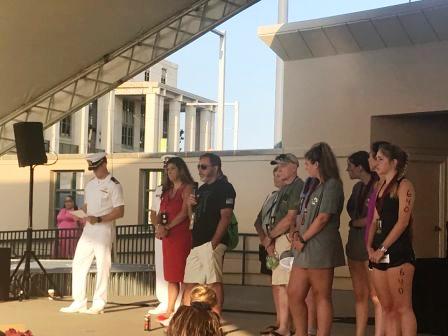
The one on the right, by the way, is a Navy Seal chaplain and was educated at Dallas Seminary -- AND has taken classes at Southeastern! Before the races kicked off, we took a few moments to honor the dead. Here you can see family members -- spouses, parents, children -- of those we were remembering today.
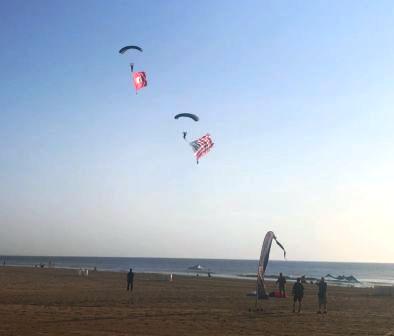
The names of their loved ones were spoken aloud, along with the names of all the other Navy Seals who gave their final measure of devotion for country and home. I don't think I was the only one who got choked up while their names were being read. Then the Seal Parachute Team landed on the beach just as the singing of the National Anthem came to a conclusion. More teared-up eyes.
Before the race, the head of the Virginia Beach Volunteer Lifesaving Squad briefed the swimmers.
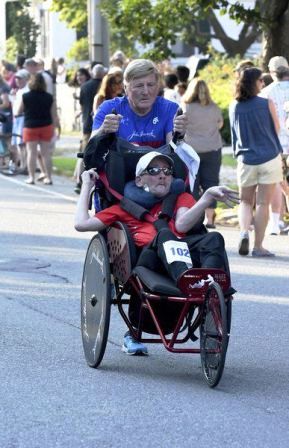
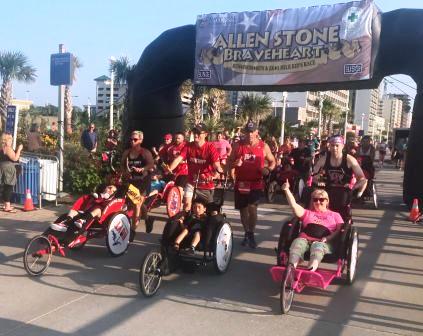
He made it sound like the swim would be a piece of cake and assured us that we'd be swimming with the current. Sadly, he was wrong on both accounts. The races started with the Team Hoyt 5K. In case you don't recognize that name, Team Hoyt is named after Dick and his son Rick Hoyt. When Rick was born with a diagnosis of cerebral palsy, the doctors advised his parents to institutionalize him since they felt there was little to no hope of him ever leading a normal life. But Dick and Judy Hoyt had other plans. In 1977, Dick participated in a benefit run for an athlete who had been paralyzed in an accident. Dick pushed Rick in a wheelchair. Afterwards, Rick said to his father, "Dad, when I'm running, it feels like I'm not disabled." That was the beginning of a father-son racing career that topped 1,300 races, including 6 Iron Man competitions. You can read the story here.
Team Hoyt Virginia Beach carries on this beautiful tradition. Here was their race start. GO RUNNERS!!!
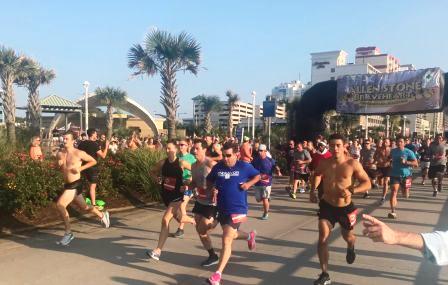
After that the 5K began.
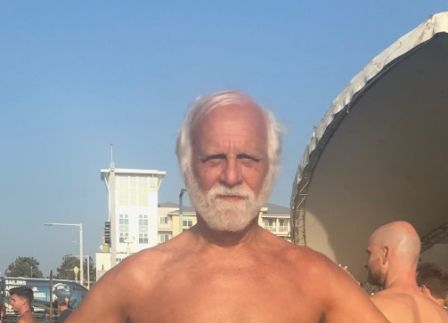
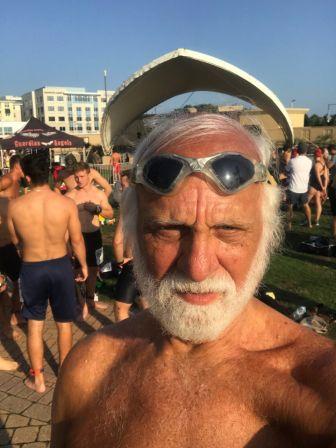
A few minutes later the rest of us walked down to the water's edge to begin a 1K run on the beach, a 1K swim back to where we started, and then a 5K race. To be honest, I went into the race with a sense of fear and trepidation. I mean, swimming for over a half mile in the open ocean? Really? I was surprised by my feelings since I am normally a person who loves to push the boundaries of the possible. After all, wasn't I born and raised in Hawaii? Hadn't I been a life guard and swimming instructor in California? Hadn't I surfed all my life? True. But since 1998 I've lived in Nelson (landlocked) Virginia, and if I did do any competitive swimming it was in a pool. Furthermore, hadn't we been told that we'd be swimming with the current? When the run on the shore began I held back, hoping to save my strength for the swim portion of the competition. Sure enough, when we back-of-the-packers entered the water, the current seemed to be with us. But about half way I noticed I was barely moving. So was everyone else. Eventually a life guard paddled up and told us that the current had switched directions. We were now swimming against a strong current. The only thing we could do was move closer to the shore where the current wasn't as strongly felt. Once we did that, we were able to make slow but steady progress, even though now we had to do battle against the breakers. I repeated my mantra "Through perseverance even the snail reached the ark" over and over again, keeping my eyes firmly planted on old Mr. Neptune. An hour and 20 minutes later, I emerged from the water to begin my 5K run. I quickly got over my sea legs and was able to pound out the miles in a nice time. By the time I reached the finish line the awards ceremony had been going on for some time, which was fine with me as I guessed they weren't going to give out awards for last place finishers any way. Here I am before the race, "exuding" confidence. Like my halo?
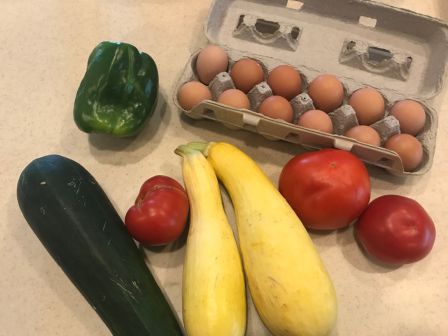
One thing I know about myself is that I love new challenges. Today was such a day. Maybe I should have become a Navy Seal after all. Mega kudos to Mike Wilson and his wife for putting on a fabulous, challenging, and memorable event. I noticed on their table that they had a Bible. It's difficult to find a better reason to run than such passages as Heb. 12:1-2 in the Holy Bible. And it seems so appropriate and fitting that a race should honor people for their courage and sacrifice -- biblical virtues for sure. The satisfaction that comes from a race like this one is deep and long-lasting, knowing that you pushed yourself way, way, way farther than you thought possible, and all for a good cause. These are the moments I will savor for the rest of my life. Friday, July 16 8:40 AM When I was in seminary I made a bunch of mistakes. One of the worst had to do with Biblical Hebrew. There were two main teachers of Hebrew at Talbot at that time. One of them was Dr. Charles Feinberg. Yes, THE Charles Feinberg. He was a real expert in Hebrew but he rode his students hard, as in VERY hard. Getting an A in his class was unheard of. But you learned Hebrew. The other prof (whom we'll call Dr. G) was known on campus as a Pushover. You took him if you wanted an easy A. The problem was, you never learned Hebrew. Class time was spent listening to Dr. G. tell jokes. So who to take? I chose Dr. G. Big mistake. Yes, I got an A. But I learned no Hebrew. Even the tests were open book. Why did I make this huge mistake? Was it because I was on an academic scholarship that required straight A's from me? Or was it because I was a lazy beach bum from Hawaii who always took the easier road in life? Either way, the sad truth was that years later I had to teach myself how to read Biblical Hebrew. Happy to say I do read Hebrew quite a bit these days, though mostly in one of my three Hebrew New Testaments (shhh, don't tell anyone). I regret not taking Dr. Feinberg for Hebrew. Even then I knew I should have. The harder road was the better road by far. I'm consistently awed at what the Lord did in my life while I was seminary despite my foolish choices. I learned my lesson from taking Dr. G. From then on, I had no interest in just getting by. It was mastery or nothing. Yes, there were incredibly difficult courses after that. But I was happy that I didn't give up. My seminary experience ended up being an inspiring, challenging, and rewarding adventure. Thursday, July 15 6:58 PM Farm update: 1) These came today from my daughter.
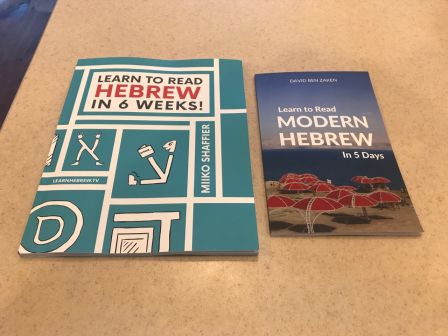
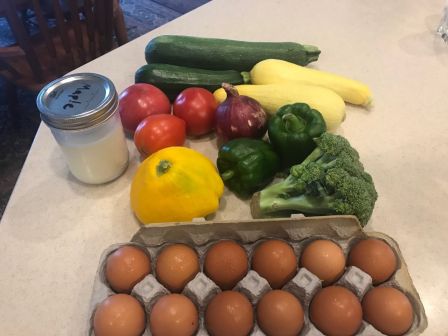
Just in the knick of time too. I had just run out of veggies and eggs. 2) These too came today. Hmm. Wonder what I should with them?
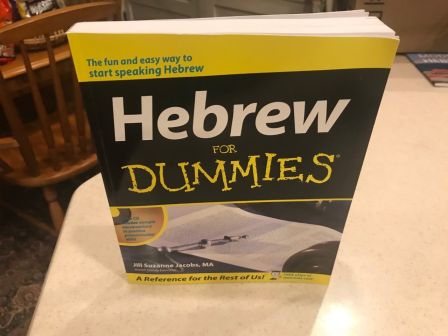
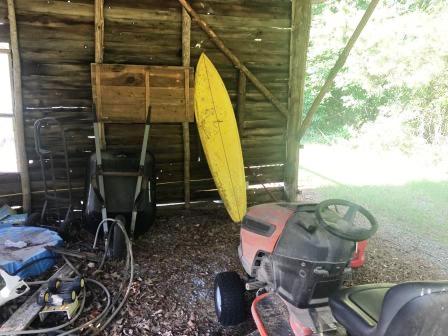
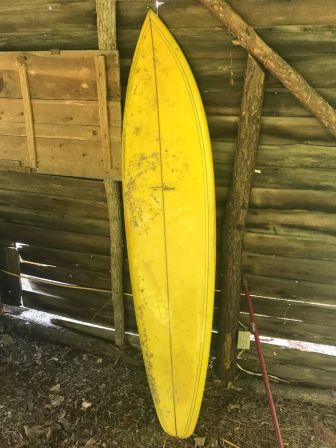
As with every language I've learned, the key is turning language learning from a boring subject into a pleasant activity you enjoy doing every day. I simply love learning languages. Don't you? 9:24 AM Hey guys! Look what I'm dusting off today.
That's right, my Bill Stonebraker custom board.
This baby served me well at Pipeline, Pupukea, Haleiwa, Ala Moana, and Diamond Head. Since I'll be in Virginia Beach this weekend I thought I'd take it along. Just checked the surf report for VB. You won't believe this, but currently the waves are breaking a whopping 10-12!!! *Inches* Oh well, Saturday's waves are going to get bigger, right? Surfers are eternal optimists! 7:50 AM Whew! Where has this month gone? Perseverance, folks, that's what life is all about. You have to be patient with yourself as you make your way through this world. I have only two weeks left to tie up all of my retirement decisions -- estate planning, investment planning, trusts and wills, etc. I am also faced with two publishing-related deadlines. Can you relate to this topic of perseverance? The ability to remain calm and to keep plodding your way through life is truly a great gift to possess. How do you handle those moments when your whole life changes and you have to make decisions on the fly? How do you keep up with all you're tasked with in life? Like marathon training, life is an incredible journey, especially when you open up to the possibility of pain and the progress you will make with perseverance and patience over years and years of dedication to making your life count for the Lord. Stay patient, folks. Perseverance is key. Consistency and patience will win the day. You need to train yourself to overcome the anxieties and doubts in your life. The only way to do that is by staying close to Jesus and "abiding in him." I hope this blog helps to bring you some perspective on what it means to face the transitions of life while persevering through the ups and downs of life's milestones.
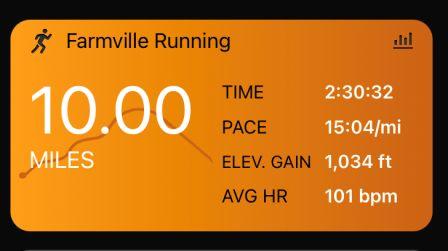
Wednesday, July 14 5:40 PM I can't believe I missed a day of blogging yesterday, but I was so busy that the day is just a blur. Life ever get that crazy for you? This morning I woke up planning to drive to the Blue Ridge Parkway and climb Sharp Top to see how my Lone Peaks 5s would work as hiking shoes, but the prediction for bad weather nixed that idea rather quickly. I don't mind rain but lightning and I just don't get along very well. But the Lord had even better plans. A day of perfection was kicked off with a fantastic run of 10 miles in Farmville which got me in the best possible frame of mind for the day.
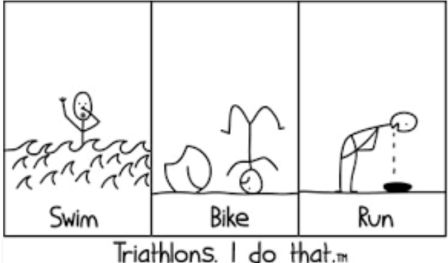
It was also good training for this weekend's race in Virginia Beach, called the Allen Stone Braveheart Run-Swim-Run. It's named for a Navy Seal who died during training and the proceeds go to the Virginia Beach Volunteer Rescue Squad and the Navy Seal Foundation. The race is kinda like a triathlon, of which I have done 5.
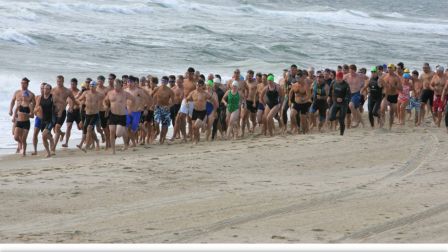
But instead of a swim-bike-run, it's a run-swim-run. First you run 1K on the sand, then you enter the ocean and SWIM 1K back to where you started, where you then run a 5K along the famous Virginia Beach boardwalk. Haven't done this race yet? What is your problem? This picture is from their Facebook page.
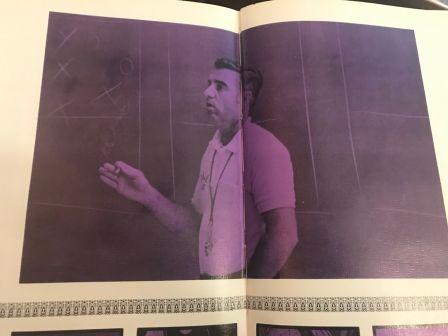
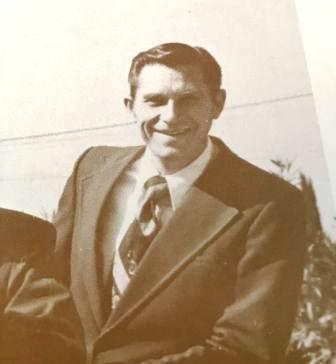
Strapping young athletes, eh? I enlarged the photo hoping to see someone over 50. Nary a soul. But I have been training hard and I need to trust that. True, I have never swam (swum?) a half mile in open water before (with who knows how many waves and surfers to negotiate), but hey, nothing in life is meant to be easy. Running seems to be pushing me in many different ways than I am used to nowadays, and that's a good thing. But no, I will NOT be going into this race with a sense of confidence. Trepidation is a much better word. It is important to try new things in life or else you will just get stuck in a rut. I guess I'll just have to throw it into grandpa gear and push as hard as I can. Monday, July 12 7:15 PM Continuing my series of reflections on my retirement (don't like that word but I'll use it here) and 44-year career, I'd like you to meet Howard Lyon. Yearbook pic.
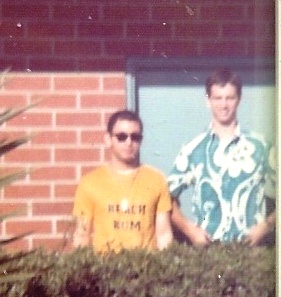
He was the head basketball coach at Biola when I arrived there in 1971. By the time I graduated from high school I had played tons of basketball and volleyball in the islands. I wanted to continue to be active in sports when I got to California and so I tried out for the basketball team. During that time, Biola was famous for its stellar varsity and junior varsity teams. Coach Lyon was the winningest coach the school had ever had. I began to realize it would be tough convincing him I belonged on the team. I was a much better surfer than I was a basketball player. But that didn't keep me from trying out. My plan was twofold: major in Biblical Studies, and play sports. "But God ..." You can probably already guess what happened. God had other plans for my life. I think he knew me well, even better than I knew myself. He knew my Type A personally. He knew I couldn't do anything unless I gave it 1,000 percent. And he knew I couldn't be BOTH a student AND an athlete. I needed to make a choice. Actually, that choice was made for me when Coach Lyon announced that I hadn't made the team. Disappointed? At the time, yes. But looking back, I now see it was the best thing that could have happened to me. Paul said, "We are God's masterpiece. He has created us anew in Christ Jesus so that we can do the good things he planned for us long ago." In 1971, I was a diamond in the rough and God was the master jeweler. He began his work in my life -- shaping, cutting, grinding, and polishing until he had prepared me for the work he had called me to. Friend, is he doing the same thing in your life? The grinding process is seldom a pleasant one. So we must be patient -- with God and with ourselves. Cutting and shaping take time. But God will complete the job. My roommate and I in 1971. I am wearing my Rick Warren power aloha shirt.
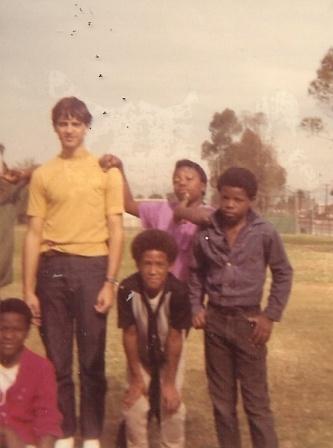
P.S. I was able to use my basketball skills after all. For my "Christian Service Assignment" (required of all Biola students), I went to South Central Los Angeles every Saturday and played pickup basketball with the locals.
During "half time" I would share with them the love of Jesus. I'd give anything to find out where these guys are today and what they're doing. 5:54 PM Today was the day to put my Lone Peak 5s to the test. They've already shown me that they work on the trails. Duh. That's what they were designed for. But how would they work on asphalt and concrete? I bet you can't wait to hear. Do not even pretend you're not interested. Up to Farmville we went. I ran the same old same old -- the crushed gravel trail from downtown FV to the bridge. But before I got to the bridge I made a detour on the River Road. Below, you can see the trail line on the top of the map.
It's the curvy one. Below it is the River Road. It's more of a straight shot back into town. And it's mostly asphalt except for a portion when you're just about back to the parking lot. You start out here.
As you can see, the road falls off precipitously after about 100 yards. Which means you have a long downhill section where you can let 'er rip. The next phase is a flat(ish) section.
This is followed by a long uphill.
Then under the trail you go.
One last section -- you have to cross the Appomattox -- and you are home free.
Here's where I parked.
And yes, Charley's Cafe is to die for. I think I've only eaten here once. Way too expensive for my tastes. How did the shoes do? Perfect! You run thinking you've got a pair of socks on your feet with rubber soles under them. Painless. Effortless. Worriless. This means that two out of three boxes can be checked -- Trails? Check. Roads? Check! Alas, there's a third check: Hiking? I will let you know. I have a long day scheduled for my office in Wake Forest tomorrow (working on our little "secret"), but if the weather holds out I plan to do some peakbagging in the Appalachians on Wednesday. (Inspirational part of this post.) I'll close by saying -- ad nauseum -- how much like therapy running is. Yes, all I did was sweat like a pig today (FYI: Pigs don't sweat). Yes, I needed a two hour nap afterwards to recover. But hey -- I am a standby kind of guy. When I find something I like I tend to stay with it. I think mixing pain and pleasure is a good thing, don't you? You learn that your past is only a description of where you've been, not a prescription for where you will be. And faith is what keeps you going. Sunday, July 11 8:20 PM I'm a huge fan of Marshall Ulrich.
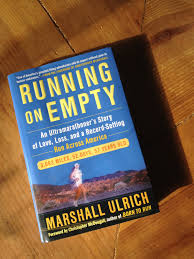
This dude has not only run 130 ultramarathons (I've done only one), he's climbed the famed Seven Summits, each of them on his first try. This includes, yes, Everest. His book Running on Empty is one of the best sports bios I've ever read.
It recounts his run from California to New York, which meant he had to run the equivalent of two marathons plus a 10K every day for two months. Today, after getting in a *whopping* 5 miles on the track, I happened to stumble on Ulrich's "Ten Commandments of Endurance." I agree with them all -- except maybe for #2:
That may be true for uber-Menschen who can run a gazillion ultras and climb the world's 7 tallest mountains on every continent, but the rest of us are, well, mortals. I'm not the only runner who's realized the benefits of sprinkling short minutes of walking in their running regimen. Today many successful marathon training programs follow a walk-run routine. There's nothing wrong with it. And it certainly is not a sign of weakness, at least in my humble opinion. Walk-run is the only way I can complete a marathon. Some have called this method the most important tool for lifetime running ( as opposed to running all out for a few years and then becoming permanently injured or burned out). It's so easy to do too much, too soon, too fast, and so on. It all boils down to 2 maxims for me right now:
I get the best of both worlds this way: I build endurance, and I avoid injury. It has gotten me through 16 marathons and 1 ultra so far. And it's definitely more enjoyable than trying to run the whole distance. I have found that walk breaks, when taken early and often enough, keep my muscles strong and resilient enough so that my legs can do more with strength and efficiency throughout the race. So on the one hand, I agree with Mr. Ulrich when he says, "Be kind to yourself." Yes and amen. But as Jeff Galloway says, walk-running is what we were meant to do. The human body wasn't designed to run long distances without a break. But when you alternate walking and running, there's virtually no limit to the distance you can cover. Just my .02. I know the marathon is supposed to be a grind and the ultimate challenge for most people. But runners need to know their own limitations. I know mine. Besides, we all have to start somewhere, right? Saturday, July 10 7:50 PM Here's a pro tip (I'm not a pro at anything, especially running, but I like the jargon) for any of you who struggle getting started with your run. Last Friday, when I ran 8 miles, I noticed that I was really struggling through the first 15 minutes of my run. I felt a bit deflated because I thought I should be able to move right into my stride. The older I get, the harder it is to run that first mile. After that, I seem to be good to go and I start to feel like a runner again. I think I know the reason: Starting your run is more a mental game than a physical one. Your mind has to convince itself that the run you are about to do is actually beneficial for your body and not deleterious. Here's what I've found. I've found that the first 15 minutes of a run definitely feel easier for me if I keep then super easy and slow -- as in jogging slower than I can walk. Then, when I increase my pace, everything is in sync and I begin to feel oh so much better. After that, I'm all good. This is called (I believe) a dynamic warm-up. Keep in mind, I'm a guy for whom at one time the first 15 minutes of his run were also the last 15 minutes of his run. Here's another interesting fact. The term "endorphin" comes from "endogenous morphine." Endorphins are produced when your hypothalamus and pituitary gland produce pain relief and a sense of well being. You can actually feel this happening to you when you run. Just another reason to push through those first 15 minutes. The Germans have a saying:
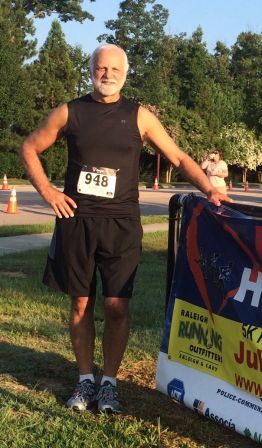
"Every beginning is hard." No matter what you are undertaking in life, including learning how to read New Testament Greek, it will suck at first. There's nothing unusual about that. The goal is to not worry about it and just keeping going until you get it right. This picture was taken on July 25, 2015.
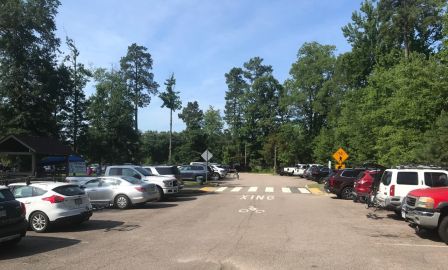
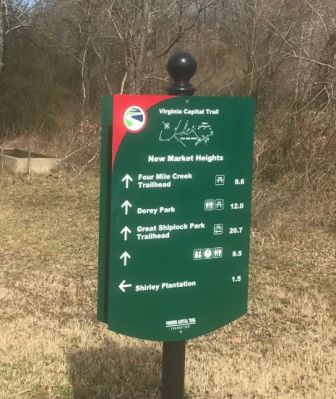
It was taken at one of my first 5K races. I never dreamed I would keep running races. But here's what happens. As many of you can attest, a 5K is merely an imbedded kernel that later blooms into a desire to run a 10K, then a 10 miler, then a half marathon, then a marathon, and then an ultramarathon and maybe even farther. Each race has a finish line, and as you cross that first one, somehow your confidence begins to grow and you begin to think, "Maybe I can cross other finish lines as well." Friends, the key to happy running is to know what you're in for. Then, when the hard times come, you will be prepared for them. You will embrace the difficult and keep right on rolling. 5:20 PM I was in the saddle again today, my goal being to get in some hard sprint work at the Virginia Capital Trail. As you can see, I wasn't the only cyclist who thought they would bike today.
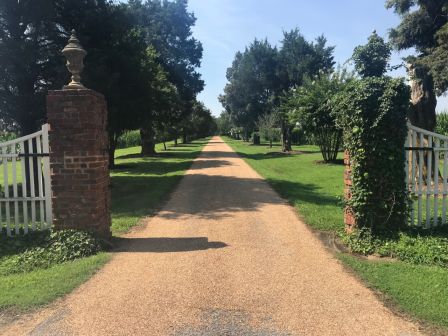
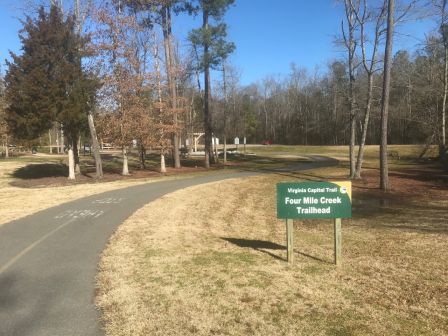
This is called Four Mile Creek Park. I have no idea why it's called "four" miles but it's a popular place for cyclists of all skill levels to park on a Saturday morning. That's good. I'd rather have the trail filled with people than empty (as it often is). Because I was hitting the trail pretty hard today, I stopped only once to take pics. This is the entrance to Evelynton.
And this is what the trail looks on either side of the entrance. Wow.
I was having to really push myself on all the uphills. This is not exactly a flat trail.
Eventually, I turned around at the 15 mile point.
It was a fantastic workout. As always, it was SO SO good to be outside -- and ACTIVE. I know of no other way to live. We runners/cyclists can't help being active, even if (like me) we're terrible at it. When you're done with a workout like today's, your body and mind have a comprehension of how hard they worked. But they also have a healthy notion of how much farther they have to go. We humans are capable of so much more than we admit to. Today was a day to share the trail with people who are willing to push past their limits and do something amazing. Activity is a GIFT and one I hope to enjoy for many years to come. How about you? Friday, July 9 8:59 PM While I was running today at the local trail I thought about some little tips that I try and use in my own running that I'd like to share. These are just a few things that make running easier, at least for me, but probably also for you if you are a novice runner and are interested in doing a marathon. But first, take a look at this view I saw tonight.
Anyway ... a few tips: 1. Slow is always best because you will recover quicker while getting all the benefits of running. 2. Be sure to take frequent walk breaks. These will reduce your fatigue dramatically. Try to take a 1-2 minute walk break every 8 minutes on your long run. 3. Rest, rest, then rest some more! If you don't get enough rest, your muscles will continue to accumulate microtears until you experience injury. 4. The day before your long run should be a no-exercise day. 5. Cross training (biking, swimming, walking) is very important to let your running muscles recover. 6. The warmer and more humid it is, the slower you have to run. 7. Take walk breaks before you feel any fatigue. This will help you conserve energy and run with strength to the finish line. I hope these tips will help make your running experience more fun and enjoyable!
Friday, July 9 6:45 PM I just finished what must have been one of the best suppers I've ever prepared for myself. Maybe I am in the wrong profession. I wrote down the menu feeling that so remarkable a gastronomic occasion was worth recording for posterity:
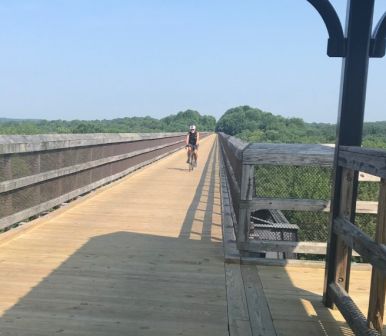
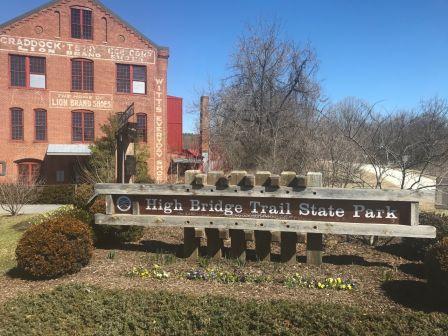
I ate slowly, savoring every mouthful. The honey-baked ham was spicy and delicious. It needed long draughts of water to wash it down. The cheese and the potato were my meal for the week and I consumed it steadily, without any diminishment of appetite. I was sorry to have to skip the cafè après le dîner but it wasn't offered. When all the food was gone I was as gorged as a Strasbourg goose. I would have gotten a picture of my plate but I was too absorbed in eating that I forgot to take one. Right now, as I said the other day, I am working hard with a publisher to have Harry Sturz's classic book The Byzantine Text Type and New Testament Textual Criticism reprinted. We have asked for the rights from Harper-Collins and it's all in their hands. I don't ask you to do this very often, but if you could, would you perhaps pray for permission to be granted? I think every New Testament scholar, even those who disagree with Harry Sturz's position (and there are many of them), would agree that Sturz was a first-rate textual scholar whose views deserve to be heard. I'm hoping that patience will pay off in time. Recently a colleague of mine at school asked me if I was looking for work. You know, like a change of career. That's completely out of the question. I can only do one thing in life, and that's teach and write. As you know, in a few weeks I'll be experiencing a career "swerve" (I do not use the word "retirement" any more; I hate the word; it is so NOT in the Bible). The swerve will mean teaching two instead of three classes so it's not that big of a change. So here I am, just a normal guy who is trying to be patient and grateful that I can do anything at all. People say you can do and be anything you want. I've said that to people umpteen times. You know me. I'm the first person to chase down dreams. And for the most part, God has granted me success. I'm proud of that fact -- that I didn't allow a low self-image to keep me from pursuing God's plan for my life with 100 percent dedication. I've been good at it and the job has been fulfilling, but a new phase is ahead of me and I generally do poorly with transitions in life. Right now, the little things are the big things for me. Hugging on grandkids. Caring for the animals. Cutting grass. I also try to do a cheery thing for someone every day, whether that's sending an encouraging email/text or helping out a colleague or cleaning up the farm for our retreatants. It forces me to remember how blessed I am. The other day while I was running on the High Bridge Trail, I saw a teenage girl running. She was using a walker. Her legs were all shriveled up, and yet there she was, out running. The amount of people outside doing things and the people I've met on the trails have tripled since the Covid demon showed up. It brings both joy and gratitude. We HAVE to look at the small things. One for me is my granddaughter who is graduating from high school next year. I've been able to share with her my own experience of how radical a change it was for me when I left home to begin college and how God's sufficiency was there through it all. I am constantly telling the people in my life to focus on what really matters (not that I'm an expert in this by any means). Yes, trips have been cancelled -- I would have flown to Dallas, New Jersey, and Hawaii last year -- but they will come back. I'll continue to write and teach and farm and blog and travel. I get up and enjoy coffee with the Lord each and every morning. There are still things to appreciate in life. And there is still work to do. You just have to decide to do them. 11:54 AM A magnificently clear day for running in southern Virginia.
A nice and easy out and back.
Managed almost 8 miles before getting back to my car.
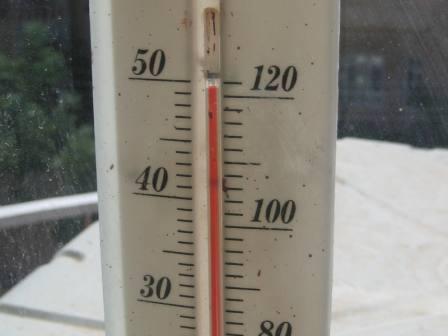
Honestly, conditions were pretty brutal. The humidity was off the charts. The risk of overheating while running in humidity is higher because the body is working harder to cool itself off. Thankfully I had 20 oz. of water with me and I did just fine. Just for fun -- here's a pic I took of the temp in Iraq after it had cooled down at night. At least it's a dry heat over there.
Time for chores. Thursday, July 8 5:50 PM Question of the Day: What do all of these products have in common?
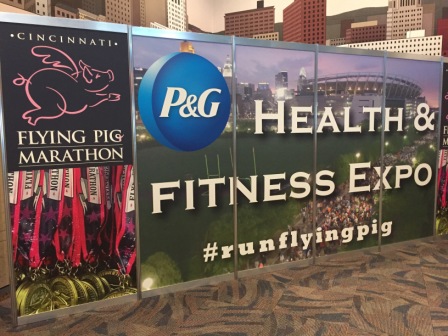
If you guessed Proctor & Gamble, you guessed right. I mention this because I noticed that P & G is sponsoring my next marathon, the Flying Pig, in Cincinnati on Oct. 31st.
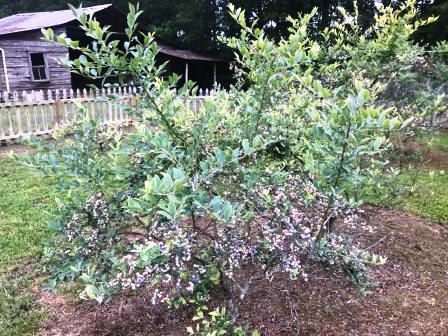
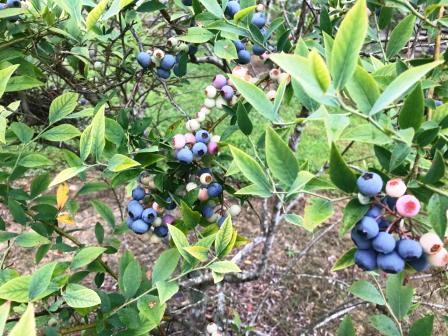
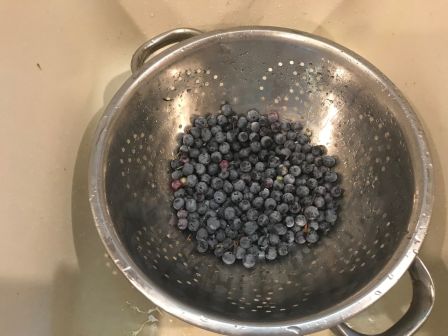
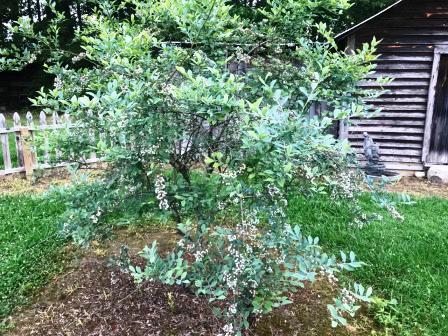
If you've ever been to a marathon expo, you know that the sponsors are there pre-event, at the event, and post-event. That's because they're not stupid. Today's runners are a highly educated lot. 79 percent of us have at least a college degree (compared with only 27 percent of the U.S. population). 73 percent of runners report a household income of more than $75,000 (as compared to the national average of $52,000). They have credit cards, they fly, they eat out, and they spend money. Of course, you don't have to be wealthy or educated to be a runner. You just have to put on a pair of shoes and go. Anyone can become a runner as long as they're willing to take that first step. And if you want to run a marathon (which anyone can do), there are always local races you can enter. For me, that means Richmond, Raleigh, Durham, etc. -- all within an easy drive (with no hotel or air fair costs). Incidentally, did you know that 6 in 10 runners are female? Or that in the U.S., currently 50 million people run -- the largest total number in the world? That's about 20 percent of us. I hear that the Flying Pig will be packed with first time marathoners this year because so many of them started running as a way to cope with Covid. Less than 1 percent of the U.S. population has completed a marathon. Yet, according to Jeff Galloway, almost anyone can complete a marathon after 6 months of training if they use frequent walk breaks. Even if you're older like me, running promotes energy and confidence. Even the ability to perform everyday functions like getting out of bed and walking is better among runners than among non-runners. I started running after Becky died. It helped me get back on my feet. It gave me a constructive activity to focus on. It gave me goals to demonstrate to myself that I had recovered. Running is now a constant in my life. Many people probably think I run to lose weight. That's only a small reason why I run. Running helps me come to terms with difficulties and eventually let them go. Running has helped me in more ways than even those closest to me will ever know. Have I convinced you to run yet? Well, I did my best. 9:48 AM So glad the blueberries are coming in.
Thought I'd pick a few before the rain started.
I'll be munching on these amazing things all day.
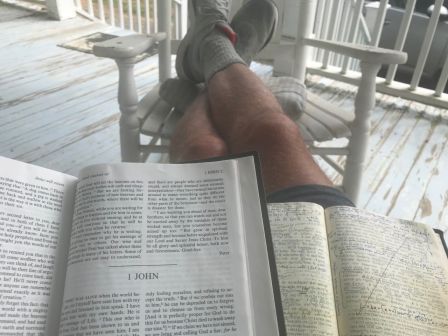
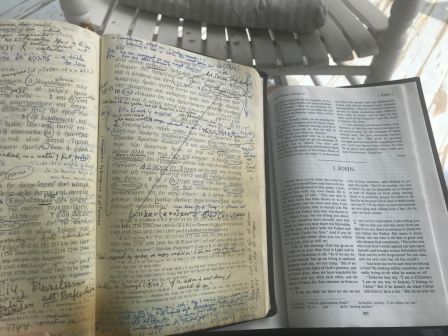
8:24 AM It's going down everybody. Elsa is supposed to hit us with 4-6 inches of rain today. I think we're ready. Fields are fertilized. Grass is cut. This will be a rest/writing day for me. My body is telling me it needs a break and I am listening. Excited about my training thus far. 50 miles in the books in July already. Last month the total was 150. P.S. My reading this morning was in 1 John.
I'll be teaching this letter in Greek 2 this fall. I think the opening prologue rivals that of Hebrews. Or is it "prolog"? Wednesday, July 7 6:05 PM On August 1st I begin writing a new chapter in my life as a post-fulltime academic. So it only seems fitting that I should announce that a major new change is coming to Dave Black Online. Care to guess what it is?
Is your curiosity piqued yet? Stay tuned. All I will say for now is, "Goodbye, Front Page!" P.S. Supper tonight. Maybe I'll open a restaurant.
4:46 PM Despite being the middle of the week and you've been at work and have midweek services tonight and whatnot, I'm sure all you've been thinking about is how my ride went today. I was very pleased with how the tweaks Rob made to the bike yesterday worked out on today's ride.
I finally feel like I'm in sync with the bike to the point where I can ride easily with no hands on the handlebars -- a good sign of optimum balance. My main goal right now is to avoid pain in my okole (pardon the Hawaiian). I often develop a significant discomfort in my pelvic floor after riding 30-40 miles. Getting my posture "reset" I think will make a big difference going forward. Padded shorts help but correct posture is going to help even more. Praise the Lord.
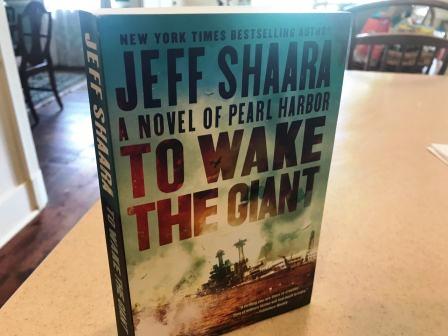
When I got home, Jeff Shaara's latest was awaiting me. Oh my. I was hoping he'd write a historical novel on this subject.
Happy Wednesday to all. 7:20 AM Yesterday, as you will recall, I had a bike fit done at The Bike Guy. It's always a good idea to let an expert fit your bike to your body. We all have certain blind spots and sometimes we are more concerned with how we "look" on the bike than on a proper fit. Yesterday Rob started at the foot and then worked his way up the kinetic chain. Each body segment affects your ride as you move up that chain. Yesterday Rob made two minor adjustments -- he raised the handlebars and raised the saddle. Sure, it cost me 40 bucks for a new handlebar stem, but that's money well spent if it works. The main goal today is to see if this new fit relieves the heavy weight and pressure on my hands and arms while riding. If it doesn't, I'll be hanging up the bike for good. Not really. Some things take time, and I'm going to be patient until we get this right. Rob also taught me about 10 more possible hand positions that I can use while riding to alleviate the pressure on my hands and wrists. So we'll see. Report later today. 6:55 AM Good morning internet fam! My reading this morning was in Philippians 4. I love this verse (4:5):
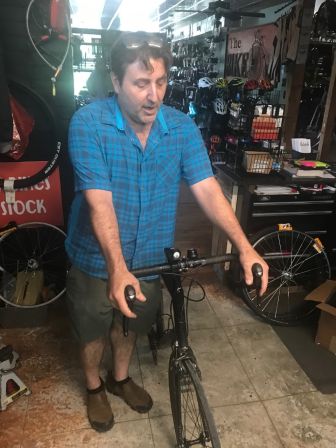
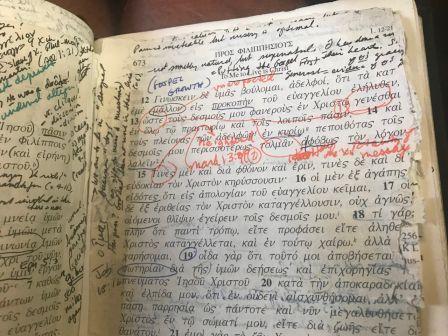
This is from The Living Bible, as opposed to the Dead Bible. Actually, if you haven't used this paraphrase, you should. Here Paul is telling it like it is. When there are problems in the church (or in your personal life), it's so easy to be the opposite of unselfish and considerate. See 4:2-3, where two ladies named Euodia and Syntyche were at loggerheads. The change is never a sudden thing. It begins gradually -- perhaps when one person wrongs another -- and then escalates until love is just a faded memory. This is especially true of married couples after the rosy glow has faded. If your love for your spouse is based on warm feelings, a mere change in mood will lead to disaster. Putting the other spouse first (see Phil. 2:3-4) enables you to complete the difficult race of marriage and enjoy the reward God promises to those who fulfill their vow -- "till death do us part." There is a difference between unselfishness and insecurity. We don't ignore the problems that exist. It's just that we don't sweat the small stuff. Jesus never imparted cheap grace. But he wasn't pushy either. One of the great things about turning 69 is you know who you are. You're "comfortable in your own skin." (I just made that up. Like it?) If people don't like it, well that's the way it is. You know what you love, what you're good at (and lousy at), what your values are (and they may not be shared by others, even those closest to you), and what you want to do with your life. You are free to be you without the constant comparison that dogged you in your younger years. And you are happy to let other people be who they are. Hendricksen translates this verse as "Let your bigheartedness be known to all men." Good advice for a man who is over 3/4ths done here on earth. Aging has tempered my fear and arrogance (though it hasn't eradicated either. Rats!). I am content to be me and content for you to be you. My prayer is that any Euodias and Syntyches out there will learn this lesson before it's too late. Tuesday, July 6 7:14 PM "In ministry." Church, we get this so wrong. "This conference is for people in ministry." "How long have you been in ministry?" "If you're in ministry, be sure to attend this seminar." Or how about this one: Using New Testament Greek in Ministry. Oh my! I wrote that book! The fact is, every follower of Jesus is in ministry. Those who waited on tables in Acts 6 were in ministry. Those who separated themselves unto the word and prayer were in ministry. Both are called a diakonia, "ministry," by Luke. They are simply different ways of serving God. Remember this: No matter how our Christian subculture (including yours truly) has misused the term, "in ministry" is not only for pastors. Rob, here, is a good example.
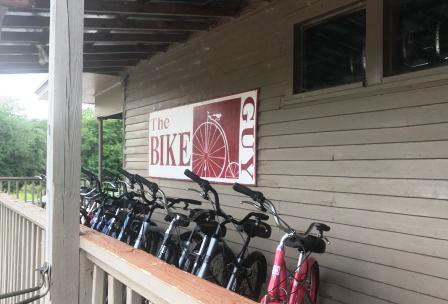
He's the owner of "The Bike Guy," a cycling store in Wake Forest.
Today he helped me with a saddle and handlebars adjustment. Years ago, when I bought this bike from him, I learned that he had taken classes with me at the seminary. Eventually he graduated with his M.Div. degree. "What did you do after that?", I asked. "I went into ministry," he replied, adding, "I opened my bike shop." Gasp. This guy gets it I thought to myself. Because we are all followers of Jesus, we are all ministers. Is this to minimize pastoral ministry? No. It is, rather, to ennoble whatever ministry God has called you to, be it pastoring or opening a bike store. So maybe, just maybe, we can begin to use the correct terminology. And if this seems too big of a step, come to my farm for one afternoon and watch how "hay ministry" takes place. John Stott, in his book The Living Church, writes, "We do a great disservice to the church whenever we refer to the pastorate as 'the' ministry. For if we use the definite article, we give the impression that we think the pastorate is the only ministry there is. I repented of this decades ago, and invite my readers to join me in penitence today." Sackcloth and ashes, anyone? 6:22 AM One of the best parts about running is that we runners always have a sense of community, even when we're running alone. It's not unusual for us to acknowledge other runners as we pass them on the trail or during a race. I always try to at least make eye contact with my fellow runners. Often a simple greeting is exchanged. The other day, while running at the High Bridge Trail, there were a lot of "Good mornings," though a couple of times I heard a "Good moanin" instead. One runner even had a New York accent. Didn't matter, we were all out there crushing it. Of course, there are variants on "Good Morning." Toward the end of a run, a nod and a smile might have to suffice. When you've begun to get really tired, a wave of the hand is about all you can muster (wave of the hand = wassup, this is really hard). Experts call this "phatic communication." Often called "small talk," the purpose is to establish a mood of sociability rather than to communicate information. At your office today, why not try a "nod"? It might come in the disguise of spending a couple of extra minutes sharing pleasantries in the office before going to your desk. "How was your Fourth of July weekend?" is another form of a nod. We may work alone, but the community we're connected to is a large part of what keeps us on track. Good morning!
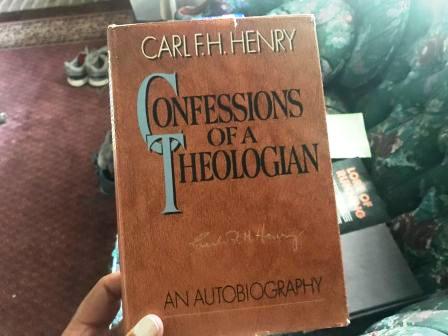
Monday, July 5 5:25 PM Here's today's issue of "Currently ...": 1) Reading: This book by Carl Henry.
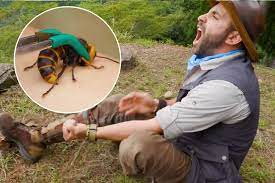
Person after person has been telling me I should read this book. Not. I doubt if any of you have ever heard of the man. But you should get to know him. Anybody who says the Bible is "my most read book" has got to be okay. So far it's great. 2) Watching: Gettysburg 158 -- YouTube videos from the recent commemoration of the battle. They are produced by the American Battlefield Trust. If you're interested in that series, you can view them here. 3) Writing: The next chapter in my book Godworld. This one is called "The Emotions of the Kingdom" and in it I'm discussing what the New Testament teaches about the 6 basic human emotions (sadness, happiness, fear, anger, surprise, disgust). Just so you know, this isn't a purely academic study. Like you, I experience all of these emotions, some more than others. What are the boundaries? Ah, that is the question. 4) Recovering from: A hornet sting while mowing the lawn today. I thought I'd stage a reenactment and take a selfie, but this photo will have to do.
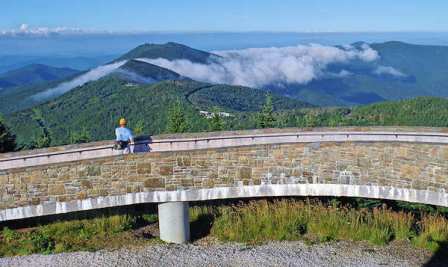
5) Planning: A trip to Wake Forest tomorrow. So far I've got three things on my agenda -- meet with my retirement advisor, watch my assistant design a new website for me, and enjoy an hour-and-a-half-long therapeutic sports massage. 6) Anticipating: Climbing Mount Mitchell -- the highest peak east of the Mississippi.
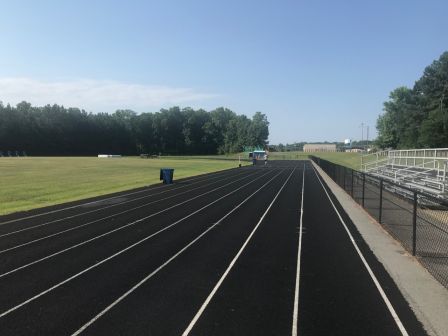
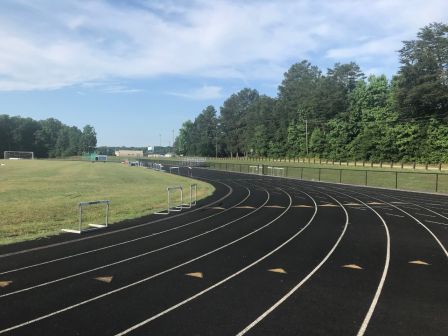
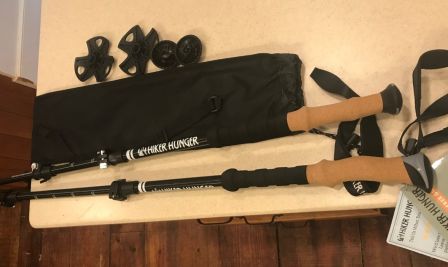
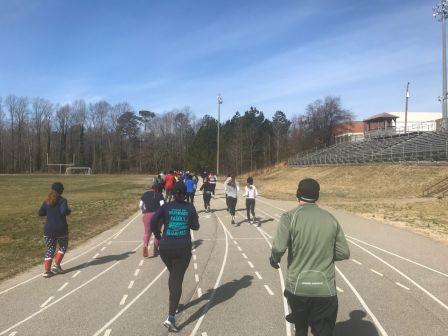
It's in western North Carolina. This mountain has been on my bucket list forever. I need to try out my new hiking poles and I also want to see how my Altra running shoes work as hiking footwear. If the weather holds up I might give it a go this week. 7) Enjoying: The benefits of a 4 mile recovery walk/run today at the high school track after yesterday's half marathon workout.
This is called "active recovery" and helps maintain cardiovascular fitness. Or so I'm told. There you have it. What have you been up to? Reminder: Life is short. Take in every minute of it with people you love and with activities you enjoy. I'll try and do the same. 11:22 AM In my 44-year career as a student and teacher of the New Testament, I think I've probably been called an iconoclast more than once. The moniker probably fits. An iconoclast is "a person who attacks cherished beliefs or institutions." I well recall the first time I heard that word applied to a New Testament scholar. William Farmer was a long-time professor of New Testament at Perkins School of Theology in Dallas. Following in the steps of J. J. Griesbach, he defended, not Markan priority (the long-held consensus), but Matthean priority, basing his studies on all of the evidence, including the eternal evidence provided by the earliest scholars of the church.
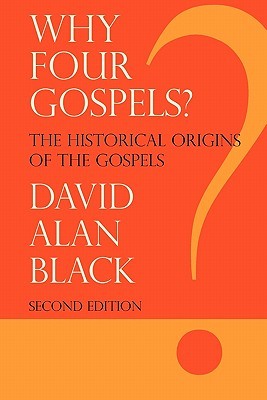
Upon reading his works, and that of his colleague Bernard Orchard, I began to revisit the matter for myself. I then began to teach Matthean priority, not because Farmer and Orchard held to that view, but because of my own work in the primary data provided by the patristic testimony. Since this testimony is available to us only in the original Greek and Latin, I spent 10 days in one of the world's leading patristics libraries in West London and retranslated the Greek and Latin fathers into English (see chapter two of my book Why Four Gospels? The Historical Origins of the Gospels). At about the same time, I became convinced that Dr. Harry Sturz's view of the Byzantine text type as being neither primary nor secondary best fit the data provided by both the external and internal evidence.
The result? I, for want of a better word, became an iconoclast in the mold of a Bill Farmer or a Harry Sturz. I never set out to be one. I just ended up one because the data didn't match what was being taught by the general New Testament establishment. You go where the science takes you. Example: Read almost any New Testament introduction and you will see that its discussion of the authorship of Hebrews does basically three things: 1) dismisses Paul as author; 2) suggests alternative possibilities, and 3) concludes by taking an agnostic position on the matter. Almost invariably this third step is accompanied by the words of the church father Origen, who famously said about Hebrews, "Who wrote the epistle, God only knows." For years this too was my approach to the topic of the authorship of Hebrews. But when I began to study the primary data for myself (I went to the library and actually read the works of Origin), I discovered that Origin was referring, not to the author of Hebrews -- Origen consistently quotes Hebrews as Paul's -- but to the penman (or amanuensis, or stenographer) of the letter. I included this data in the appendix to my book The Authorship of Hebrews: The Case for Paul. Incidentally, I sometimes ask my New Testament students a "trick" question: "Who wrote Romans?" When they answer "Paul," I take them to Rom. 16:22, where we read these words: "I, Tertius, who wrote this epistle, greet you in the Lord." Interestingly, in both this verse and Origen's statement, the identical Greek words appear: ho grapsas. The meaning in both places is unmistakable: "who wrote it down." Thus, to the question "Who wrote Romans?", the only possible answer is "Tertius." But that fact is almost irrelevant: the only thing that really matters is authorship, and Paul was the author. Likewise, Origen didn't know who the penman of Hebrews was, though he speculated that it may have been either Luke or Clement (of Rome). In the end, though, what did it matter? It's enough for God to know the identity of the writer. The author is Paul. Oliver Wendell Holmes once said, "Rough work, iconoclasm, but the only way to get at truth." I'm grateful for the two iconoclasts in my life who set me on a trajectory that, if nothing else, has been great fun.
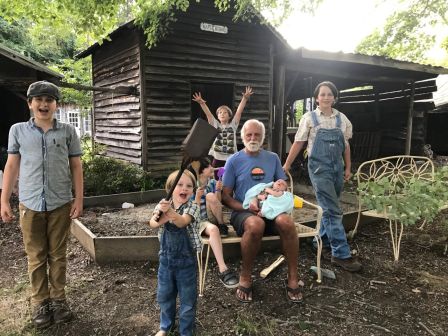
Sunday, July 4 8:30 PM My son's farm is called My 6 Sons Farm. Hmm. Wonder why.
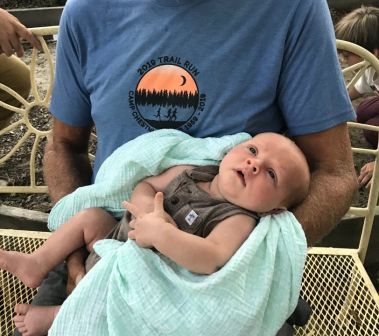
Ira James Black. Ain't he a cutie pie?
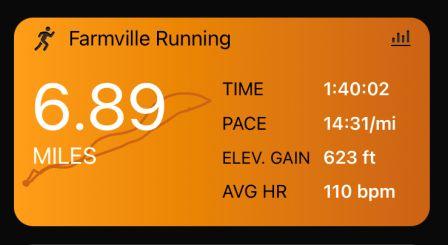
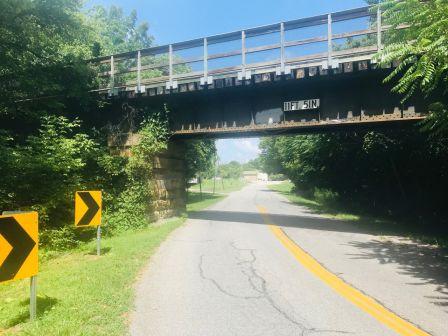
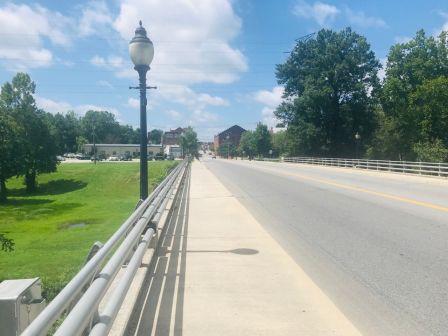
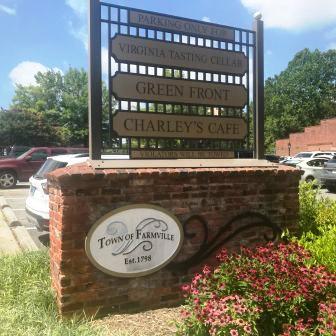
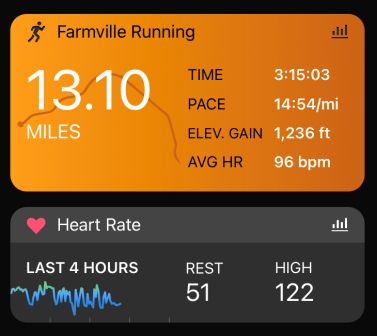
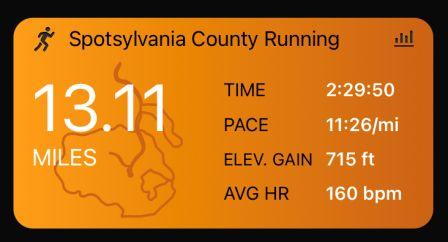
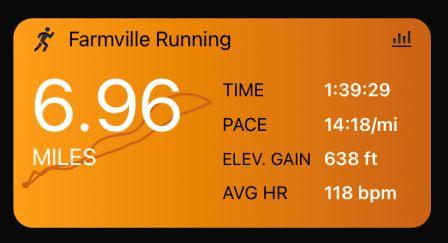
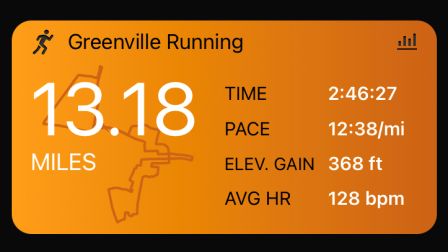
They are off to watch the fireworks in town once they milk their goats. I'm off to watch A Capital Fourth on YouTube. Here's to a great holiday for all of my readers, friends, and their families. 2:38 PM How's your day going? Splendid over here. I did a half marathon run today. And yes, here are the perfunctory pictures of... Farmville:
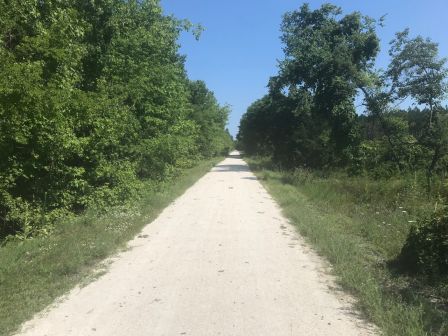
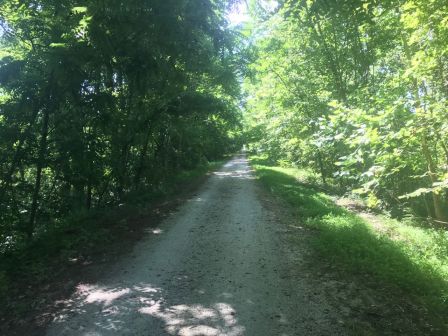
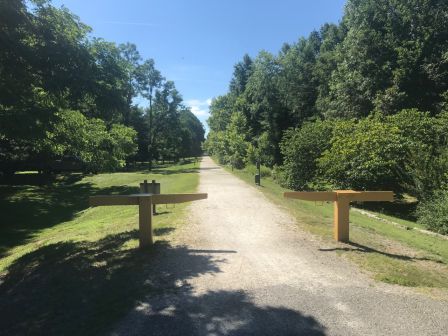
The trail:
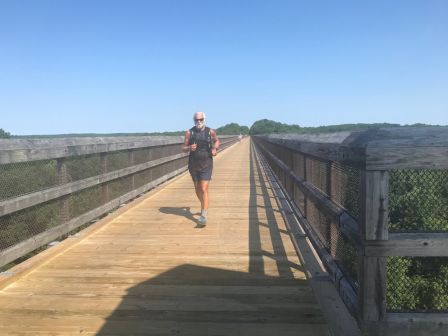
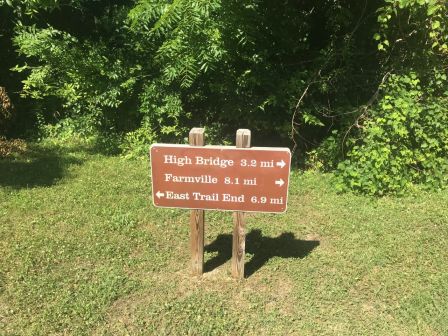
The bridge:
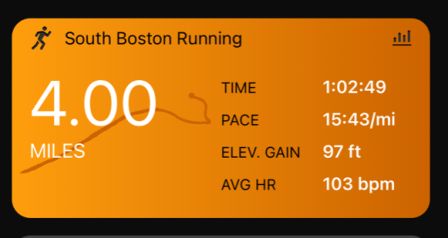
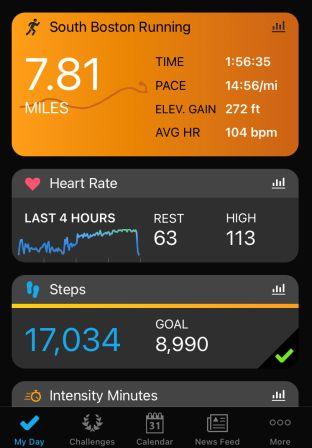
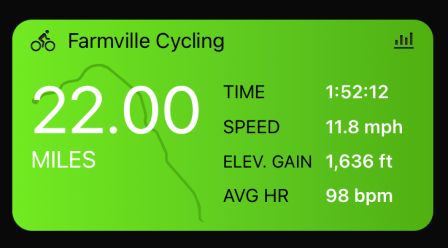
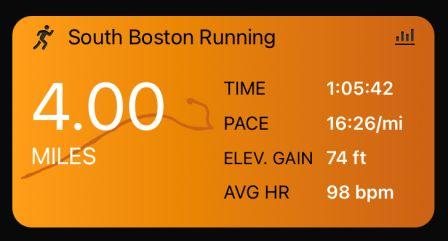
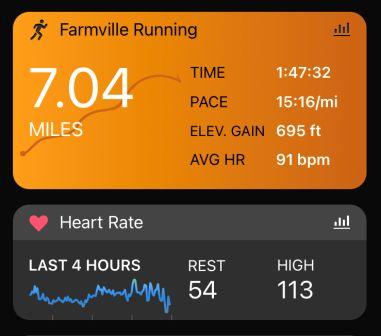
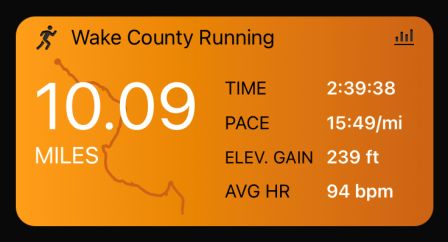
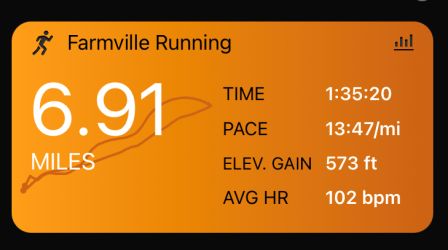
And my miles:
I know that for some of you these kinds of posts are boring. I get that. But I can never see things that way. I can never take for granted the ability to get out of bed, jump in the car, and drive anywhere I want and do anything I wish. I can never take for granted the beautiful outdoors and the way nature refreshes my spirit. I can never take for granted asking my body if it would give me 13.1 miles and it tell me, "Be glad to." I can never take for granted living in a nation where attending church is legal. I can never take for granted publishing a website and not having to be afraid that the government will shut it down. I am a free man living in a free nation serving a God of liberty. I can even exercise my freedom in such a way as to curtail it. Liberty is not license. I cannot read the Bible and then say, "No, I disagree. I will do what I want to do." I know this isn't a particularly cosmic thought. But this morning as I drove to Farmville I experienced a small moment of unexpected joy when I realized anew that I live in a free nation. And in that moment I realized that freedom makes a difference. 7:20 AM Good morning everyone and Happy Fourth! My morning Bible reading today was in Romans 12.
Can't we just let posturing continue? No, says Paul. Posturing creates nice, fake relationships. It's not what we say that counts. It's what we do. Presenting a fake life to others produces "insincere love" (verse 9). It's far better to be real. This includes the career path I chose for myself 44 years ago. Paul says so himself. "If your gift is that of serving others, serve them well. If you are a teacher, do a good job of teaching" (verse 7). Do a good job of teaching. Jesus doesn't require perfection from us teachers. But he does require that we do our very best. When I think of excellence in teaching, I think of Dr. Bill Bynum. He headed the Education Department at Biola while I was there. He was the best teacher I have ever had. Busy-work in classes? Not a drop. Personalized attention? Whenever you needed it. He was always there for his students. His office door was always open. He would grade your essay exam (no silly fill-in-the-blanks or multiple guess questions for him!) and then write on it something like: "Great work, Dave! I'll take a dozen just like you!" The year I began teaching Greek, I took two classes with Dr. Bynum: College Teaching Procedures, and Tests and Measurements. I soaked up the content. Teachers are born, not made. But even a naturally gifted teacher can improve their craft. The one thing a teacher must never be is boring. "There's no such thing as a boring teacher," said Bill Bynum. "If he's boring, he's not a teacher." (Incidentally, for you preacher types out there, last week in his message Chuck Swindoll called out all the boring preachers he's heard through the years. He wondered out loud, "How in the world can anybody make the Bible boring?" Yet I've sat through far more boring sermons in my lifetime than interesting ones.) Here in Romans 12, I think Paul tells us what a good teacher looks like. He doesn't do this directly but through inference. Let me share with you 4 such characteristics I find here: 1) Good teachers love their students. "Don't just pretend that you love others: really love them .... Love each other with brotherly affection and take delight in honoring each other" (Rom. 12:9-10). Do your students know that you love them ? Do you say to them in class, "I love you"? Do you treat them with kindness and respect? 2) Good teachers reach out. "When God's children are in need, you be the one to help them" (Rom. 12:13). Do your students know you are accessible? Do you have an open door policy? Can they contact you easily and will they get a response within 24 hours? 3) Good teachers are humble. "Don't try to act big. Don't try to get into the good graces of important people, but enjoy the company of ordinary folks. And don't think you know it all!" (Rom. 12:16). The longer I'm a teacher, the less I know. Even views I do hold I hold with fear and trepidation, knowing that I may be wrong. Do your students see in you a humble, teachable person? 4) Finally, good teachers work hard. "Never be lazy in your work but serve the Lord enthusiastically" (Rom. 12:11). Elton Trueblood once said, "Holy shoddy is still shoddy." I am probably the laziest person on the plant by nature. Sloth comes easily to me. Jesus deserves better than that. Do your students see in you a slothful or diligent teacher? Again, perfection is not required. What is required is being the same person on the outside as we are on the inside. People know a good teacher when they see one. They can sense a fraud a mile away. Don't try and fake it. That never works. Saturday, July 3 5:50 PM Today, as I continue my series "Reminiscences of a 44-Year Teaching Career" (I just made that title up; aren't I clever?), I wanted to show you a picture I've never before posted here on my blog.
Recognize this girl? Yep. It's Becky Lynn Lapsley. She had left her home in Dallas to study nursing at Biola. I had left Hawaii to study Bible. Becky had determined before the Lord that she would remain single -- at least she would never date one of those stuck up Bible majors -- and then serve on the international mission field as a nurse. I had determined before the Lord to -- well, the truth is, I pretty much had lost my way. I knew only one thing: I wanted to study the word of God. Let him tell me what to do with the degree after I graduated! Prior to meeting Becky in the cafeteria line at Biola I had dated only one other girt in my life. We had gone together for 3 years in high school. We both played in the band. She lived one beach over from me. (Kailua boy meets Waimanalo girl.) We both ended up at Biola. I knew I was going to marry her some day. Alas, she had other plans. My 19-year old mind couldn't grasp what was happening. What I was going through didn't seem fair. She was the one person I loved more than anyone in the world. My heart felt like it was going to explode. As I tried to process what I was feeling, I turned to the Bible. At that moment I came to the realization that if God was sovereign (and he was and he is), not only would I get past this breakup but he would provide a wife for me in his own good time. Then I met Becky. Marriage is the essence of the unknown transforming into the known. There's always as much potential in marriage for disaster as there is for happiness, as much chance for misery as there is for elation, as much potential for heartbreak as there is for triumph. Without having the slightest idea of what I was getting myself into, I asked Becky out for a date. Believe it or not, I took her to Huntington Beach to watch 5 Summer Stories, a film about surfing in Hawaii.
It must have been pure torture for Becky, for all it showed was wave after wave after wave. Despite that, Becky said yes when I asked her out again. We started spending more time together. Heck, we began spending all of our free time together between jobs and studies. I saw in Becky Lynn Lapsley someone special. I had never met a more selfless, giving, compassionate, smart, godly person. I loved how she was quick to laugh, quick to joke, quick to smile, and quick to serve (she typed my term papers for me). Eventually we realized that we were meant for each other, and our pastor at the College Church in La Mirada flew to Dallas to marry us. My father had left our family when I was 3 and so I felt at a loss as to how to be a husband (and later a father). But I knew something for certain. When I said, "Till death do us part," I meant it with all my heart. Becky and I were married for 37 years. When she died from cancer I knew one thing: marriage gives you a crash course in gratitude, patience, perseverance, and the rewarding feeling of knowing you have pushed through walls and come out victorious on the other side. Sometimes when I'm alone on the trails I can feel Becky beside me. I'd like to think that she has joined me on those trails since she passed away. I imagine her breathing the same fresh air, adoring the same Creator, and feeling the same elation. Those are the moments when I feel like Heaven has touched earth and I am one in memory with the bride of my youth. My career would never have happened without Becky Lynn Lapsley Black. Together we found the work we were meant to do. Together we found God in all the ordinary and mundane and even ugly aspects of life, in all the places we lived, in all the mission trips we made together.
There isn't a hero in this story. Our marriage was simply a testimony to the goodness and grace and forgiveness and faithfulness of our God. My friend, if that was true for two misfits like Becky and me, it's true for you. You hold in your wedded hands the pain and brilliance of marriage, the complexity and the simplicity, the promise and the hope. The battle of marriage is already won, as Jesus said ("I have overcome the world"). Let us, then, lift up our heads from despair and receive from him the gift of perseverance and renewal. 1:44 PM I had three goals going into today's 5K in Cary. 1) Start out at the back of the pack (as usual) and then see how many runners I could slowly reel in during the race. There were 127 competitors in today's event. How would I fare against the competition?
2) See how my Altra Lone Peak 5s would hold up, especially in the muddier sections of the course. 3) Come in under 30 minutes. Would this be possible on such a hilly cross country course?
I love these events. I see them all as great opportunities to challenge yourself. I never once looked at my Garmin watch today while out on the course. I ran by effort, not pace. So what happened? 1) Out of the 127 participants in today's race, I came in #89 -- confirming my status as a mid- to back-of-the-packer. 2) My shoes crushed it. While other runners were having to slow down through the muddy and wet sections of the course, I could keep right on trucking along because of the amazing grip my outsoles were providing. Thank you, Altra! 3) As for my finish time, the hills won. I didn't even come close to finishing in under 30 minutes, even though I caught and passed other runners, especially on the hills.
When I had only about a half mile to go I set my sights on passing these two high school girls.
Somehow I pulled it off, only to be passed by one of them near the finish line. Yes, this morning we were all RACING! Today I was reminded of the importance of discipline in life. God disciplines us. That's one reason we're called disciples. The highest form of love is to train ourselves to do what is right and good while our own fleshly desires are battling for control. God simply loves us too much to let us get away with undisciplined lives. Love compels him to intervene when we disobey his laws. "We all have human fathers who disciplined us and we respected them for it. How much more should we submit to the Father of our spirits and live!" Unpleasant and painful doesn't necessarily mean bad. Discipline simply means having higher standards for yourself -- and others. Hopefully our children will see through our example that discipline and obedience pays off. Let your discipline, drive, determination, and utter dependence on God speak volumes to your kids. Set some goals and give it a go. No one outruns aging. But you can always improve. Friday, July 2 4:32 PM Robert Lustig's book The Hacking of the American Mind came yesterday.
On pages 9-10 he discusses the differences between "reward" and "contentment." May I share them with you? 1. Reward is short-lived; contentment is long-term. 2. Reward is excitement; contentment is calming. 3. Reward is achievable through substance use (some legal, some not legal); contentment is not achievable through substance use but is achieved with deeds and accomplishments. 4. Reward occurs with taking; contentment is generated through giving. 5. Reward is yours and yours alone; contentment can impact other people and even society at large. 6. Unchecked reward can lead to misery; contentment keeps us from being miserable in the first place. 7. Reward is driven by dopamine; contentment is driven by serotonin. There is a two-way movement here. The temporal versus the eternal. The physical versus the spiritual. The self versus others. God blesses us in the moment. But we are all headed for a Grand Tomorrow. In fact, the night is far spent and the day is at hand. We await the sunrise because we are looking for the Son to appear. The thing is, Jesus is with us both in the Today and in the Tomorrow, both in our temporary rewards and in our hopeful contentment. Either way, Christ is what really matters and everything else is judged by him. Either way, his grace is sufficient. Well did Spurgeon say that a fish might fret about enough water in the sea before a Christian need be bothered over the sufficiency of God's grace. Grace to you, my friend. No matter what ephemeral rewards you receive or don't receive. No matter if contentment is a present reality in your life or only a prospective reality. What was provided for the apostle Paul is available to any and all saints: "My grace is sufficient for you." Now that's contentment. 3:30 PM My former assistant and I met today in Henderson, NC, to discuss my forthcoming book How to Make the New Testament Come Alive!
Abidan Shah is an elder at Clearview Church and the host of the podcast Hoi Polloi. This is the 6th interview I've done with him. (Go here for the others.) He also invited me to teach a New Testament class at Clearview in the spring of 2022 as well as speak at their Apologetics Conference in the fall of same. Yes, and yes! Abidan is the author of an excellent book that has already elicited a number of reviews in such prestigious journals as the Expository Times.
We also decided today to see Harry Sturz's classic book The Byzantine Text-Type and New Testament Textual Criticism back into print.
I spoke today with a publisher who is definitely interested in helping us do this. Stay tuned for more details. 8:44 AM Meet the Wake Med Soccer Park in Cary, NC.
This is where I ran my first race -- a 5K with my daughter. Since then, I've run dozens of races here, each time for a different charity. Tomorrow's 5K is called Run for Liberty. All profits will go to the Amputee Coalition of America, the nation's leading organization on limb loss. Come and join us at 8:30 if you can. You can register here. Great cause! 6:50 AM When I arrived in La Mirada, Bill Carden was the Dean of Students. For some crazy reason he took a liking to me. It was he who arranged for me to attend Biola even though my high school grades weren't exactly stellar. Peggy Russell was the head of Financial Aid. Together with Bill Carden, she worked tirelessly to secure for me scholarship aid. By the time I became a junior I was receiving a full tuition scholarship based on my grade point average. This scholarship came from a donor who wanted to remain anonymous. As I look back, I see how God brought all three of these individuals into my life at just the right time. Even though I worked in the college cafeteria to support myself, there was no way I could have attended Biola and then Talbot without a scholarship. Living the Christian life goes far beyond the "what," "when," and "how." It hinges on the "who" of the people God brings into our lives. It's about people who intentionally and sacrificially live out the gospel wherever they are. For those of us who are older, it's about seeing the potential in every young person God brings into our lives and calling out that potential. Because of these people, my life was interrupted and changed forever. Without them, there would have been no B.A. degree or M.Div. degree or D.Theol. degree. Biola was the family of my dreams. It was the right place at the right time for this island boy. God has enriched my life with thousands of likeminded people through the years. I dare say that in your own life there is a great cloud of witnesses bearing the same weight. God loves us more than we ever dared to hope, and he does so through people. Thursday, July 1 5:30 PM Since this is the month of July -- the last month I will enjoy as a fulltime teacher before retiring on July 31st -- I thought I'd share a few personal reflections on a 44-year career that has been both richly rewarding and surprisingly happy. Dr. Harry Sturz -- I'll begin with him. You've probably never heard the name. Dr. Sturz was the head of the Greek Department at Biola when I arrived there as a freshman in 1971. I ended up taking him for first year Greek when I was a graduating senior -- and promptly dropping the class. Greek was far beyond the ability of a kid from a beach in Hawaii. Or so I thought. When I heard that Moody Bible Institute in Chicago offered a very simple correspondence course in Greek (taught on a level than even a dumb kid like me could learn it), I enrolled in Greek 1 and 2, aced both classes, and a year later Dr. Sturz hired me to teach Greek at Biola at the ripe old age of 24. It was a "chance" opportunity but one that changed the course of my life. Dr. Sturz devoted his entire life to teaching Greek. He was committed with a capital C and refused to let anything interfere with his strict teaching and mentoring regimen. I'd never known anyone to work that hard for anything, least of all for peons like me. I was amazed by his drive and maturity. I was in awe that he knew what he wanted out of life and that he was determined to make the Greek Department at Biola the finest in the land. Before long, he had taken me under his wings. He must have seen potential in me, because I certainly didn't see any potential in myself. He was responsible for completely changing my study habits. I got to know the beauty of the Greek language through his instruction. He was a kind and paternal man who cared deeply for his students. He infected us with his passion for Greek. He managed to get more out of me than anybody else had in my life. I was the kind of kid who was always making excuses not to do my best. But I liked Harry Sturz and was willing to work for him. He showed interest in me. That meant so much. When you're young, you're always looking for someone who believes in you. Dr. Sturz thought I showed real potential as a teacher. He would never chastise me or pressure me to be someone I wasn't, but would always say things like, "You'd be a good teacher if you ever became serious about it." And I did become serious. First my teacher and then my colleague, Harry Sturz became one of the most important people in my life then or now. I've never known anyone who worked so hard, loved so deeply, or cared so genuinely. I cannot imagine being where I am today without him. 1:10 PM This morning, after grabbing some breakfast, I drove to the Eno River State park to run on one of its trails. I chose the Cox Mountain Trail.
This trail is located in the western part of the park. It's a loop trail and is about 3.75 miles round trip. If you're looking for a longer run or hike, the park offers a total of 14.2 miles of trails along the Eno River.
There's no cost for parking though there's a fee if you plan on camping in one of their wilderness campsites.
Trail maps are provided by the friendly park rangers. One of the things I noticed about this park is that its trails are both well marked and well maintained. At every intersection there's a brown sign with white lettering and along the trail there are blue blazes. I really enjoyed the run today. The trail was dry and in great shape. One of the neatest things about this park is the pedestrian suspension bridge you cross before hitting the trails.
There's plenty of shade along the trail, but that doesn't mean you won't sweat. I was sopping wet by the time I finished my run. The first part of the Cox Mountain Trail is uphill, while the final part of the trail is mostly flat or downhill.
Of course, it being North Carolina, there were rocks and roots everywhere. Way too many of them for my liking.
I did trip and fall once, but I did it gracefully and ended up in that table top pose from yoga. Have you ever done that?
(Note to self: If you take your mind off of what you're doing for only a split second while trail running, be prepared to suffer the consequences.)
In total, my run was just over 4 miles, but I definitely felt these miles were harder earned than the ones I get when I run on a flat surface. It's runs like today that remind me why I love being outdoors so much: the simplicity of it, the grandeur of it, and the challenging quality of it.
Keep taking risks, friends. Continue to do what makes you uncomfortable. Feel that fear and do it anyway. Wednesday, June 30 7:52 PM Over the years I've discovered something interesting about myself. I get stuck in a rut easily. Sure, I try new things, but I end up usually going back to what is normal and routine. Today's ride at the High Bridge Trail is something of a combination of new and old.
The old is -- well -- it's the High Bridge Trail. The new is that this is the first time I biked it with my road bike. I have to say that my tires held up extremely well for being on crushed gravel. Crushed limestone is not nearly as good a surface as asphalt or concrete to bike on.
However, I didn't find the ride quality or the traction to be a problem with my road tires, but neither would I consider their performance ideal. Thankfully, most of the trail was dry and hard.
No ruts, nothing hidden by leaves.
I was expecting to find occasional sections with washboard due to rain, which would have been tough.
My main fear was a broken spoke, but both of my wheels survived the outing without any surprises. I don't plan to ride this trail often with my road bike, but as I had always wanted to see what it was like, I decided today was the day.
Tonight I'm working on my book Godworld and in particular on the chapter dealing with marriage ethics -- marriage, singleness, divorce, and remarriage. I have exegeted all the texts (Matt. 5, Matt. 19, Luke 16, Mark 10, 1 Cor. 7, Rom. 7. etc) and feel comfortable with my view (no remarriage unless the first spouse has died). Tonight I'm going to watch John Piper's YouTubes on the subject as I hear he holds to the same view. Then I will check out those who hold to contrary opinions. Oh, one more takeaway from Robert Lustig's excellent book Metabolical. Part 1 is perhaps the best section of the book. It's called "Debunking 'Modern Medicine'." Here he describes what doctors were taught about nutrition in medical school and how they need to "unlearn" most of it. Writing about "The Clinician's Conundrum," he says:
He adds:
Finally:
I suppose "group think" is a problem no matter what the field is. I see a similar thing happening in biblical education. For many years I taught views in the classroom that today I disagree with but I taught them simply because it was what I had been taught in seminary. Since then I've learned how to challenge the consensus opinion (hopefully in a scholarly and polite manner) and have even tried to publish my findings so that others might benefit from them (or try and shoot them down, as the case may be). Next year I'll be giving a lectureship abroad on what I'm calling "Myths and Mistakes in New Testament Interpretation." The current bucket list (I reserve the right to modify these) include:
Can you imagine how lively our sessions are going to be? Of course, I won't insist that I am right in these areas of interpretation. I may be wrong! But I WILL present both sides. And my main goal? Not to get people to agree with me. Quite the contrary. The goal is to get people to THINK for themselves. Wish me luck! The great Mark Twain once said, "Education is mainly what we have unlearned." That's hyperbole, of course, but there's a whole lot of truth to it. 7:55 AM Time to get down to business, folks. As you can probably tell, I love training, I love exerting effort, I love getting in the miles for my next race. I also just love jumping on my bike and letting her roll. Today's goal? Get in a few miles on the High Bridge Trail. Cross training allows you to get stronger and fitter across the board. "Train like a triathlete" is my new mantra. But since the pools are still closed, the only other option I have for now is cycling. Since I started cycling a few years ago, my appreciation for this sport has skyrocketed. Now, when I finish a ride, my body feels loose and content. It tells me it appreciates the fact that I got off my feet for a change. Yes, it's time to do the business, everyone.
Tuesday, June 29 7:40 PM I had an easy afternoon of reading, trying to digest all the information in Robert Lustig's new book Metabolical.
The author's goal is to debunk the myths and lies we've been fed by the food and pharma industries. Among his points:
I am not mentioning all of this to make it easier for you to fit into your skinny jeans. I am referring to a way to improve your health and make you more fit and energetic so that you can do whatever the Lord is leading you to do with your life. I love the fact that this book makes sense and promotes healthy eating. But it has to be a long-term commitment. I feel so much better when I am kind to my body and fuel it this way. Most healthy eating plans call for the same thing: more color, more fresh foods, less sugar, and less processed food. I do try to eat healthy maybe 90 percent of the time. Alas, I still crave my Doritos and salsa. But I have to say that eating healthy is a lot easier when your daughter brings you a box filled with veggies from her garden, eggs from her chickens, and milk that her goat produced today.
Her husband, by the way, bush hogged the farm paths today as well. Thanks to you both!
Disclaimer: I am a doctor but not THAT kind of a doctor and certainly not a nutritionist. In fact, I am pretty ignorant about most things. Don't take Dr. Lustig's advice if you don't want to, and be sure you don't do anything before you consult your doctor or nutritionist. 11:30 AM I have to say I'm very impressed with my new shoes after doing a 4 mile run in them this morning.
The stitching, the overlays, the bonding are all incredible. The shoe doesn't do the work for you like with some shoes but you do have an incredible sense of the ground underneath. I felt like I was running barefooted actually. The ground feel is awesome. Obviously the shoe is a zero drop as all the Altras are. I've got to admit that it's got an extremely soft and comfortable upper, which is nice and quite a change from my New Balance 880s. I really like this shoe and I feel it's a big step in the right direction for someone like me who is trying to transition from road racing to trail racing. The EGO midsole is a huge asset and I'm just hoping the durability holds up over time. The price point is spot on.
If a shoe feels good to me on my first few runs in it I will generally keep it. I tend to know right away if they will work for me or not. I have no major concerns about these shoes and I do hope they will serve me well over the long term.
7:12 AM It's amazing to think that half of the year is already past. The end of June brings tender thoughts. It's been another half year of God's faithfulness. Hitherto he has helped us. No wonder Paul wanted to finish his race with joy (Acts 20:24). Here's the Greek text:
And here's the English:
I can't spend the end of my days by the casket of things past. There is new half year to be greeted. This is a season for renewed commitment. It's a season for letting things (and people) go. This includes relationships that are dysfunctional. We have permission to walk away from toxic relationships. As someone has said, "Once you feel you are avoided by someone, never disturb them again." What I want is for us to live for what's really important. Just as we have to spend our money all the more wisely when we have less of it, so we need to invest what remains of our days on this earth.
Our Lord will honor you if you do these three things and will fill your life with his fragrance. Yes, eternal life is an undeserved gift from God by simple faith in Christ. But that should never be confused with a cheap believism that never really believes or receives. I must come to Christ, but I must also come after him. That means giving my all to him. Thanks for being my friend (I hope you don't mind me assuming we are friends!). Monday, June 28 7:52 PM I can't believe it. Today I bought my first pair of trail running shoes. They are the Altra Lone Peak 5.
What? Never heard of them? I bought them because they are comfy, cushiony, durable, relatively inexpensive, and give the illusion that I am a fast and accomplished runner (hehe). I really needed them because I have begun to run and race so much on trails and my road shoes don't work very well on anything but hard surfaces. These shoes are also said to work well while hiking, which I plan to do a lot of in the months ahead. I call the Altra Lone Peak 5 my Goldilocks because they have just the right amount of midsole for me. It doesn't put a ton of pressure on the metatarsals and that is a huge plus for me also. Almost feels more like a slipper than a trail shoe. I can't wait to try them out tomorrow. If I don't like them the store owner in Wake Forest said I could return them with no questions asked. The people at Run-N-Tri Outfitters are fabulous and I always try to buy local whenever I can. Please support your local shoe store, folks! While in Wake Forest I spent a couple of hours in the office making Zoom calls and trying to sort out a number of planning items. I called Exum Mountain Guides and found out that they are completely booked for the rest of the season and that all the hotels and car rentals in Jackson Hole are booked as well. I should have guessed as much, what with everybody antsy to emerge from Covid. Which means that I'll have to find another adventure to mark my retirement. Don't worry, I'll think of something. When I got back to the farm I saw that my daughter had left me some of her garden fresh cukes.
I immediately put them to good use with tonight's supper. Yummy!
Also, FedEx dropped off this tome:
The man is obviously preaching to the choir here. Oh for the good old days when Becky and I grew our own veggies, ate our own grass-fed beef, and enjoyed free-range eggs and chicken. Bottom line: Eat real food as the Lord intended for us to do. It alone can protect our liver and feed those critters in our gut that keep us healthy and happy. I've also ordered his The Hacking of the American Mind. If it's any bit as good as Alan Bloom's The Closing of the American Mind I'll be pleased. Now if you'll excuse me, I have a book to read. Sunday, June 27 4:05 PM Woohoo! I just booked my flight to Dallas to see mom and dad in December. We'll attend a Vocal Majority concert, eat Ethiopian food, and then swap tales about our trips to Abyssinia. I am so ready to be flying again! Flying is almost always an enjoyable experience for me. I always get a window seat. For example, when I'm flying to Oahu I get a window seat on the right side of the airplane in order to get a glimpse of Kailua Beach before landing. Three hours later, I'm there surfing.
I was scheduled to see mom and dad last year but had to cancel due to Covid. Ditto for my trip last August to Hawaii. In both cases, the airlines bent over backwards to accommodate their customers. Each of them gave me until 2022 to rebook my flights at no extra charge. A big tip of the kepi to United and American! As for Hawaii, this year there are still too many Covid restrictions in place for me to return to my home state, so that will have to wait until either later in the year or early 2022. I'm also happy to report that I'll be returning to Israel in January 2022. How cool is that? Hope there are waves on the Mediterranean coast. The BIG question is: What trip will I take this year to celebrate my retirement? Well, remember I told you about Julie who paced me in yesterday's race? As we chatted while running we talked about hiking and mountain climbing, and she mentioned in passing that her father had recently climbed the Grand Tetons. "I've always wanted to try that," I said. Ever since I took the family on vacation to Wyoming, I've had a hankering to get back to Yellowstone and Grand Teton National Parks. Also, within a day's drive is a battlefield I've visited twice but would love to see again -- The Custer National Battlefield near Billings, Montana. Billings, by the way, is where my grandparents lived until they emigrated to Honolulu to start a business in 1910. As a result, my father was born there in 1918 and I was born there in 1952. But the main attraction is climbing one of the Tetons. Definitely a bucket list item for me. I'm thinking about a late September or early October trip when the crowds are (hopefully) fewer. As I did when I climbed the alps, I will be hiring a mountain guide for the climbs. The company I'm looking at is called Exum Mountain Guides. They offer easy, moderate, and difficult climbs. I'm curious -- have any of you used this company and, if so, how pleased were you? Also, which peak did you climb and how difficult was it? I know my body pretty well. I know I'm probably not up to summiting Grand Teton (super duper strenuous) but perhaps there are some lower peaks I could still manage. So there you have it. Adventures of an incurable traveler whose Wanderlust is sometimes completely unmanageable. Guys, it's the weirdest thing. I still don't know where I got that from. Maybe from growing up on a tiny little island in the middle of nowhere? 10:15 AM I felt really good going into last night's half marathon in Farmville. I thought I had trained well for the race and that there would be a ton of people doing it (yes, everyone is happy to be racing again). The good news is that there was plenty of parking at the Camp Paradise lot in the High Bridge State Park. Before the run there was a lengthy pre-race briefing (what to do if you get lost, who to call if you die, etc.).
Then it was time to line up.
We were off and I lost all sense of holding back a bit at the start and spit out some fast miles. By mile seven I was feeling a bit tired but thankfully a runner named Julie offered to pace me to the finish line. Turns out I didn't get a new PR but I did finish under 3 hours.
By far the best part of the race was running over the High Bridge itself. Crossing it is always such a unique blessing.
Overall I had a great experience and a reminder that:
I think the winner finished in around 1:20. I did that once except that 1:20 was my 10K time.
Thanks so much to Virginia Adventures for putting on a stellar event as always. Yes, I love running. Running has reminded me that I can do anything I put my mind to. It has literally changed my life.
Friday, June 25 3:04 PM I don't know about you, but I'm hoping to run for many more years. In fact, if I can run until I'm 100 I might just be able to qualify for Boston. Apparently I'm an anomaly of sorts. For tomorrow's half I counted only 3 men who are over 65. As you can see from this snippet from the race roster, I'm surrounded by mostly 30- and 40-somethings.
That's fine by me. They need someone to bring up the rear, right? No matter what anybody says or thinks, I'm owning up to this aging thing. I'm a firm believer in embracing your older years and in continuing to set high expectations for yourself. Bottom line: It ain't over just because I qualify for the Methuselah division at a race. I still hit the weights twice a week (as recommend by the American College of Sports Medicine). Exercise and aging belong together. As Walter Bortz, MD, said, "It's never too late to start, and it's always too soon to stop." Aging is due more to inactivity than anything else. Forget what age has done to your body and just put it into action. And when people ask you, "Why don't you act your age?" you simply answer, "I am." Thursday, June 24 7:44 AM My reading this morning was in Philippians.
Philippians is a summary of the Christian gospel. In Philippians, Jesus is the physician healing the fracture, the fisherman mending the net, the stonemason rebuilding the wall, the potter reshaping the clay, the one who fits all pieces together without forcing them. This is the Lord who ministers to us, the church. And Philippians is a fresh incentive to join him in the task of unifying the church around the gospel. We are to rediscover "the one thing necessary." And that is to work together as one team for the sake of the Glad News. Yet we fail to do this. We are too proud to give our lives away to people who are imperfect. So we make only a partial commitment to the body of Christ and we find our identity in our rebellion from other believers. The underlying problem is a self that is insecure, doubtful and lonely, that lives for the praise of men rather than the praise of God. That hunger, of course, is never satisfied. We have forgotten that true spirituality is earthy. It has more to do with everyday life than with worship services. We have substituted pulpit-centricity for a biblical Christ-centeredness and the cross-bearing, sacrificial life to which Jesus calls us (Phil. 2:5-11). We cannot study the book of Philippians and chatter our lives away in superficial relationships with others and with God. Superficial Christianity is founded on the wrong diagnosis; it never takes us beyond ourselves. Today evangelicalism is, by and large, shallow. It has produced both an arid intellectualism (those on the right) and mindless emotionalism (those on the left). We have become both hard and flabby. We have forgotten who is the sole leader of the church -- Christ the Head, serving and ruling over all. There is no super-equipper among us who can do all this. But together -- leaders and led -- we can. And this equipping happens best when we have servant leaders like Paul, Timothy, and Epaphroditus and not leading servants. (This is more than a nice distinction.) Thank you, Jesus, for being amazing and astonishing and wonderful and brilliant. You alone are the standard to which we all aspire. Teach us how to love, to lead, to follow, to trust, to obey, and to serve. Wednesday, June 23 5:34 PM This is my view right now. I mean, it could not be a more PERFECT day.
It is cool for a change. There is a slight breeze (Hawaii anyone?). No humidity. The weather is ideal. I haven't had a day like this for a very long time (as in maybe 3 weeks). I keep thinking to myself, "What I'm witnessing right now far surpasses anything I could watch on TV" (not that I watch TV or anything like that). Earlier today I read about the terrible heat wave that's hitting the Pacific Northwest. I mean, when it gets (and stays) over 100 degrees in Portland and Seattle, Houston, we have a problem. Plus -- how can anybody live in Phoenix??!!!!!!! My guests have decided to prolong their visit. I think the kids just can't get enough of the treats I leave for them on the kitchen table. For lunch I took them out for Mexican food (they are from Europe and had never eaten Mexican before as a family). In the state of Virginia it's illegal to pass through South Boston without stopping at Mi Carreta for a meal. I have no interest in breaking the law, so I obliged. I think they all enjoyed it. Seriously, anything with chicken, onions, rice, and cheese sauce has got to be sinful. This afternoon I had great plans to get some writing done. None of it happened. I got lazy, took a long nap, and now feel 100 percent better. I'll make up for it tomorrow, I promise. Let's face it, I HAVE been putting a lot of miles on this old bod of mine lately. One area of life that I do follow through on is exercise. I think I shared with you the other day what my race goals are for 2021. I am extremely excited about them. As I said, I'm only picking races I know I will love doing. I will definitely add in some triathlons whenever they return. I know some of you might be getting a bit tired of all these posts about running. For those of you who are bored, there are a lot of running-free posts here as well, so just pick and choose. Blogging has always been something I do for fun. I like to keep things unpredictable in case you haven't noticed. It's funny. I used to enjoy reading other people's blogs and now I hardly read any. It's largely because I'm either blogging myself or out living life. What I love about blogs is that they give you a peek into people's personal lives. Blogging also gives me the opportunity to write on any topic that comes to my mind and not try to impress a certain audience. One thing I do know about myself is that I get bored easily. I never like it when things become too routine. Remember: You never know what's around the corner so soak it up while you can. If you feel like writing, write. Like napping? Then nap. Like blogging? Then blog. Be present. No regrets allowed. 9:08 AM Good morning all! When I was mowing the lawns on the farm this week I also cut the grass at our farm cemetery. The former owner of Rosewood, Anderson Boyd, is buried there along with both of his wives (he remarried after the death of his first spouse). Boyd lived on this property 180 years ago. I thought about what his life must have been like -- in fact, what life must have been like generally for people in America back then. I don't imagine any of them were runners. They didn't need much exercise in the form of athletics. Life, for them, was predominantly agricultural. Work was physical, not mental. Men, women, and children did it every day simply because they had to. They must have experienced a sense of mental and bodily equilibrium that most of us today can only dream of. By contrast, most of us Americans today spend our days sedentary, getting fatter and unhealthier by the year. Today, rather than cycling, I decided to take a "rest" day. Rest and recovery days are two very different things. A rest day means no running or exercise at all. A recovery day means easy exercise to help facilitate circulation so that our bodies can recover more quickly. Rest days are vitally important. They allow the body time to heal and repair any soft tissue damage. They also help prevent mental burnout. Runners should plan to take at least one day off completely each week. I sometimes take two off, especially after a long race (10K, 10 Miler, Half Marathon, etc.). I am discovering that rest and recovery days are just as essential to my training as the exercise itself. Only as we rest can our bodies recover from the physical stress we've placed on them. Not that it's easy to rest. Everything in me wants to get out there and run today. But that would invite disaster. You can run every day, but you probably shouldn't unless you are an elite athlete. Whatever plan you design for yourself, go slow and enjoy the process. Make every workout as fun and comfortable as possible. The goal is to never overtrain. It might seem counterintuitive, but less is often more when it comes to running. Your rest day should be a time to pat yourself on the back for coming so far.
Tuesday, June 22 5:18 PM My run today was SO NICE because I was running in the rain. I love southern Virginia in the summer. I love the remoteness, simplicity, rich landscape, warm rain, and Mexican food. From the moment I began today's run I was relaxed. Soon I was in the pouring rain and I was so happy feeling the water on my face and trying to take it all in. I'm pretty sure it rained in Kailua every day when I was growing up on Oahu. Sometimes it rained while the sun was shining on your face. We called this liquid sunshine. I can recall how glassy the water would become when it rained while we were surfing at Kailua Beach. I loved every minute of it. I felt so happy and at peace. "My" beach.
You never got cold because both the air temperature and the water temperature was 75 degrees. Today's goal was 7 miles. Nailed it.
Tomorrow it's back to the bike and then I'll take two days off before Saturday's half. Right now I'm writing. Well, trying to write. Do you ever feel unmotivated to write? I think it has something to do with the general feeling of "hang loose" that comes over this Hawaiian boy from time to time. Pathetic, I know. Guess you can take the boy out of Hawaii but you can never quite take Hawaii out of the boy. Once again I am grateful for my friend running. Running is not so much a physical challenge as a mental one. The brain rules all. Running reminds us that if we sit on the sidelines of life we can only wither away. The lesson? if you're a runner, listen to your brain. If you're a writer, listen to your soul. 7:44 AM This morning, as I watched the sun rise in all its glory, and as I reflected on the retreatants who arrived yesterday, I thought about the time when Becky and I decided to establish our retreat ministry on the farm.
That decision was greatly influenced by the lives of Francis and Edith Schaeffer, whose ministry in Switzerland was called "L'Abri" (the "shelter"). Their chalet was a safe place for people to come to put body and soul back together again. Our Lord longs for us to step away from the distractions of everyday life and be with him. On our farm we have seen married couples come and then leave renewed in their marriages. We have seen elders retreat (then advance) and individual shepherd-teachers restored in spirit. "Come away by yourselves to a secluded place and rest a while" is our driving verse. Each of us needs the rhythm of the outstroke of activity and backstroke of reflection. The one without the other is anemic. Jesus led his disciples into active ministry, retreated them for reflection, then sent them out again. Sometimes, when we move out of our normal environment, we can become free from distractions and gain a perspective that enables us to return to our everyday lives with a renewed vision and purpose. Have you found that place in your own life? Monday, June 21 3:24 PM Hey folks. There's really not much to report on today. Here's yesterday's run.
And today's.
The only major news item is that we desperately need rain. Yes, thankfully the barns are full.
But these bales will soon be gone. Let's face it. Farming is so God-dependent. And that's a good thing. In my opinion, farming keeps you humbly waiting on God to do what only he can do while being prepared to do what only you can do. It is important that we trust. It is important that we work. Along with privilege goes responsibility. The Christian is both a pauper and a plutocrat. We have nothing (because all we have belongs to God) and we have everything (because we belong to Christ). That's quite a way to live. Like you guys, I like to keep busy. Thankfully there's always something to do on a farm. This includes what I'm currently doing -- preparing a welcome meal for some guests who arrive tonight for a few days of R & R. All this to say ... everything is in God's hands, including "my times." I am but the steward of my days, and I had better number them that I may apply my heart unto wisdom. Friend, these may be tough times. Don't let that get you down. Do what you can do and enjoy you can enjoy. You just have to notice all the good things and appreciate them. Sunday, June 20 7:22 PM I think it's important for us Type A personalities to occasionally slow down long enough to rethink our purpose and goals in life. Those two words -- purpose and goal -- are often used interchangeably. But there's a world of difference between them. A goal is a desired outcome. It's something you want to achieve in life. Purpose, on the other hand, is the reason you're striving after that goal. Purpose and goals work together. They are like yin and yang. A goal provides us with direction. Purpose gives our goal meaning and significance. At certain seasons of life it's good to clarify the purpose of one's goals. We have to keep asking "Why?" until we arrive at a very personal, core reason. After I graduated with my doctorate from Basel, I entered a new phase of my teaching and academic career. I therefore set out certain goals for my writing. I realized that the dissertation I had written (and published) was likely to be the least significant thing I would ever write. A doctoral dissertation is never an end in itself. I have always viewed it as a stepping stone -- a launching pad -- into a lifetime of research and writing. So when I returned from Switzerland to California, I wrote down my writing goals for the rest of my career:
These goals kept me on track. In the end, by God's grace, I exceeded them. A goal should be high enough to push you but not so high that it paralyzes you. I prefer it when my goals seem to be a little out of reach for me. That's partly because I realize that I never outgrow my need to be challenged and to grow thereby. But why had I set these goals? What was the purpose behind them? When I first started teaching I thought my purpose was to become a responsible academic and an excellent classroom instructor. But that was my goal. What I really wanted was to realize my God-given potential as a teacher. The classroom was simply a means of fulfilling that purpose. Back in the 1980s, none of this was very clear to me. For those of you who are just starting your own teaching career, it can be difficult to find the path. It's a bit like walking through tall grass.
But as you continue to walk and explore the ground beneath you, the path becomes clearer and easier to navigate. With retirement upon me, I feel like I'm going through this process again. The process is very similar to the way exercise reshapes your body. As you continue to work out, the process becomes more instinctual. Remember, a goal is not a purpose. Purpose connects us to something we value. In my case, the thing I value the most is being a good steward of the blessings and talents the Lord has graciously given me. More and more I feel the need to carefully steward these things in view of that Day when I will stand in his presence to give an account. Our supreme business as Christians is not survival or success or comfort or the good life. What matters is stewardship, for it is require of stewards that they be found faithful, not only until death but unto death if necessary. God bids us, "Be faithful." That is our sole obligation. Whether we eat or drink (or write or teach) we should do all to the glory of God. With some, Christ is present. With others, he is prominent. Oh, may he be preeminent in my life! May he be not simply Item Number 1 on the program. May he be the Program! The Christian life is not merely a life dedicated to Christ. It is not merely a life lived by his help. The Christian life is Christ. He alone can help us find the path through the tall grass. 8:06 AM Happy Father's Day, Heavenly Father! I know, sometimes you must feel like the forgotten person of the Godhead. We have a chapter in our theology textbooks on Christ -- Christology. We have a chapter on the Spirit -- Pneumatology. But for you? A brief section in the chapter "Theology Proper." Oh how I would love to see a whole chapter dedicated to you. We can all it Patrology. We would remind people that:
My friend, begin any undertaking with the Father. Bring it under the scrutiny of his all-seeing and loving eyes. This is our Father's world. This is why we need not fear. When we are in his hands nothing can pluck us out. "It is your Father's good pleasure to give you the kingdom," said the Son (Luke 12:32). We are God's children through faith in him. The Father has no favorites but he does have intimates. And we come to him simply through the blood of Christ. We find access through Calvary alone. In fact, the whole Christian life is one big "Thank you" to God for his goodness. Happy Father's Day, Dad. You have helped me become who I am. Not every experience has been perfect, but they have all led to you. I've been your son now for 61 years. There are so many good memories. And more to come. I love you. Saturday, June 19 3:16 PM I just got back from Fredericksburg, a city that will always have a very special place in my heart. It was about a year after Becky passed way that one of my daughters asked me to watch her run the Marine Corps Half Marathon in Fredericksburg. "What's a half marathon?" I asked. "It's 13.1 miles, dad." "NOBODY can run 13.1 miles," I said. "Come and see." I did, and the rest, as they say, is history. Later she invited me to run a 5K race with her -- the first time I ever crossed the finish line. I was hooked. As I said yesterday, today's event was a fundraiser for Wear Blue. Today we were running for four Gold Star Families.
Pictures of the deceased dotted the course.
I felt like was I running the famous "Blue Mile" at the Marine Corps Marathon in DC. Afterwards I got to meet the children of these heroes and it was everything I could do not to weep in public. My emotions must have been a factor in today's race, because I never ran a faster 10K.
Afterwards I rewarded myself with a chili relleno in Farmville at my favorite Mexican restaurant (La Parota). I even prayed in Spanish.
Clearly, this is not simply a post about running. It's a post about real life. The race was for me a celebration not just of running but of the beauty, challenge, joy, and heartache of life. If there was a word in the English language to express amazement of living your dream life I would have it tattooed on my arm.
You think life should never involve having to lose a parent to death or divorce. But such is life. Life just keeps moving on because that's life. I have to remember that it's okay to smile in the face of heartache and loss. I have to remember to thank people like these who put up these faces on the course so that we will NEVER forget that freedom is never free.
I don't know why horrific things happen to people. But they do. In the midst of such grim reality one Light stands out. Yes. The Bright Spot. God is still moving in and through us, connecting us to himself and to one another in our grief. As the sun sets tonight, Dave, don't forget that fact. Jesus, I thank you from the bottom of my heart that you care, you TRULY care, about us. We are all passengers on the stormy sea of life. Rich and poor, famous and obscure, learned and uneducated, some proud and some ashamed of their status in life. The good news is that while a man lives, mercy's door is still ajar, and we may move our name from "Lost" to "Saved." Today is a glorious opportunity to make that choice. "Now is the acceptable time. Now is the day of salvation." Have you been listed in the "Saved" column? Friday, June 18 8:32 AM "Jogging is very beneficial. It's good for your legs and your feet. It's also very good for the ground. It makes it feel needed." -- Charles Schulz of Peanuts fame. Mr. Schulz, I completely agree. The treadmill is soooo boring.
Heading up to F-Burg today for tomorrow's 10K. Yes, I promise to run easy. It seems like my body has this limit, and if I go over the limit I get a ticket (that ticket being the sense that I just got hit by a truck). My main goal is to avoid committing the cardinal sin of racing -- going out too fast. One of the things I like most about races is how participatory they are. Anyone can take part, even klutzes like me. Sorta reminds me of the church. Despite the traditional division between clergy and laity in our thinking, the New Testament reveals a much different picture of the church. In place of hierarchy there is theocracy (the church is a body with Christ as its only head). Leadership exists to be sure, but it is always leadership among (not over) the laos -- the people of God. Its job is to encourage the ministry gifts that the risen Christ gave to the whole church. These leaders (called elders, not pastors) were always plural, nor did they ever constitute a separate class from the so-called laity. Just as in a 10K where all can participate, so in the church, everyone gets to play. In case you haven't guessed it yet, one of my goals in teaching is to do whatever I can to help abolish the laity altogether. We are all the ministers of God -- the so-called clergy and the so-called laity. I think it's time to elevate the people in our pews to their true dignity as MINISTERS of Jesus Christ. The more I read my New Testament, the more I'm convinced that the liberation of the laity is not merely a peripheral characteristic of New Testament Christianity but one of its central themes. Each of us needs to be equipped for his or her own ministry in the church and in the world. I offer my race reports on this blog as a humble attempt to move the heart of the church from an "only my pastor can do it" mentality to an "I can do it too" one. No, it's not about launching another program for laity training in our churches. It's a day for a radical transformation of the whole people of God into a ministering people. I know this sounds crazy. But we shouldn't be afraid to be a little crazy for God. The church's diakonic function as ministers of God is central to a healthy local church. So ... how's your deaconing going? Thursday, June 17 8:04 PM The sun was setting on the L.A. basin as my 747 arrived at Los Angeles International Airport. The year was 1971, and I was 19. I had arrived in California to begin my B.A. in Biblical Studies at Biola College. Everything was new to me -- the dorms, the rigors of college life, my roommate, chapel services, the strenuous classes, the dry heat of Southern California, the cold surf of Huntington Beach. Walking on campus or sitting in class, negativity and self-doubt seemed to drown me. That's how I felt as I entered my first Bible classes at the college. How can I possibly do this? I'm no scholar. I am an imposter. I thought about all those years growing up in Hawaii. I saw myself barely getting by in school, spending all of my time at the beach or on the basketball court. Lurking behind an outgoing personality lay a heart frozen with self-doubt. I saw that I had always been at the whim of that negative, immovable trait, out of my control, and I had let it master me. I've put up with you long enough, I whispered. It's time to put the past behind me and move ahead with all the faith I can muster. And with that I felt my self-doubt go. In that moment, I felt divine potential fill the empty space within me. I committed myself to giving college 4 years, and decided to open myself up to whatever God had in store for me, learning whatever it took to reach my potential. Somewhere on the campus of Biola College, I found the courage to press on into the future. I felt like I was sliding off the world into space and time. It seemed like the perfect place to let the Lord grow one of his children. It may be a cliché to say we can find blessing in disappointment, but doing so helps us accept our past and move on from the letdowns. Acknowledging what went right and what went wrong in your formative years can open yourself up to learning how to do better. It's impossible to overemphasize the need for resilience in the Christian life. Rejection, disappointment, poor performance in school, defeat, or simply a broken surfboard are all part of life. These are moments when God does his best work. It was the faculty at Biola who made the biggest difference for me. They loved and supported me when I needed love and support the most. What about your life? Who has loved and supported you? Recognizing such people is an act of gratitude. Perhaps that person in your life who brought you the most encouragement was your dad. He gave your individual purpose a deeper purpose. Do something this weekend to express your gratitude to him. I arrived at LAX in 1971 with no earthly idea what God wanted to do with my life. 50 years later, I see it was the event that defined me. I had found a career that was to become the most authentic expression of who I was -- a delicate balance of desire and will, caution and daring, joy and gratitude, teacher and human being. That outcome was right there on the tarmac. At that very moment, I got a tiny glimpse of the life I had always wanted, as shimmering and bright as the California sun.
Wednesday, June 16 6:20 PM Today I got on my bike again. For runners, getting on a bike is called crosstraining. Some of you may not know this about me, but I was a cyclist long before I was a runner.
Later I stated surfing, then came basketball, tennis, and volleyball. Then I returned to cycling. I remember buying my first road bike. I bought it because I was told I was supposed to have one if I was going to do triathlons. What, my mountain bike won't do? How naive I was in those days. That's almost like saying, What, my tricycle won't do? At any rate, I really like to crosstrain. I love to swim and I love to bike. Unfortunately, all the pools around here are still closed, so right now the only thing going is cycling. Speaking of which, it's QUIZ TIME! Here's the question: Where in Virginia can you find all of the following? Beautiful fields of corn.
Acres and acres of soy beans.
Miles of wheat fields.
Gorgeous bridges.
Historic battlefields.
Unique river views.
And the answer is: The Virginia Capital Trail! I drove there this morning to get in a few miles on my bike.
Cycling is an enjoyable and wonderful exercise. Very importantly, it's a non-weight-bearing activity, which becomes increasingly important the older you get. What I like most about cycling is the fact that I can cover large distances in a relatively short period of time. I actually think I'm a better cyclist than I am a runner (though that's not saying very much). But I do enjoy the fact that cycling allows me to stay off my feet for a day or two during the week. I really enjoy spending half the day (or more) exploring places with my bike. How about you? My advice is that if you have something you like to do, whether it's swimming or cycling or hiking or running, just get out there and do it. You will be happy you did. P.S. This came in today's mail.
Deena Castor is one of my all-time faves. Spirit of the Marathon -- the greatest running movie ever made -- features her story of winning the Chicago Marathon. We can all be like Deena. Pick a goal, any goal, big or small, and go for it. Take the word "can't" out of your vocabulary. Never talk yourself out of doing something the Lord is leading you to do. You get only one life to live, right here and right now. It's you who have most to lose by not tapping into your God-given gifts and potential. Tuesday, June 15 2:42 PM Somebody please hit me with the stupid stick. I left the house this morning to go on a 5 mile run and left my bug spray behind. Not a good idea when you're running on a trail by the river. I was eaten alive. You can't swat 'em. You can't outrun 'em. You just grin and bear it. Oh well, lesson learned -- keep the bug spray in the car, Dave. In other news ... There's a race coming up in two weeks at my favorite training site in the whole world, the High Bridge Trail in Farmville. It's called the Night Train 50K and Half Marathon.
Since I already did the 50K (32 mile) race here a couple of years ago, and since I have another full marathon coming up in October, I opted to sign up for the half. Alas, all the slots were already taken when I went online to register for the race so I was put on the waiting list. Well, this morning the race director contacted me and told me that a slot had just opened up and asked me if I still wanted to run. "Are there cows in Texas?" I shrieked. "Of course I want to run! Thank you!" In case you're following my 2021 race schedule, this is how it looks as of today:
I am only picking races I am extremely excited about. I am still very very very much on the fence when it comes to the 50K ultra in November at this very same High Bridge Trail. I will just have to wait and see what kind of condition my body is in at that point in the year. In the meantime, halfs will do just fine. If you're just tuning in, I love the half marathon distance. I know for a full marathon I will have to take frequent walk breaks, but a half marathon I can run pretty much the whole 13.1 miles without taking a lot of breaks. I am so blessed and am so thankful to God to be able to run these races. It's hard to put into words all the fun. Let's face it. God created the Great Outdoors for a reason. If we're not enjoying it, we're the losers. Have a swell day! Monday, June 14 7:54 PM I just added a Father's Day race to my running calendar. The race will benefit Wear Blue: Run to Remember. This non-profit honors the service and sacrifice of our American military. The date is actually this Saturday (one day before Father's Day) and the venue is the lovely town of Fredericksburg. I am always keeping my eye out for new races. I like to experiment. And what better cause to run for? "Honor has no finish line."
I'll chalk it up as just another long run in preparation for October's marathon. I'll get in two more good runs before the race on Saturday Lord willing. They will help me run the best race possible. My biggest goal? Smell the roses -- and stay injury-free. So glad my 69-year old body can still run a 10K race. Hopefully it can run another tough marathon in October. Something in the human spirit sings when you go further than you imagined possible. Someone asked me the other day, What do you wish you had time to do? Fact is, I'm already doing it. I tend to find time for the things and people I love if they are a priority. So ... time to get back to reading my book on Gettysburg. Still hope to make a trip up there soon! Sunday, June 13 8:38 PM I'm enjoying this book tremendously.
It's been called the runner's bible. It's 931 pages of wisdom. I think it's interesting that much of the book has to do with diet and nutrition. While doping in sports makes the headlines, what about nutrition? Millions of people around the world watch the Olympics, where they get to see some great performances -- and lots of advertising for junk food. There's even a giant McDonalds in the heart of London's Olympic Park (it seats some 1,500 people). Seems that the golden arches and the gold medal go hand in hand. The message to all (not only athletes but all of us): you can be fit but also unhealthy. Athletes, myself included, tend to have very unhealthy eating habits even if we're not guilty of smoking, drinking, or inactivity. The problem, as Noakes points out, is not that we are overweight. We are overfat. Soda is a huge part of the problem (I stopped drinking soda but it wasn't easy). Coke celebrated the Atlanta Olympics with specially marked cans (containing, by the way, 8 teaspoons of sugar for each 12 ounce serving). These are the same marketing tactics that were used by tobacco companies back in the day.
The system is killing us (for profit) and it shows no desire to slow down. This should be in the headlines daily. It may take time, but I believe that years from now people will talk about unhealthy food in the same way they are talking about smoking today. Maybe one day there will even be labels on processed foods that say something like "May be harmful to your health." How's your diet? Wait -- this isn't a diet blog! True, but here's my point (I think): Being active doesn't make you inherently healthy since there are so many other factors involved in good health (sleep, stress management, diet, etc.). There's nothing magical about it, Dave (yes, I am pointing the finger at myself -- listen in if you like). The most effective way to lose weight is by focusing on diet. Eat only quality foods. Avoid sugary drinks. Cut out cakes and cookies. Eat food, not pills. Go through the checkout line at the grocery store with as few processed and pre-cooked foods as possible. Load up on whole fruits and vegetables. Switch to whole grain bread. Cut out fast food. Say no to soda. Eat consciously, always. I have made quite a turnaround in this area but I still have a ways to go. There is nothing I eat in a day that I do not conspicuously think about how it's contributing to the wellness of my body. Bottom line: We need to take personal responsibility for our health. We can't wait until society catches up to the science. I have been eating fast food all of my life and to be honest with you, nowadays I feel like it's just poison. Calorie counting is irrelevant until you start to clean up your diet. We need to be taught how to make smarter food decisions. I know I do. Western practices (fast food, huge portions at the restaurant) have not helped. Overall, this book has lots of good info. Sadly, we as humans are always looking for excuses not to do what we know is right. We Baptists seem to be the worst. We have spent too much time neglecting our bodies. Acknowledging that fact is the tough first step that we have to take. We know that, with God's help, we can change. I think the key to anything is taking baby steps. We're not going to go from unhealthy to healthy in a few days. But don't things get easier once you have the momentum going ... putting one foot in front of the other? Small changes can yield big results. Here we go, one day at a time, one step at a time! 5:24 PM "You have to wonder at times what you're doing out there. Over the years I've given myself a thousand reasons to keep running, but it always comes back to where it started. It comes down to self-satisfaction and a sense of achievement" (Steve Prefontaine). No truer words! For today's run I returned to the High Bridge Trail in Farmville.
They just replaced all the bridge planks. Nice, eh? On the way back into town I switched to the River Road so I could practice running hills.
First, there's a long downhill you have to negotiate. Downhill running adds stress to your running because the slope boosts your speed and increases the vertical drop from one footfall to the next, which means you hit the ground with two to three times more force than you would on a flat surface. The key to running downhill is to make haste slowly, without extending your leg stride. Put the next foot down as soon as possible, then just coast along for the ride. Uphills are another story. Running uphill dramatically reduces the impact of foot to surface contact and hence your chance of injury. Today, my goal was to run slow and steady. In fact, as a beginning runner (5 years in and, yes, I still consider myself a novice) I do all of my running at a slow, comfortable pace.
Heart rates don't lie. Your body will always tell when you are running too hard or too fast for your level of fitness. To get healthy (and maybe even faster), you have to do a lot of slow running. I'm getting to be an expert at this. During one of the Sunday services I attended today the choir and organ led in the Doxology. I love the Old Hundredth. Especially when played by an expert organist. It was a majestic and stirring arrangement composed by the church organist himself. For the final stanza, the congregation was invited to sing along. I thought, Isn't it wonderful to see unleashed all of this power that an organ can produce? Mind you, this wasn't some high church. This was an ordinary evangelical church in Dallas whose philosophy of worship is quite different from what I'm used to. What we call a praise and worship team is really a music team. The Holy Spirit fills believers so that we are in constant worship of God. When I am teaching a class I am at worship, when I am running I am at worship, when I am cooking supper I am at worship. Which is why the Bible says, whatever you do, do it as unto the Lord because ALL of it is worship. Still, music can significantly enhance (or un-enhance!) the experience of corporate praise. I simply cannot put into words what this hymn meant to me as it was sung (not performed -- hate that word) by the choir at Stonebriar. If you'd like to see what I'm talking about, just go to the Stonebriar Community Church's website and watch the beginning of today's service. Tomorrow I'm back to writing, trying to finish my book on how to study (and enjoy!) the New Testament. I don't dare skimp on the facts or leave something important out. Yet the book needs to be accessible to the "person-in-the-pew." You know, it needs to be for real people like you and me who don't need a doctoral dissertation when a 150-page book would do just fine, thank you. I am so happy to be writing again. I am glad I decided to write this book. I have really come to value books that are relevant to the church at large and that don't talk over our heads. I feel that I have so much to learn and I'm excited to tackle another chapter tomorrow. Remember, folks: Hills make you stronger. Both literal hills and spiritual ones! Saturday, June 12 8:02 PM Counting my blessings ... Having such a clean house inspired me to get the washer and dryer going. I'm currently on my third load.
The blueberries are almost ready for picking.
Bec's rose garden shore looks purty.
Happy house!
1:52 PM It was, perhaps, the highlight of Greek 1. This was the course I taught for the past 4 weeks on campus -- in person. I would ask the students to gather around in groups of 2 or 3. They would work on exercises I had prepared for them. I would saunter from group to group, cracking jokes and answering questions. The dynamic was electrifying. At the same time, I was teaching a Greek class in Israel via Zoom. (Travel to Israel was not possible due to Covid.) The feel was completely different. We managed, but as I taught I became increasingly frustrated by the whole procedure. I wanted my students in front of me. I wanted to read their body language. I wanted eye contact and the encounter of personalities that goes along with it. I was desperate to build rapport with them, a rapport that would stimulate both thought and emotional responses. And I wanted to create a memory -- an intimacy -- that would live on forever in their brains. I discovered that you can be a teacher and never enter into the lives of the people who sit across the computer monitor in front of them. Teaching is much more than logic and facts. It is the synthesis of logic with experience and emotion. The ancient Greeks knew this when they spoke of logos, ēthos, and pathos. Education, by definition, is a whole person experience. It is total intellectual, emotional, and experiential well being. What bothers me most about this generation of students is that so many of them seem to see no need to feel the presence of a teacher -- the living, three-dimensional person. Education has been reduced to an appearance on a screen and an exam. I have been told that students forget about 90 percent of the factual things they learn in school. And what do they retain? The friendships, the one on one, eyeball to eyeball meeting with their prof over a cup of coffee in his office, the overtones and undertones that one picks up only in the classroom, including integrity, honesty, compassion, humor, dependability, responsibility, and love. Students today need more nurturing than information. They need to see in their teachers something more than mechanics who will never truly enter into their lives. 11:34 AM Hey guys! Drum roll please. It's time to reopen our retreat ministry here at Rosewood Farm. As you know, I recently had our guest house, Maple Ridge, deep cleaned. Today I've hired a couple of housecleaners to deep clean my residence (Bradford Hall) so that I can use both places for guests to stay in. I am determined to continue Becky's vision of using every inch of this farm as a place where people can come and put body and soul back together. If we are to love to each other like Jesus loved us, then it only makes sense to band together as the body of Christ and share the burdens of life. Necessity is the need that brings us together, but love is the glue that binds us together. If we're too busy to love each other like this, then we're too busy. It boils down to "shrewdness," said Jesus. Shrewdness is simply the ability to discern how to do the right thing at the right time in the right way. Covid was not the time to open the farm to retreatants. Now is. By the way, I've decided to do another marathon. (You're not surprised, are you?) My plan is to return to Cincinnati for the Flying Pig Marathon, which was my very first 26.2 mile race and one I've done a total of 3 times so far. This will be my fourth attempt at that distance in Cincy. Pre-race training will be the key, which I plan to start tomorrow with a longish run. If you ever plan on doing a marathon, be sure to choose a training plan that is appropriate for your skill level, experience, and pace. Remember, you are about to take a car that usually goes for groceries and drive it to Alaska and back. The biggest worry we runners have is getting injured and not being able to train or exercise. So training runs are a must. In the U.S., 93 percent of runners run at least 3 days per week. 64 percent run at least 4 days per week. And 35 percent run 5 or more days per week. Of the 75 million total runners in the U.S., a whopping 64 percent have completed at least one marathon. 17 percent have finished 10 or more. 94 percent are college educated. And in the course of a year, they've purchased, on average, 2.9 pairs of running shoes. The Flying Pig (or "Pig" for short) is usually run on the first Sunday in May, but due to Covid it is being run on Oct. 31st this year. The weather then should be well-nigh perfect for a long distance run. I plan to use the race (again) as an opportunity to do some fundraising for UNC Women's Cancer Hospital (where Becky was treated for 4 years). I've talked to many runners who are racing in support of someone struggling with cancer. "If my friend can go through that," they tell me, "the least I can do is try running a marathon to help." I agree with that philosophy 100 percent. Meanwhile, I've been culling my library for books to send oversees.
I often tell my students, the only book I read is the Bible. Well, sometimes I'll read a few other books. Okay, so many other books that it's embarrassing. My stars! We have the word of God, inerrant and sufficient, in our possession, and yet we are going to mere men (and women) for insights? Yep. I'm a firm believer in being well read. But not at the expense of reading my Bible daily and even many times during the day. Which means I could never view the Sunday morning sermon as the main conduit of biblical truth into my life. At best a good sermon can supplement what we're learning from our own study of the text. Belief may be confirmed by what others are writing and saying. But it's based only on the solid rock of biblical revelation. No matter how long you have been a Christian, you never outgrow your need to read God's word daily. There you will encounter Jesus, who is the stability you've been longing for. Let's fill our minds to the brim with the Bible. But let's not hoard our books. The need for books in the Majority World (and elsewhere) is unfathomable. So there you have it. The farm. The books. The marathon. Ah, the marathon. The ultimate challenge. Tougher than tough. And yet I crave the distance. There is nothing like it. Friday, June 11 5:22 PM To help me celebrate my 69th birthday on Wednesday I ran 69 miles in the past couple of days. Oops. Wait a sec. I seem to have forgotten to add a decimal point. It was actually 6.9 miles! But you get the picture. This was a week to celebrate! As I ran I was in no rush. I had nothing to prove to myself or anyone else. I wanted to appreciate and savor these precious moments. I wanted to celebrate life -- mine and everyone else's. At one point this little guy made an appearance on the trail.
Sweet thing! I slowed to a walk to applaud the One who created all good things for our enjoyment. Also, did I mention that Greek 1 is in the books? That's right. Today was the last day of my summer school session as well as my final day of being in the classroom as a fulltime teacher. What a joy! Overcoming adversity and fulfilling one's calling in life -- that's the story of the Christian life. From start to finish, we faced challenges, but nothing our Lord couldn't handle. Good things come to those who wait -- an old adage that is a secret strategy for success in the 21st century, which is defined by instant gratification. The lessons we learn in life! Finding one's voice during one's lifetime is a dance between dedication and creativity. But first we have to make the effort to know ourselves and spend time every single day discovering who we are as persons. Once we discover who we are through knowing ourselves, then our voice will naturally reach the people. I have simply loved my career. There was not a class I wanted to teach that was left untaught. There was not a book or journal article that I wanted to write that was left unwritten. There was not a goal that I wanted to meet that I did not meet. There was not a country I wanted to visit that I did travel to. I cannot stress enough that it takes time to find yourself as God created you, but it will happen if you employ prayer, patience, creativity, and perseverance. What a joy to have taught for all these years! Today life changes forever. As in running, life moves on. I would not want it any other way. We march on, we work hard, we love each other, and we listen to God as "he leads his dear children along." We can create momentum in life if we work hard at it and stay persistent in our daily activities. Once you begin, the ball is rolling, like a giant snowball. Once you move one foot forward, the other will follow. Gradually you build up momentum, and then one day you look back at 44 years in the classroom and you are filled with nothing but joy and happy memories. Once you have momentum on your side, no one can stop you except yourself. I hope that by publishing this blog I can help you see the potential in your own life and help you overcome huge obstacles and little ones as well. Most importantly, I hope you enjoy the process! Thanks for sharing the journey of LIFE with me. Reading your emails is my favorite part of this blogging journey. Tough times, especially in the wake of Covid, can steal our inner peace and joy. Fear not. The Lord is still our Shepherd. I'm about to do something I've never done before -- retire. Or will I? I work, people. That's what I do whether or not I'm getting paid to do it. Just so you know, I will still have an office on campus. I will have the same email address. I will still teach classes. I will continue to approach the daily tasks of life with simple priorities. I will continue to refuse to reside exclusively in the Christian subculture. I will continue to look for kingdom opportunities to serve Jesus. I will continue to participate in and help create international partnerships that are bigger than me. I will continue to be honest and vulnerable with you, my readers. I will continue to serve the marginalized who need the good news not only in the form of salvation but in the form of assistance. I will continue to lure people to the simple ways of Jesus. I will continue to revel in the unbroken beauty and peace of his creation. I will follow him into every scary, broken place he leads me because I trust him. He is my life. He is the only breath I have. It is impossible for me to express my sense of gratitude to him for his providential gift of a teaching career that has spanned over four decades. A uniquely satisfying blessing it was! It would be hard to imagine a better or more fulfilling way to spend my life. Life is an offering and a sacrifice. May we lift it up to him as a daily oblation, and with open hearts and open hands be ready to receive all that he has for us. I love you all. Dave Wednesday, June 9 6:20 AM My simple goal in life: to be like Christ in his incarnation, his love, his service, his patience, and his mission. Oh to be like Christ! Tuesday, June 8 3:28 PM Been mowing the grass all day. Cut to the backyard garden. Why is it that I have to water the plants and spray Round Up on the weeds? Aaaargh!!!
1:08 PM As I turn 69 tomorrow, and as I retire from fulltime academic work on July 31 (though I will continue to teach about two classes a semester), I am giving some thought to what the future might hold for me. Retirees often ask themselves, "How can I successfully transition from work to leisure?" For me, no such transition can take place. For I will merely be transitioning from leisure to leisure, seeing that I have never worked a day in life. Yes, I have been a school teacher for 44 years. But did you know where the word "school" comes from? It might surprise you that our word "school" derives from the Greek word scholē, which has the general meaning of "leisure." To the ancient Greeks, leisure made it possible for people to spend time thinking and pursuing knowledge. Eventually the term came to refer to a place of leisurely learning (as the "school" [scholē] of Tyrannus in the book of Acts). The Latins changed the spelling to schola, hence our word school (Span. escuela). Today, of course, "school" means anything but leisure to many. School has become more and more about vocational training, a place to learn the skill sets of one's life work. Leisure is something we do when we are not at school.
I have never viewed school that way. As you know, when I went to Biola to study the Scriptures and to major in Bible (changing from a music major at the University of Hawaii), I had no earthly idea what I would do with my degree. As with the original meaning of "school," I undertook my studies for their own sake and enjoyment. That I was asked to teach Greek at Biola in 1976 took me completely by surprise. Me teach Greek? What, are you kidding? I don't know if anyone ever said, "You can take the boy out of leisurely Hawaii. but you can never take leisurely Hawaii out of the boy." But it's true. I went to Biola as a student in 1971. I left for Wake Forest as a teacher in 1998. I will retire from my profession in 2021. But nothing will change. I am a life-long leisurely learner. That this "schooling" led to a career in teaching was completely a serendipity. Studies were never a bore for me. That includes 4 years of college, 5 years of seminary, and 3 years of doctoral studies. True scholars will make their way in life whether they are paid or not. That's just who they are. Students today, I believe, have largely forgotten this. Somehow we have forgotten how to play and have sacrificed "school as leisure" to the demands of a pastorate or some other vocation. I can assure you that leisure and learning are not incompatible. That's one reason I've never been able to separate my "devotional" study of the Bible from my "academic" study of the same. That's simply not possible when all of schooling is leisure and all of leisure is schooling. That's why I see education as much more than classroom teaching and degrees. It's about getting the tools for life. For many of us, formal education is simply a way that allows us to start that process. For me, studying is my leisure. For scholars, all of life is a laboratory where we subject what we have been taught to the test of daily living. As I look back now, I think very little of the diplomas I've gotten. Nobody really cares that I have a degree from such-and-such a school. The educated person does not need degrees to grow into well-rounded maturity. They become men and women of thought. I will not deny that I am a professor of Greek or that I hold a chair in New Testament Studies. But that does not define me. I am, and have always been, a defender of "school" and its delights. Thus, very little will change when I "retire" at the end of July. Leisurely study will accompany me all the days of my life, and I shall dwell in the (school)house of the Lord forever. 10:40 AM Final exams for my Greek 4 class in Israel are now graded!
Whoop whoop! My goal in teaching has always been a very simple one: to develop in my students an increasingly Christian mind and to help them learn to not only think straight but to obey what they know to be the truth. Simplistic shortcuts are unhelpful. God has given us his word in order to direct our thinking. As we study it and absorb its teachings, our lives will be increasingly conformed to his. This is not because we have memorized a few verses of Scripture. It is rather because we have grasped the great principles of Scripture, relying on the Holy Spirit, who opens up the Scriptures to us and illuminates our fallen minds so that we can understand and apply its truth. That I was given the privilege of doing this in Israel (via Zoom) was one of the highlights of my teaching career. The idea was to develop a Christian mind -- a mind trained, informed, and equipped to handle the word of God. If we want to live right, we have to think right. And, for me, a huge part of this process is learning how to engage the Scriptures in their original languages. (Ignorance is not bliss.) And we do all this for the sake of the gospel. Introducing people to a meaningful and transformative relationship to Christ is what I live for. It's the reason I live and breathe. I want this relationship for my students so badly. Nothing is better than knowing and obeying Jesus. Students in Israel, my hope is that in studying Philippians together, you might identify where God is leading you -- along the downward path of Jesus -- and that you might chase after his will for your life without holding anything back. It had been my joy to have served you in this way. Lord willing, I hope to meet you personally in Israel one day. I am so proud of you. My heart is bursting. Monday, June 7 6:02 PM This was my walk-run today.
I'm happiest when I'm outdoors, enjoying the Creation of our great God. I love running on trails like this one. I'm always looking for wildlife. My mind grows peaceful as I pass by trees shimmering in the morning sun under a sky of blue. When I was younger, I spent no time indoors. Neither would you if you lived in Hawaii. I came of age during the surfing boom of the 1960s and 70s. There's never going to be a period quite like the one I lived through. We were at the birth of something extraordinary, like when the first daffodils come up through the spring soil. The exhilaration I felt today while running was indescribable. It felt like I was back at Sunset Beach or Pupukea, dropping in on a massive wave with so much ocean spray in your eyes you can't see where you're going. Surfing wasn't just a hobby for us kamaaina haoles and kanakas; it was an all-encompassing lifestyle and an essential part of who we were. It was a necessary, life-sustaining passion, the way writing was to Hemingway or missions was to the apostle Paul. I wouldn't trade my growing up years in Kailua for anything. In the end, I was on the same solitary quest as you are to discover our potential as human beings. Don't let fear of life paralyze you. Life, like light, is so much better when we let it in. 6:15 AM A word to my current students and -- shoot -- let's make it to all of my students in the past 44 years: Don't compare yourself to others. Just don't even go there. It's your life. It's your journey. It's your goals that matter, not someone else's. Just be you. There will always be students who are smarter than you. There will always be runners who are faster than you. There will always be people who are better looking than you. Want to be happy? Do the very best you can and feel good about yourself. Want to be unhappy? Compare yourself with everyone else. Get out of the competition trap (Facebook is a good trigger!). Do what you do for God and in his strength and trust him for the results. You have permission to love your not-so-perfect life, and so do I. Your race is yours and nobody else's. When I race, the only thing that matters is knowing I gave it my all, even if I finish at the back of the pack. Even a failure is not a wasted effort if we use it as a platform for growth. "Fall down seven times, get up eight." Drop beginning Greek after 3 weeks (as I did in college), then try again. The sting will wear off in time. It takes courage to lose and keep going. Besides, what would life be like if we didn't fail? We learn more from failure than from anything we succeed at. Students, I salute you for your efforts this summer semester in Greek class. Keep running your own race at your own pace!
Sunday, June 6 5:56 PM Met Ira James yet?
Who's he? Only my latest grandbaby. He joins his older brothers Nolan, Bradford, Graham, Peyton, and Chesley. Welcome to the fam, Mr. Ira! We love you! 9:45 AM Boy is it hot. I just got back from doing a walk at the high school track.
My marathon recovery plan is to walk every day for 30 minutes to an hour. In a couple of days I will add some slow jogging. Maybe next week I will begin running again. The pace can be as slow as I want; just keep moving. I don't plan to race again for several weeks. In fact, I think my next scheduled race isn't until August when I'm doing a half marathon in Ashland, VA. But now is the time to accept the regeneration that is going on in my body, especially in my muscular system -- which tomorrow's massage should help with significantly. Tonight, of course, I'm watching The Longest Day, being June 6 and the anniversary of D-Day and all that.
Enjoy the heat! Saturday, June 5 8:50 PM Hey, it's me again. My 17th marathon. Yes, let's celebrate! As you know, yesterday I drove to the site of today's race (actually, almost into West Virginia). On the way I did what every respectable runner/carnivore does before a race -- pig out on a plate of spaghetti with meat sauce.
Mercy, I have never tasted better food. When I arrived near my destination, I couldn't resist making a detour to see a bridge I had heard and read so much about.
It's only a few miles north of the city of Covington. So unique!
Then I drove into town to get my hotel room.
The Hampton Inn was wonderful. They even started their breakfast an hour earlier than usual this morning in order to accommodate all these hungry runners' mouths. Covington has definitely seen better days but the people there were uber-friendly and they treated us marathoners like royalty. I arrived at the event site this morning fresh, fit, and healthy, thank you, Lord! Today's race was a test of sorts for me. I give lots of tests in my Greek classes. Though nobody necessarily likes tests, we all need them. They help us assess our progress and can point out where we are strong and, conversely, where we are weak and need improvement. Going into my 17th full marathon I knew I needed to see if I had learned any lessons from past races -- especially from my tendency to go full out at a high heart rate and not listen to my body when it tells me I'm going too fast and too hard. When the race started I lined up, per usual, at the back of the pack.
Before you could say "Afterburners on!," the pack had moved ahead of me as if they were tied together at the hip.
But no, I was a good boy and stayed within myself. I was going to run MY race today, not anybody else's. Let them kill themselves before they hit mile 13. I will be content to stay within a low heart rate and do a run/walk at the ratio of about 4 to 1. I stopped at every aid station (which were spaced two miles or so apart) and made sure to share a word or two with the volunteers and thank them for being there.
Remember, I was in no hurry! At one of the road crossings, I met Ricky doing traffic control. His patrol car had a pink stripe and a pink cancer ribbon.
"That's so neat!" I said. "I've never seen that on a sheriff's patrol car before." Ricky then told me the whole story, how his wife had contracted breast cancer 9 years ago, then had a double mastectomy, then eventually was passed "cured" with a complete bill of health. She's been cancer-free for 7 years now. Ricky and I swapped high fives, then I mentioned how I lost Becky to cancer but that I thought we were both very blessed men to have had wives who were such fighters. I gave him a post-Covid hug and then went on my way. I continued to go slow and enjoy the process of running a marathon. My goal was never to increase my pace and to stay relaxed and enjoy the exciting process of getting in shape. I continued to run tall and run short -- "tall," as in a straight and erect carriage, and "short," as in comfortably short strides.
Most of all, I committed myself to running the enter race with a smile on my face, even when my body began to hurt. I told myself, "You are going to smile and greet everyone you see." My customary start line picture -- smiling, as you see. I send this to all my kids on race day so that they see how daddy is feeling and looking.
In other words, I have been transformed into a marathoner who picks completing a race over competing in a race. You see, in every marathon there are those who want to compete in it, and those who want to complete it, and the beauty of the sport is that it's big enough to accommodate both of us. Thankfully, in today's race everything seemed to click. Throughout the race I got text messages from my kids.
I was so happy to read them.
What an energy boost!
Finally, I saw the finish ahead and my legs slowly plodded on and carried me beyond the finish line. A volunteer got a picture of me the moment I crossed that very special mat on the ground.
And yes, I was still smiling. I had smiled throughout the entire race. I then headed off for O'Charleys in Lynchburg to grab some post-race grub.
I do believe that running, for me, is a miracle. This time last year I couldn't walk let alone run. I feel so blessed that my body was able to carry me so far today. Today's marathon was one of the most fun experiences of my life. Prayers were answered and I got through the race without experiencing any major aches or pains. The marathon is such an incredible experience to be a part of. There is always such an energy and sense of togetherness among the runners. But today I saw that energy and togetherness extended to the wonderful people who serve us so sacrificially on the sidelines. It is incredible how many stories they have to tell if we would only take a few seconds to listen to them. Thanks, volunteers! You made my day a success and I loved getting to meet all of you. You hear it all the time -- say thank you to the volunteers. They really notice it when people take the time to thank them. Don't forget to do it! Will I do another marathon? Ah, the million dollar question. I have an idea floating around in my brain, but before I share it with you I think I'll let it percolate a little more. Take time today to thank those people who help you. They will appreciate it. Friday, June 4 6:18 AM Four simple words:
God has provided a stimulant for his people. It's not sports or drugs. It's not wealth or sex. Over against all this Paul sets forth in Gal. 2:20 the Spirit of Christ. It is he who arouses us to holy living and gives us serenity so that not only are we "drunk on new wine" like the earliest Christians but we rest in the Lord and his peace garrisons our thoughts and feelings. He who will quicken our mortal bodies at the resurrection will energize them now to accomplish all God wants us to do, be it on our knees in prayer or on our feet in a race. The Christian life is not merely our lives dedicated to Christ or lived by his help. The Christian life is Christ. May I display his character, be it in the classroom or on the race course.
Thursday, June 3 6:05 PM Help! I'm caught on the horns of a dilemma this evening. Which of these books that arrived today in the mail should I read first?
George Sheehan was a medical doctor who has probably been quoted more often by more writers than any individual associated with the sport of running. Tragically, he died of cancer in 1993. He's the Thoreau and Emerson of marathoning. "Boston Billy" Rodgers, on the other hand, is the poster boy for the ubiquitous happy-go-lucky underdog, working so hard that he eventually won the Boston and New York Marathons 4 times each. Each man refused to stop thriving, striving, and seeking new challenges. When I was growing up in Hawaii and watching TV shows like Leave It To Beaver and Ozzie and Harriet, a retiree wanted nothing more than to sit in his rocking chair on the porch enjoying a glass of lemonade and a sunset.
I'm also a big fan of front porches, lemonade, and sunsets, but I want so much more than that. Life doesn't stop just because you reach a certain age. A good goal is the greatest motivator of all. All of us have to learn to adapt and adjust. At every age of life we should be chasing down great-but-not-impossible dreams (I will probably never be a heart surgeon or POTUS). I am a sucker for inspiration. That's why I buy these silly books about running. Some of us through life never come close to reaching our potential and living only on wishes. I'm a huge believer that we can do way more than we think we can. This afternoon the big thing was getting myself packed for the race. I had to make sure that I've packed all the gear I'll need as well as the indispensible Vaseline. Up to this point I was feeling more excited than nervous, but things have flip-flopped. I've done enough of these races to know that there's always a chance something won't go well and I could not run a good race. But at this point I feel like I've put in the work. If something happens it's gonna be out of the ordinary and not going to be because I'm not ready. Tomorrow, after teaching my class in the Forest of Wake, I'll drive to parts unknown (I'm totally unfamiliar with the mountains of this part of Virginia) to grab some z's at the local Hampton Inn before race day. About the only mantra I'll have at the beginning of the race is, "Starting out too fast is for idiots." No matter how difficult it gets, I'll try my hardest. That is my commitment. With a marathon you can't cheat yourself. There are no shortcuts. But that's what I love about this sport. I love trying something that forces you to ask, "How can I possibly pull this off?" It is daunting in every way. I'll also probably think back wistfully to my first marathon after Becky died. The emotion for me after that race was overwhelming. It reminded me that with God's help I could do anything I set my mind to. It literally changed my life. Running has helped me heal, recover, reach my goals in life. But enough of all that. All of what I love and value is already right here in front of my eyes. Thanks a million for stopping by! Wednesday, June 2 6:45 PM All the vital stats about my upcoming race that you wanted to know about (or couldn't care less about):
At the end of the day (I hate that expression but it fits here), for me there is no better feeling than getting up early, working hard, and getting it done. Would love to see you on Saturday. If you do find Covington, VA, please send me an email with directions. 5:50 AM I'll be spending the morning the best way -- teaching my Greek class. I'll grade two quizzes, introduce two chapters, and then do triage on the class. Tough dudes we are, for sure. Happy incredible Wednesday! Tuesday, June 1 6:36 PM I recently read that 90 percent of marathon registrants actually show up on race day, and that more than 95 percent of them reach the finish line. Those are surprisingly high percentages. More than anything, I think it's a testimony to the grit and intelligent approach to running that describes most marathoners. Each runner has to have a race plan in mind before hitting that starting line. For me, this means running slowly and conservatively on race day, with a mixture of running and walking. I once did a marathon with Jeff Galloway, who ran with a ratio of 15 seconds of running and 15 seconds of walking.
This sounds ludicrous, but for him it produces the best marathon results. Leading up to the race, as you know, I've been doing all my runs at a slow, relaxed pace. When I first started marathoning, I ran pretty much all out. Today, "slow-but-sure" is my racing motto. For a man who's about to turn 69 years of age, it's the best path to follow in my training, my rest and recovery, and my racing. Safety first! I will always try to keep in mind that running races is not necessary to good health. If good health is your goal, you never need to do more than 30 minutes of exercise at a time, 3-5 times a week. The goal is to hit a mere 150 minutes per week. And it doesn't even have to be running. If you choose to run, be sure to run as slowly as you can. Everything should be done at a comfortable pace. Aim for pleasure not pain. Don't be perfect but do be persistent. Will this be my last marathon? I've been thinking a lot about this question in the run-up to Saturday's race. With increasing years it takes longer and longer to recovery adequately from a marathon. There's a point in every runner's life where you have to learn not to do too much. The most important thing is to maintain your quality of life. In other words, being healthy is more important than getting more marathon medals. We'll see. It may be wisest for me to do just one or two more marathons and then proceed to safer and healthier exercise patterns. On the other hand, light to moderate intensity exercise does not present the risks associated with excessive endurance exercise. A routine of moderate physical activity will add years to your life and life to your years. In contrast, running too frequently, too fast, and too far (as I did for the few two or three years of my running life) may be more debilitating than helpful. I am finding that is it possible to exercise with zero stress and zero impact, as long as I maintain a low heart rate. Sadly, our culture (including a big segment of the running community) all too often worships exercise. But to me, exercise is not an end in itself. It's not even about maximizing life expectancy. That is only one factor. I've recently begun to see marathons as being more about fun than about performance. Personally, I don't believe that life is all about how long we live. It's about the meaning of life, its adventures, and the accomplishments that God wants to perform through us before he calls us home. I want my lifestyle choices to be made with clarity, with biblical wisdom, and with the goal of taking care of the one and only temple God has bequeathed to me. At my age, more exercise may lead to improved athletic performance but it probably will not lead to better health outcomes. In terms of the message I would try to get across to someone who is thinking about becoming more active in life, I would say that 100 percent of the training I do takes place at an intensity that would allow me to talk to you as if we were sitting on my library sofa. I call it "conversational effort." I think that's the misconception that people who have been inactive have about running or even about turning off the TV and going out for a walk. The level of intensity that you need to achieve fitness is actually very low. As long as you're active, you are getting what's called a training effect/benefit -- your cardiovascular system is improving. I think that's the first thing people have to be willing to acknowledge. The second thing I would say is that it's never too late to start. As for this Saturday, my only goal is to enjoy the race. These days, I'm just happy to be alive, healthy, and reasonably vigorous. Running a marathon still excites me, though, regardless of my pace. As long as I'm moving I'm happy. Sometimes I hate to write about running and exercise because the subject is so loaded. Yet is it such an important subject, especially for those of us who believe that God is our Creator. Take what I say with a grain of salt. I don't know it all or have all the answers. Just be honest with yourself. Do you need to become more active? My recommendation to you would be: Always have a fitness goal, be it a walk, a bike ride, or anything. This will keep you motivated and on track. The more you are in touch with your own body, the more you will realize how diet and exercise impact your overall wellbeing. I'll close by citing Eleanor Roosevelt, who said (one of my favorite quotes ever), "Do something every day that scares you." There's nothing magical about good health. Eat quality foods. Treat your body with respect. Exercise regularly. No one outruns aging. But that's beside the point. Choose your own activity, then stick with it. It's not about running a marathon. It's about taking a single step in the right direction. 8:20 AM So today begins a new month. What does my June look like? Thanks for asking, it will be great.
Things I won't be doing in June include:
One thing I'd like to do this month, should I be able to finish the manuscript of my book on the New Testament, is to begin writing a third edition of my book Why Four Gospels? The Historical Origins of the Gospels.
Yes, this is the book in which I defend the "indefensible" -- Matthean priority (the chronological order is Matthew, Luke, Mark, John). I'm curious to see what impact, if any, this book has had on the way people think about the Gospels. A striking characteristic of "truth" is that it's often cyclical. In other words, wisdom developed in one generation sometimes fails to make it through to the next generation until it is rediscover by some misguided maverick in a following generation. No, I don't think there will ever be a wholesale rejection of the Markan Priority Hypothesis. But a dent, maybe? Today is gorgeous. I had planned to get in a bike today but yesterday I experienced a minor muscle pull while running so I am going to take the day off and rest. I don't know about you, but I plan to keep active until the day I die if my body cooperates. I want to be the one raising money to build a track around my nursing home where I can do my tempo runs before I eat tuna casserole and fruit cocktail for lunch. And yes, we will allow walkers on the track (not walking itself but a contraption that allows you to walk). Here's to a June -- and a life -- filled with happiness and fruit cocktail! Monday, May 31 5:35 PM This was my run today.
As usual, the trail was deserted. Hence I usually run by myself. I don't mind that because it's a good time for me to reflect on life. But I've always enjoyed running with people. In bigger races, like the Chicago Marathon, you're never alone, not when there's 40,000 other runners competing on the same course.
At smaller races, like the Tobacco Road Half Marathon in Raleigh, I usually fall in with a pace group where after a while everybody seems to end up knowing everybody else.
In the sport of running, it seems everywhere you go you find people who share your love of running, your struggle to move beyond your limitations, and your determination to push through a difficult challenge. You are truly among friends. So what if we don't match up on a wide range of topics and philosophies. Running with others is wonderful. One day I'd love to be able to run races with my grandkids. Or even with my kids. Running partners offer the help you often need to run better and farther. 7:02 AM On the front porch this morning sipping coffee before I get my shoes on and do my morning chores. The sun is peeking through the trees while the fog slowly burns off.
I can hear the donkeys munching grass, while the neighbor's cattle are lowing. I cancelled class today because of the holiday but my students still have to take their quiz at home. I hope they do well. Nothing in life is impossible, but everything takes time, and often more time than we expected. I want my Greek students to dream big, to hunt down their dreams. Want to learn to read Greek? No problem. Hundreds of thousands of others have done this. They didn't have more talent than you. They simply set their mind to the task. I'm not saying it will be easy sailing. I don't believe in fairytale promises wrapped in pretty bows. Quite the contrary. I can guarantee you will face plenty of obstacles and setbacks. Everyone does. But these obstacles won't stop you, not when you learn with both your heart and your brain. That's one thing I love about being around marathoners. Marathoners tend to succeed in all areas of life, not just in running. That's because, for the most part, they are goal-oriented, disciplined, committed, organized, and consistent. They're not perfect. You don't have to be perfect in anything in life. You just have to be persistent. The modern marathon came about primarily because we crave challenges in our lives. It's the ordinary man's "Everest." I've completed 4 half marathons this year in preparation for Saturday's marathon. The half marathon takes less training than a marathon and offers a much faster recovery. I respect the marathon distance. Although I've never had to drop out of any of the 16 marathons I've been blessed enough to have run, I still can't go into a race with any confidence that I will finish. The distance is simply too great, the challenge too formidable, the uncertainties too numerous. But as I stand at the starting line I know that somewhere out there is a finish line. And I know that merely by showing up I will win no matter when, or how, or if, I finish. Sunday, May 30 7:52 AM Are y'all having a good Memorial Day weekend so far? Any special plans? Whether you are a veteran yourself or have loved ones who currently or previously served in the military or, like me, are just deeply grateful for the freedoms we enjoy each and every day in our great nation, Memorial Day is a perfect opportunity to express our gratitude for the sacrifice of every veteran past and present. My thanks to you all, and to God, who is the ultimate source of every blessing spiritual or material. My Scripture reading this morning was like a pinball machine.
Can't tell you how many passages I read! Henry Ford once said, "Anyone who stops learning is old, whether at twenty or eighty." I never want to stop learning. I had to smile when I read in Heb. 6:7, "When a farmer's land has had many showers upon it and good crops come up, that land has experienced God's blessing upon it." How true! The rain is still falling and I am so grateful. It's no accident that the Bible often uses agricultural metaphors. The psalmist wrote that the godly person "is like a tree planted by streams of water, which yields its fruit in season" (Psalm 1:3). We are not meant to remain seedlings forever. Spiritual seedlings are meant to become strong and mature, bearing fruit that is pleasing to God. Earlier in the same chapter of Hebrews the author describes his readers as those who "have tasted for yourselves the good things of heaven and shared in the Holy Spirit and known how good the word of God is and felt the mighty powers of the world to come." Note: "How good the word of God is." Amen! The key is this: We develop into strong trees only by developing a healthy root system. Why is the Bible important to you, to me? The reason is simple: The Bible is God's word, given to us to teach us his truth and guide us through this life. The Bible is not optional; it is essential if we are going to be rooted in him. Suddenly the pinball darted over to the book of Philippians, and I was struck by these words of Paul:
When I'm running in a marathon, I'm all too aware of all the things that make me different from the other runners. I know how slow I'm running and how awkward my stride looks. In the end, though, we come to understand that the victory of each race has nothing to do with speed or form, with winning or losing. Each race has to be run one step at a time. Running teaches us to enjoy the moment. It teaches us that the only time we have is the here and now. As you get better at living in the moment, at slogging away at each step, each mile, you'll find that you're content to let time march on. Your memories are those you are creating today. You can take honest pride in having done your best. And the last step of one marathon merely becomes the first step of the next. Just so you know, long distance running is a painful sport physically. Which means you have to have a strong mental game while training and in the race itself. A marathon will certainly put you to the test and yes, I think many of the lessons learned while running a marathon can be applied to life as well. For mental toughness, I try to break things down into small chunks. In a race, it could be getting to the next bend in the road or the next mile marker. It doesn't always work, but building toughness is a process. Therefore, I welcome suffering because I know it produces perseverance. Ok, enough for now. I will likely revisit this topic in the days to come. Thanks for bearing with me and, again, thanks to all you veterans! Saturday, May 29 10:15 AM God is so good to me. With only 24 hours of rain, the hay is already looking so much greener.
We may get a second cutting this year after all. I don't deserve these blessings but I sure do appreciate them. Oh how I thank you, Jesus! 8:25 AM Today is the day I begin tapering. Yes, ladies and gentlemen, the marathon is exactly one week from today. The goal is to arrive at the start line neither tired nor undertrained. That is the balance in this thing called running (and life). You want to arrive at the event as fresh and as fit as you can possibly be. Think about the story of Goldilocks and the Three Bears.
The story is a lesson about balance in life. Nothing should be too hot or too cold. Nothing should be too hard or too easy. The extremes are to be avoided, in life and in running. We are constantly seeking out that place where everything is "just right." It's a matter of finding that point of balance on a daily, weekly, monthly, and even yearly basis. And the point of balance is constantly changing because our lives are constantly changing. We're getting older, our bodies are changing, our circumstances shift, etc. It takes a while to learn and to accept balance in our lives. But to be successful in life, we have to find that ever-elusive thing called balance that is appropriate to us. By working too hard we are actually working against ourselves. I've learned that lesson the hard way as a runner. Ultimately, finding the "just right" in our lives is a game of trial and error. Everyone who knows me knows that I believe we should always aim high but appropriately. To everything there is a season. We must continue to pursue excellence with all of our being even as we adapt to new circumstances. The place of equilibrium is there every day; we just have to find it. And with God's help and wisdom, we can all learn to run the race of life with a balance between restlessness and exhaustion. Friday, May 28 6:10 PM My body, which worked overtime this week both in the classroom and out on the trail, insisted on having Mexican food this evening in South Boston. Who was I to say no? These portions are ridiculously large.
I'll get at least three meals out of this order of arroz con pollo. Meanwhile, a storm is about to hit. Which means it's time to sit on the front porch and enjoy it! 5:58 AM Week 2 of summer Greek ends today. Only two more to go! Today we're having a review exam over chapters 3-6. Teachers give their students far more than facts. The best we can do is give them Jesus. He is so good, isn't he? When we are confused, he is there. When stamina fails us, he is there. When we lack wisdom, all we have to do is ask him for it. With good reason students may doubt their teachers. But it is harder to doubt a Teacher as good as Jesus. May he be glorified in class today. Thursday, May 27 5:34 PM This morning I rode my bike to Jamestown.
I started in Charles City Courthouse, which meant a 20-mile ride each way.
Oddly, every time I bike, I get imposter's syndrome. "You are not really a cyclist, Dave." I mean, I don't look much like a cyclist.
I'm too tall and too heavy. And my outfit? Ridiculous when compared to theirs. When I started cycling several years ago, I didn't know anything about the sport. I was enthusiastic, and that was all that mattered. Fact is, I simply love to bike. In the end, if you bike, you are a cyclist. You bike the same paths as the big boys do, though you will never have an expensive bike or the latest gear like they do. A few of them even gave me a passing nod today as we went by each other in opposite directions. But even without their recognition, I would still bike. My slowness is not a measure of my value. Not as an individual, not as a cyclist or a runner. I am slow, but my passion is real. Cycling teaches the rider how to live in the moment and truly enjoy it -- to find the happiness and joy that comes only from being outside in God's marvelous creation and breathing the air he made and watching your body move. We must learn to appreciate these fleeting moments as they are happening, not a day or a week later. Day by day, moment by moment, I am adding to the mosaic of myself as a runner, a cyclist, a dad, a teacher, and a hundred other things. Being an athlete is a journey. It never stands still. It is an odyssey in constant discovery. And it can be one of the best things in your life! 6:20 AM Wonderful time this morning in the book of 1 Corinthians in one of my favorite Bible translations.
Ecclesiastes teaches us that there's a time for everything. If we are to have our priorities in order, we need to keep in constant touch with God's precious word. Only a book of such perfect balance can keep us balanced in our own lives and activities. Off to bike! Wednesday, May 26 8:32 PM This evening I'm working on my book How to Make the New Testament Come Alive! There are moments like tonight when I feel thankful and shocked at how blessed I am that I can do this. I began as a simple classroom teacher. But classroom teachers need textbooks, right? I surprised myself with writing a little book about Greek linguistics, not knowing exactly what would come next. When you decide to be on a journey with God, everything is up in the air. You just have to trust him to direct your steps. When it comes right down to it, I'd have to say that there really aren't any books I've left unwritten in my career. Thank you, God, for the opportunities you've given me to write and publish. Even this little book I'm working on tonight feels sacred and beautiful. Friend, the best things in life never happen on their own. It wasn't just Baker or Zondervan or T & T Clark that decided I would publish a book. In publishing I discovered my own twin natures -- that of writer and that of teacher. And so I keep reminding myself: Be careful. God may have some other surprises up his sleeve. Sometimes when I'm writing, if I try really hard, I can see a 10 year old boy in Kailua dreaming about things richer and brighter than anything he dared to imagine, wanting in some way to make a difference in this world. Following Jesus felt like a task so big I couldn't manage it and yet a calling so visceral I couldn't ignore it. When I look back now, with my 68-year old eyes, it's like there was a big broad path I was walking on and never even knew it. No one is an insignificant blip on God's radar. Perhaps you, dear reader, are ducking God's will because you're troubled by low self-worth like I was. If so, you've been duped. God is never bound by our self-imposed inabilities. What we can't do, he can do. God already has a plan worked out. What may seem impossible to you is possible with God. For me, each day has become an experiment in which I, like the apostle Paul, strive to leave the past behind and reach forward to all God has for me in Christ Jesus. It can be a very radical way of living. 7:04 PM Here's my mileage so far for May, 2021.
If the Lord wills, I'd like to get it up to 200 total miles before the end of the month. I did manage one long bike in Wake Forest.
Then, after class today, I drove up to Rice, VA, to try and get in a 10 mile run. The day was sweltering hot and the run was just too much for me. I stopped at 5 miles and got back into my air-conditioned car. This is the same trail I ran for my ultramarathon a couple of years ago. We ran it end to end, all 32 miles.
It's a wonderful trail but today was just not the day to be out there running on it.
Tomorrow is another day of course. My plan is to get in a long bike but to do it in the morning before the day gets too hot. I believe that saying "no" to today's run wasn't quitting. It was the right thing to do. All too often we runners let our egos steal what could have been small victories for us. I don't believe I have run my last best run yet. I don't believe I've lived my last best day yet either. My best days are still out there somewhere, and every day is an opportunity to find them. Running continues to teach me that I am fully human. Sometimes I make dumb mistakes. Sometimes I do what is the right thing to do. Either way, I have to meet every trial head-on. Gone are the days when I couldn't find satisfaction in quality because the only thing I understood was quantity. More is not always better. Each run can't be a work of art. Sometimes you just have to stop halfway. As ironic as it may sound, though my pace has slowed and my mileage has dropped over the years, I am probably a better runner now than I have ever been. I have come to understand that the only person who can tell me how to run is me. I realize that every step I take is a step in the right direction, taking me closer to who I want to be in Christ. What a liberating thought. Monday, May 24 5:55 AM It may sound weird, but to me studying Greek isn't meant just to be enjoyed. It's meant to be a challenge and a chance to become a stronger, better you. It's an opportunity to build character traits such as stamina, perseverance, and long-term thinking, as well as help you improve your time-management skills and self discipline. Every single language I have studied has come to me the hard way. In fact, in one of my dreams last night, a Frenchman asked me if I spoke French. I had to admit that I was terrible at spoken French. (I love crazy dreams like that. Is someone trying to tell me something?) When I first started studying Greek, I had no clue what was in store for me. I got so sick of hearing myself and other people making excuses for why they weren't doing the things they wanted to do. Studying, like anything else in life, is a DECISION. It's not negotiation or anything else. You make studying a part of your routine and you just do it. That's it. It's like running. Don't let your brain make excuses for not going out for a run. Lace up your shoes and get going. There are many people who can't walk. MANY. You get to run. There are many people who never had the opportunity to go to college or grad school. You get to do that. I am no psychologist, but my guess is that our motivation is tied to our goals. If your goal is to read the Greek New Testament, then toughen up. The payoff is out of this world. It is ridiculously worth it. Say, "I will be tough. I will be grateful. I will not stop unless I have to." (Yes, that may happen. I dropped Greek after 3 weeks. That just wasn't the course or teacher for me. No shame in that.) The ancient Greeks knew a thing or two about sports. The athletic experience had three parts:
"Breaking training" was a sin. Self-mastery was required. How well the runner knows that. How well the language student knows that as well. Let's not forget that the agōn was freely accepted. Sports, like language learning, is a laboratory of dedication, sacrifice, commitment, mastery, discipline, and loyalty. There will never be a day in our lives when we don't need self-mastery. Sunday, May 23 5:22 PM During the 2016 presidential campaign one candidate tweeted, "Greed, fraud, dishonesty, arrogance. These are just some of the adjectives we use to describe Wall Street." The grammar police were all over this tweet. "These are all nouns," said one. Of course, on Twitter you're supposed to be able to get away with this. (Twitter has its own rules of grammar.) Fact is, words can belong to more than one word class (part of speech). Indeed, nouns can often be used as adjectives in certain contexts (i.e., chicken soup). Anyhoo, it's time for the Greek adjective in class tomorrow, which means, yes, there are 24 forms to learn for the normal Greek adjective.
Oh my. What fun! 3:28 PM It's hard to believe that marathon #17 will be here in less than two weeks. It's kinda nerve-racking to tell you the truth. But I'm all in. Little did I know when I ran my first marathon some 5 years ago that this event would take me all around the country, from Arizona to Chicago to Utah to Texas to Baltimore to Richmond and, of course, to Washington DC for the Marine Corps Marathon. What I've come to realize is that when the gun goes off, all of us runners are pursuing the same finish line even though we are running for different reasons. We all have one thing in common: we want to experience the joy of moving forward. I leave marathons in awe of the accomplishments of so many different kinds of people. People run to fight cancer or find companionship or be a better person. Just stand at the finish line of a marathon for 15 minutes and watch the reactions of everyone reaching new heights and achieving new goals. Did I mention that running is fun? You can't help but get caught up in the excitement and joy. These kinds of experiences transfer to every other area of our lives, making us realize we can improve in our careers, our relationships, and even in our health. Even now I am humbled to run a few miles each week, aware and respectful of what my aging body can and can't do. The people I meet in running inspire me to keep going. My life has been molded and framed by the sport. I wish the same for every one of you, my dear readers. No matter what your aspirations may be, do something in life that will challenge you to the max. Every day is an opportunity to find those challenges. P.S. The other day my son told me about a walking/biking trail in Danville that he and his family discovered recently. So I thought I'd try it out today. It's called the Riverwalk Trail. It's a very wooded trail that mostly follows the Dan River. You will pass through various communities, a few parks, and a couple of industrial areas. The whole trail is very peaceful and quiet even though you are passing through the heart of Danville. I had a very nice ride! Here are a few pics (along with an encouragement to bring your family here if you want a delightful weekend outing).
6:05 AM This morning I enjoyed two revelations of God -- his revelation in nature, and his revelation in his word.
As a farmer, I'm reminded that all we have on this green earth comes directly from the hand of God. If he sends rain, we have crops. But we must also work. Wise old Solomon said, "He who gathers crops in summer is a wise son, but he who sleeps during harvest is a disgraceful son" (Prov. 10:5). Yesterday one of my daughters told me she had just planted her summer garden. It would be foolish indeed to grow vegetables and never pick them. When we used to grow our own vegetables, regular picking was a way of life. Even if we couldn't use all of the green beans we grew, we could give them away. You can be sure that my daughter will be busy picking and canning this summer. You can also be certain that hay will be got up this evening because tomorrow it will be raining. God always commends diligence. When we neglect our garden, it gives itself over to weeds. Greek student, our laziness affects our grades. Luck? Nope, not in this game. It really comes down to an off the charts work ethic. I'm a big fan of putting your head down and chasing down dreams. Doing your best is all it takes to be a real champion in this game called life. Saturday, May 22 6:10 PM Maple Ridge, our guest house, has been closed for over a year now due to Covid. But that's about to change, and to get the house ready for occupancy again a number of young men and women from the Westwood Baptist Church-based American Heritage Girls and Trail Life USA came to the farm today with their leaders and did a bang-up job of spiffying the house and environs. They were joined by a couple of stalwart seminary students.
Ladies and gentlemen, I cannot thank you enough! I've been working very hard to see that our guest ministry can resume as quickly as possible, and today was a giant step forward toward reaching that goal. Yes, running is important, but sometimes it gets trumped by importanter stuff (like good grammar). One of my favorite quotes is, "The best way to find yourself is to lose yourself in the service of others" (Gandhi). Paul put it this way: "Share what you have with God's people who are in need" (Rom. 12:13). So, thank you, men and women, for lightening my burden today so that I can lighten someone else's burden tomorrow. Life is so much better when we go out of our way to help each other, isn't it? A few pics. Enjoy!
7:55 AM Happy weekend, guys! It's supposed to be 90 degrees today so I'm going to try and get most of my outdoor work done before noon. My hay fever is doing a number on me this morning. Sure makes life miserable. Add to that this silly growth above my right eye. It's getting so large I think I'm going to have a take out a birth certificate on it. I don't care. It won't keep me from doing what I want to do. It's one thing to make the decision to live an active life. It's quite another to keep on acting on that decision. What I know for sure is, even though I am awful at it, I love doing physical things. As I told my students yesterday, I want to become a "transition" person. Instead of simply transferring the scripts from the preceding generation (baby boomers tend to be sedentary), we can change them. And we can do it in such a way as to not put other people down while doing it. For example, let's say you have a bad temper and you blame it on the fact that your dad had a bad temper. You can still change. And your own change can affect many lives downstream. Or let's say you grew up with the "senior/lead pastor" model. (Eldership in the New Testament is completely non-hierarchical.) Since then you've come to realize that there's only one Senior Pastor (1 Pet. 5:4) and it's not you. The church you plant can change all that. Change -- real change -- comes through commitment to being a transition person who decides to rise above the false or negative scripting that has been passed down to you. But enough philosophizing for now. Stop dithering, Dave! Time to get to work. Enjoy the day y'all! Friday, May 21 9:40 PM It was another fantastic week on campus and here on the old farmstead. While my students were knocking themselves out learning Greek verbs and nouns, I kept plugging away at my marathon training. I got in a longish run.
As well as a longish bike.
After teaching today I came home to mow the yards and then get up some more hay. We worked until way past dark.
Thankfully, the evening was coolish and there was very little humidity.
The hay fever was another story, however. Aaaargh!!!! I hate hay fever. Aaaargh!!!!
I've come to realize that our bodies will go as far as they need to go and no farther. They are hardwired to work, but you always have to pace yourself. I love work. I could watch it all day!
I loved this week, all of it. The outdoors were so beautiful I couldn't stop taking pictures. I quickly realized that none of the pics I post on my blog could ever truly capture the beauty of the moment, whether it's biking, running, or farming. I face the challenges -- of growing older, of teaching a reduced load, of the good and bad things in this life -- in the same way I face the challenges of running. There will be good patches and bad, easy days and hard ones, but in the final analysis all is good because our God is good. Like Paul, I keep running the race set before me, stumbling along, panting sometimes to catch up, praying and trusting the same Lord who drew you after himself and will keep on drawing me. We have his promise. "Your light will rise like dawn out of the darkness and the Lord will satisfy your needs. You will be a well-watered garden, like a spring whose waters never fail" (Isa. 58:9-11). Praying you have a wonderful weekend, Dave Monday, May 17 6:06 AM Hello virtual friends. I hope you had a wonderful weekend. I've been reading John McWhorter's book What Language Is. So far I'm loving it. It's masterfully written, brilliantly argued, and, in my opinion, simple without being simplistic. The latter point is why I still use my beginning Greek grammar in my classes after all these years and after so many recent contributions to the field. I've always appreciated succinctness and clarity, as long as you don't sacrifice essential content. Today we're reviewing chapter 1 on the alphabet and pronunciation.
We'll also take our first look at the Greek verb system which, unlike English, is highly inflected. I can still remember the day in 1975 when I dropped out of my beginning Greek class at Biola after only 3 weeks. I discovered I wasn't very good at languages, especially when the textbook was designed for students at Harvard and not for kids who grew up on a remote Pacific island and who never went to school. That was a heartbreaking moment, and the discovery sentenced me to a long period of introspection. Will I ever become a good student? Can I ever learn let alone master Greek? All I could see was the awful prospect of failure. A simple course in Greek from Moody Bible Institute's Correspondence School turned all that around. And so it was that a funny thing happened on my way to adulthood. Surprise, surprise, I became a Greek teacher. I have discovered that being a teacher is a way of life that gives back more to you than you invest. My class that starts today is an invitation to my students to discover the accidental Greek scholar in themselves. My grammar is merely a guidebook for their own journey. Throughout the class the students will hear my story, which is sad at times, poignant at times, and downright silly at times. I made some mistakes in trying to learn languages only once and others over and over again. You may have too. In the end, though, the worst mistake I made was believing I couldn't do the impossible. With Christ, all things are possible. My friend, you are your best teacher, your wisest coach, your harshest critic, and your biggest fan. You are both the player and the cheerleader. I hope you will join me as together we discover the life of an accidental Greek student. Sunday, May 16 1:52 PM Tomorrow begins our summer Greek 1 class. Perhaps you too are taking a class this summer. The protocol for Greek is quite simple: study, then study some more. It's not long before you're asking yourself: How long can I sustain this routine? Will the benefits outweigh the pain? Each of us must have a mountain in our lives, even if to others it may look like nothing more than an anthill. We all need meaningful goals. Otherwise it's simply not worth the effort. I once read about a course in physical fitness at an Oregon university. Students were required to lift weights one day and jog the next. Week in and week out. Sound boring? Not to these students. They rarely lost interest or dropped out of the class. Why? Because the course prepared them to climb Oregon's Mount Hood. Having a real and tangible goal transformed an otherwise mundane course into a new and rewarding experience.
The person who finishes a marathon is vastly different from the same person who started the race. That's what makes the marathon so attractive. You need something you think yourself to be incapable of. You need to try something you've never done before. You'd be surprised at how many rewards are out there waiting to be claimed. The true competition is with yourself. You run against the absolute best you can do. In this game, everyone can be a winner. You are not diminished in any way by those who are ahead of you and those who are behind. You are running your race. The famous line in the movie Chariots of Fire says it all: "Let each of you discover where your chance for greatness lies. Seize that chance, and let no power on earth deter you." So welcome, students, to Greek 1. When I stand at the starting line of a race, no one comments about the absurdity of a man my age competing against them. No one questions my reasons for entering an event in which there's a high degree of probability that I will come in dead last. No one asks, "Why are you doing this?" They already know the answer. My answer and theirs are exactly the same: "It is my heart that led me here." When we all do our best, we are equal. None is any more heroic than the other. We are all engaged in the same struggle. And I am here to help you succeed. 9:45 AM While waiting for their service to be live-streamed, I stumbled across Stonebriar Community Church's page called Adopt a Missionary. I think this is a fabulous idea. Maybe you could consider doing it in your own church. Through our prayers God changes otherwise immovable circumstances, strengthens weary missionaries, and draws people into a personal relationship with himself. 9:15 AM My former copy of this escape classic from WW 2 fell apart weeks ago so I ordered a new(er) copy.
This page is when he's captured. Fun quiz: Can you spot the errors in the German?
8:58 AM Just bought me some new hiking poles. Time to get back to the mountains.
7:48 AM If there's one saying of mine that my students have heard over and over again it's, "Take a teacher, not a course." I learned to do that at Biola. Yes, I enjoyed all of my teachers. (Well, maybe not all of them; I could never understand the philosophy prof.) But the gravitational pull of a few of them was irresistible. One of these profs was a man named Lloyd Kwast.
You've never heard that name before. He hadn't published much. But his classroom presence was spellbinding. He taught in the Department of Missions. In fact, if you attended Biola in the 1970s, you probably had Lloyd Kwast for Introduction to Missions and Evangelism. I also took him for the Book of Acts and others classes. Dr. Kwast had returned from the foreign mission field to study World Missions at Fuller and then take up his teaching post at Biola. And what a contribution he made. He never disappointed us in that contribution. He was more than a professor of missions to us. He was our missionary ideal, a constant rebuke, a stimulus to maintain at any cost the apostle Paul's methods of missionary work. His brilliant gifts were matched only by his humility and a tenderness that often brought him to tears as he talked about the nations. He taught me to be ready to make the most of my opportunities to share Christ. When Lloyd Kwast entered the classroom at Biola, he depended on the power of God. Nothing's changed. The same power still opens closed minds and softens hearts. He taught me that my goal in life is to see a church for every community worldwide. Where no churches exist we seek to plant them. But hear me and hear me well: Where the church is already established we assist its ministry and development. We do not come in as outsiders and impose our agendas. We come alongside the national churches and simply and humbly say, "How can we help you?" As you know, I'm committed to honesty as a teacher. I'm attracted to honesty in others. Lloyd Kwast always told us the most naked and truthful things about missions. He never sugarcoated a thing. He showed us that life with God is extraordinary and rich and worth devoting yourself to. Friend, God is calling you to a life of missions in this exact moment. That calling is enough and is worth celebrating and investing in. On Friday, we sent out our graduates. I pray that they will set out asking nothing but the joy of carrying the Name of Jesus further afield into the darkness. Thank you for reading, and keep going. Saturday, May 15 5:14 PM Hi. It's me again. No, the rapture didn't happen. I just got stuck in Wake Forest due to the panic gas buying. But all is well now. After a wonderful week on campus, I had a stirring interest to attempt a trail race. So I browsed the blogs and message boards, reading about the various races that were to be held today. When I came across a 5 mile trail run just west of Chapel Hill, I had an instinctual feeling that this was the race for me. It started out in an exclusive residential community.
I began in wave 14.
While out on the trail I had an epiphany: "Wait a sec. I love being outdoors pursuing my goals. And that's exactly what a trail race is -- a run through nature with an aid station in the middle!"
Once the race got underway, I felt right at home at the back of the pack. Yes, I did manage to pass a few runners, but not because I was necessarily faster than they were. They were just slower than I was.
That said, I did rev up the afterburners when my competitive juices began to flow. Honestly, I felt like I was in the Olympics. Suddenly I found myself on the ground. "Hmm. That's strange. Did I just face plant?" The reality was that the course was extremely rocky and rooty, if you know what I mean. (If you live in North Carolina, you know exactly what I mean.)
There was no option but to get yourself up, dust yourself off, and continue the race. On an Embarrassment Scale of one to ten, I'd rate this moment about a sixty-two. (Although it must have been something to watch.) I was no worse for the wear and kept running with one goal in mind: finish the race without murdering myself.
At the finish line there were no cheering multitudes.
No external rewards. Just the internal satisfaction of knowing that you persevered amid challenges and never gave up.
Oddly, I kept thinking about Becky while running. It was, after all, her birthday on Wednesday. My thoughts were filled with joy. I have never met a more selfless, compassionate, or giving person. I admired how quickly she was to laugh, to smile, and to serve. She had an ability to make people feel important, and when she smiled, her face glowed. I remember the hardships we endured in Switzerland because we were too poor to turn the heat on in our minuscule apartment. We subsisted on whatever food our meager resources could afford. But we had Jesus and we had each other, and that was enough. The heart and soul of life is about pushing hard, being determined, fighting through the adversities, and especially trusting the Lord and enjoying his goodness. I thought about this when I was grading these papers, exams, and notebooks this week.
Behind each of these projects were literally hundreds of hours of study and work. If that thought won't keep you humble and grounded as a teacher, nothing will. Yesterday, many of these students finished their course. They came here to be sent, so we sent them! Graduation is the beginning of so many amazing experiences.
A light bulb went on in my head: "You graduated with your M.Div. 41 years ago. I know exactly what these students are feeling!" As the time has passed, I've looked back on my life at things that at the time I thought were fairly mundane and insignificant but ones that ended up shaping the person I am today. I am so thankful to God for giving me all these years to help shape these precious young people. I could show you many post-graduation pictures, but I'll only post one.
This is my personal assistant with his wife. You will never meet a more gracious, Christ-focused couple. I start to get the shakes when I think of trying to accomplish everything we accomplished these past two years without Rodolfo's help and wisdom. Was graduation bittersweet? Yes, in some ways. It was bitter in that this is the last time I plan on attending a commencement service.
But it was sweet knowing that God's timing is always perfect. I fell head-over-heels in love with teaching 44 years ago. I love the whole campus environment. I love the excitement of wondering what new adventures are in store as you teach. I know the thrill of jumping off the proverbial cliff and then proceeding to soar. I know I am describing many of you. You are people who strive to live your lives to the fullest, and by doing so to inspire others to be brave and jump. The combination of life experiences, working with Becky's cancer team to help her beat back the disease, and the lessons I've learned through teaching and writing have all inspired my desire to keep jumping. I never want to become the guy in the movie Groundhog Day who, year after year, works from eight to five, comes home, watches TV, then goes to bed, only to repeat the whole thing over again the next day. I don't want to look back on my life as a long string of useless days. I want to jump! If there is a race I want to run, I'm going to run it now. If there is a goal I want to achieve, I will start working toward achieving that goal now. I want to keep challenging myself to grow personally and spiritually. Furthermore, I believe I've been blessed with a body that is willing to run, walk, bike, and hike, and I want to take advantage of that while I can. How amazing is it that a guy six years older than me would have the bravery to click the "register" button for the marathon I'm running in a couple of weeks? It goes to show that age doesn't have to be a limiting factor when you are chasing your dreams. Marathons teach an invaluable lesson: It is possible to suffer and keep going. It is possible to suffer and become a stronger person because of it. This lesson is applicable to every aspect of life. No, I'm not saying you should try and predict the future. Just focus on the mile of life you are running at this very moment. Expect that you will have to dig deep. You may have to find a level of courage you never thought you had. But it's there. Believe me, it's there. Let me close by saying how incredibly thankful I am to Southeastern Seminary for providing me with a place to work and thrive for 23 years. There is no better seminary on the planet. Words can't adequately describe the gratitude and love I feel for our president Danny Akin. I'm thankful for my colleagues, my students, and all the staff who work so tirelessly to make our jobs easier. I feel so blessed to have had a wife for 37 years who was unquestionably supportive of all my career adventures. She never questioned or discouraged any of my vocational aspirations. The best decision I ever made was to ask Becky to marry me. Finally, I'm thankful to God for the opportunities he has placed before me. That includes the body he's given me, a body that allows me to feel his earth beneath my feet, breathe the fresh air he provides, and experience the beauty of his creation. Truly, Jesus, you are the wind beneath my wings. I love you! Monday, May 10 6:20 AM Kathy Miller was your typical Scottsdale, AZ, teenager. That is, until she was critically injured in a car accident. She suffered a traumatic brain injury and lapsed into a coma. Months later she opened her eyes. When she was finally released from the hospital, she couldn't walk or talk. The months passed as she began to regain her coordination. At first she shuffled, holding onto the wall for balance. The first time she tried to jog she fell and fractured her nose. But she kept getting up, determined not just to walk but to run. Eight months after her accident, Kathy entered the North Bank 10K in Phoenix. She didn't come close to finishing first. But she won her race, because she finished. Students, I want to thank you for not giving up this semester. I know it's been hard on many of you. Thank you for taking that one step at a time we talked about so often in class. It takes courage to continue. My motto as a runner is: "By perseverance the snail reached the ark" (C. H. Spurgeon). And my favorite Scripture is:
Even in the classroom -- yes, maybe especially there -- God is our refuge and strength. I love you, I appreciate you, and I will miss you. Have a wonderful summer and I will see you in the fall as the Lord allows. Sunday, May 9 6:12 PM Today, at the Virginia Capital Trail in Richmond, I biked exactly 29 miles.
That's the number of years Becky spent on this earth as a mother. Afterwards I treated myself to some Ethiopian food at the Addis Restaurant in Richmond. I often took Bec here when we were nearby. Of course, I ordered her favorite item on the menu, kai wat.
Once again, the Scripture gets it right:
Thank you, honey, for being such a wonderful wife and mother. You loved us well. We love you and miss you. Happy Mother's Day to all of you moms out there! 6:18 AM From my Bible reading this morning:
In his book Galaxy of Saints, H. F. Stevenson writes:
Postmoderns approach life differently than most of us did at their age. But there's one thing we have in common: we require safe spiritual environments where honest questions are welcome and where we feel "at home." I suppose my spiritual "mother" during my college and seminary days was my pastor's wife. I often turned to her for counsel, especially when it came to my relationship with Becky, whom I was dating. Ever the perfectionist, I was ready to marry Becky -- I had just been hired to teach at Biola -- but was punctilious about every detail to a fault. After Becky graduated and returned to her home in Dallas, I still had not popped the question. She was ready. But was I? Off to Doris Hakes I went. Over lunch she looked at me and told me in no uncertain words, "Don't you realize you're supposed to marry that girl?" I got on the next plane to Dallas and the rest, as they say, is history. I beg God to bring mothers into the lives of my students, someone to help "raise" them in the nurture and admonition of the Lord. Yes, even seminary students need spiritual mentors. They hunger for love. Relationships deeply matter to them, even the most "self-reliant and ruggedly resourceful" among them. They must be allowed to wrestle without being put to shame. Who will be a sanctuary to them? How about Sanctuary Jesus, who sometimes looks an awful lot like a mother. Real parents say, "I love you. Now get off your behind and do your chores." They don't coddle or excuse. "You know what is right. Now go and do it." Who will mentor our children long after they leave our homes? Let's give them a few more mothers à la Rufus. 5:52 AM Happy Mother's Day -- and 90th Birthday -- mom!
Saturday, May 8 6:04 PM What a wonderful next few months it will be. I'll attend my last commencement service at the seminary. I'll graduate my final Ph.D. student. I'll start my summer Greek class. I'll run my next marathon. I'll attend the 158th anniversary of the Battle of Gettysburg. Remember when I wrote my book Running My Race: Reflections on Life, Loss, Aging, and 40 Years of Teaching? I don't. But I went back and reread it, wrote a scathing review on Amazon, and then remembered that I had the nerve not only to write a book about aging, I actually said nice things about getting older. Sure, your mind and body go wacky, but I promise you: aging will temper you like nothing else. This is me running today on the High Bridge Trail in Farmville.
Come close, all ye who think ye will never get old. I know, YOU will never age, but if perchance you should, just remember how a 68 year old dude kept chasing down his dreams. Which is so weird, because I don't know anybody who's 68, do you? There I was, getting in my daily mileage so that when I become a greeter at Wal-Mart I won't have to use a walker.
Oh, did I tell you? On the run back to Farmville along the River Road, who should I meet but these three sweeties out for a morning stroll alongside the highway.
Calves, you see, are too young to realize that car and cow encounters aren't a good thing. For either car or cow. I called the County Sherriff to report the breakout and they said they'd send someone to help me get the escapees back into a pasture -- some pasture, ANY pasture. Well, let me tell you, a young dude like me doesn't wait around for the cops. Drawing on my years of experience raising Angus, I had those babies back in the pasture long before the sheriff showed up.
Being a farmer, I guess, has its benefits after all. I'll close by apologizing for posting yet another picture of my running mileage. I paid good money for my Garmin, and I plan to get my money's worth out of it. I eventually made it back home, where I promptly sat down in my lawn chair to soak up the sun.
Ever the optimist, I choose to think of this as a way of taking care of my body. Actually, I am just pain lazy. (Have I ever mentioned that?) Trust me, if I could get Vitamin D any other way, I'd do it. (Milk? What's milk?) Well, I am completely out of excuses for prolonging this blog post, so I will sign off for now. Tomorrow's another day -- a long bike ride, Lord willing. Adios! 7:58 AM Seen this?
(Contemplative Haiku by Dave Black, frequent self-quoting author.) I'm so lazy I thought "Marathon Man" applied only to the movie.
Whatever. Time to lace 'em up and go for my weekend run. I have no running aptitude. Zero, zilch, nada, Nichts. But I'm worse at other sports so I might as well stick with this one. My guess is you're sitting there contemplating getting up off your behind today and getting out the door for some exercise. I don't know if anyone has ever been given the Order of Hawaiian Beach Bum for being lazy, but I know I would qualify for that honor. Don't let my bad example hold you back. It's not like we're forced to exercise, you know. 7:36 AM "Pray all the time. Ask God for anything in line with the Holy Spirit's wishes" (Eph. 6:18). I'm praying this morning with much hope and faith that God will give my students a refreshing summer and reward them for their efforts this semester. I beg your forgiveness where I was less than what I should have been in the classroom. I trust that my motives were godly. Remember always, "I have loved you with an everlasting love; therefore, I have continued to extend faithful love to you ..." says the Lord. I'm so happy in Jesus this morning because I know he will continue to open our minds to understand the Scriptures. God bless you, students. Glad to serve Jesus with you. Let us boldly proclaim his goodness this day. Friday, May 7 8:45 PM Pleasant drive into town.
What's not to enjoy about this evening?
Now it's time for a fire in the fireplace and a good book. 6:58 PM We teachers are driven, and sometimes we need to take the foot off the pedal and slow down a little bit. I'd much rather be driven than not driven, but it does require that we strike a balance between all of our other responsibilities in this life. This weekend I'm going to slow down and focus on the blessings of having been married to a wonderful woman who would have been celebrating Mother's Day and her Birthday in the next few days. Early in our marriage we decided that we would always try to be just plain old kind with each other. We sought to demonstrate our love in very mundane, ordinary ways. I can't tell you how many times Becky would come into my home office, set a cup of coffee next to me, gently touch my arm, then walk out of the room without saying a word. It always struck me that she didn't have to do that for me. But she did it anyway, acting entirely of her own free will. In his book I Married You, Walter Trobisch said there were three tests of genuine love in a marriage:
Love thinks of the other, not of oneself. Love makes each partner stronger, imbued with new energy and strength to serve the other day in and day out. And there is no true love without respect. My friend, if you are married, these guidelines may help you measure the health of your relationship. "Yes," say to your spouse, "I will love you completely in an environment of trust, respect, and sacrifice, no strings attached. I will love you like that because that's the way God loves me. I love you!"
6:10 PM Summer Greek begins a week from Monday. If you still need to get a copy of our textbook, Amazon is running a sale you might be interested in ($16.55 instead of $22.99). 12:22 PM First year Greek students -- check this out!
11:45 AM Morning again y'all. Jumping online again to share with you just how wonderful I'm finding The Living Bible this morning. Sometimes Kenneth Taylor nails it. This is my Bible reading this morning.
I'm doing a deep dive into the opening paragraph of 1 John 2.
I can tell that the man tried to take God seriously. He was so careful about the way he rendered the word. Not always, of course. But you have to at least give him credit for hitting it out of the ballpark on occasion. A few examples: "My little children, I am telling you this so that you will stay away from sin." This is exactly what the aorist implies here. "But if you sin, there is someone to plead for you before the Father." Bingo! That's precisely what paraklētos means here! "His name is Jesus Christ, the one who is all that is good and who pleases God completely." "The one who is" captures the absence of the article terrifically. "He is the one who took God's wrath against our sins upon himself." Yes, yes, and YES! Many translations completely miss the reference to propitiation here. As a general rule, I do not recommend a paraphrase of the Bible produced by one man to be used as your basic study tool. Yet there's a place for versions like The Living Bible. Exasperating as they can be at times, they can get us thinking about the meaning of the text. I remember falling in love with the Good News Bible when I was 16. The flame, fanned by subsequent years of following Jesus, has only grown since then. Something's burning, folks. It's the word of God as it sizzles in our hearts. Pure and simple, the Bible is the most life-changing book you will ever read. Deep inside me is the God-given urge to know him better, to have regular, audible conversations with him, to see him up close and personal, to worship him face to face. That's possible when we come to him in his word. If you have any doubts, just read it for yourself. 10:05 AM You might be wondering what it's like to run a marathon. Well, in less than a month I hope to be able to give you a pretty good idea, from start to finish. The Jackson River Trail Marathon is truly unique, the venue is one of the nicest you can find in Virginia, and I am excited to get back to running this distance after a break of over a year and a half. Marathon training is another level that you have to dig for sometimes. Today is cool and rainy, but tomorrow promises to be sunny and warmer and I hope to get in a 2 hour run in Farmville leading up to this incredible race. Filling in the gaps of training with proper rest and nutrition is absolutely key. Marathon training is nothing to mess around with. Overall I'm pleased with my efforts but I know I can always improve. I'm a little nervous but that's to be expected. We just keep breathing and moving forward, one day at a time in this world. The start of the 2019 Chicago Marathon.
The finish of the 2018 Dallas Marathon.
6:58 AM Dealing with disappointment in life. How is it done? The curveballs that life throws at us are real. I had one of these thrown at me this week. The disappointment is too personal to share here, but it was very real nonetheless. We MUST roll with the curve balls. Disappointments do not cease for anyone, any time. I once read a book that suggested we treat life like a pet dog does: You live in the moment, you don't obsess over things you can't control, you focus on strengthening bonds with family and friends, and you love unconditionally. My dogs taught me more than I ever taught them, that's for sure. The best lesson they taught me was the permission to love with a wide-open love, like a puppy in a puppy box with all of his puppy friends, feeling warm and safe, loving with unmeasured and unadulterated love. Yes, disappointments hurt, but when you put them in perspective in your greater life, they aren't that big of a deal. Ask yourself, will your sulking change the situation? If the answer is no, then there is literally no reason to be disappointed. It's wasted energy that could be used to focus on (1) what can be learned from the situation or (2) what can improve the situation. Obviously, life isn't always this simple, but I think it's definitely the best approach when we encounter the curveballs of life. Because of Christ, your life, right now, is exploding with potential, better than the best movie you've ever seen. I believe in the gift of disappointment. I believe that curveballs deepen us. Through disappointment you will discover a new gratitude, and it's gratitude for the way God makes something beautiful out of something not so beautiful. That's the kind of gratitude I talked about yesterday. It's the kind of gratitude that makes you want to slow down and smell the roses. Everything is a preparation for the next thing. Life with Jesus is a daring adventure, full of twisty and turny detours. But with the surprises come great hope. I mowed the yard yesterday after work. Looking at Becky's rose garden turned the backyard into a wonderland, bouncing and brimming over with beauty and color and bands of light.
Seek the positive today, my friend, seek the positive. Thursday, May 6 5:50 PM Today, like every Thursday after I get back to the farm, is a time for reflection. I sit on the porch reflecting. I think about this week on campus. I think about the ups and the downs, the positives and the negatives, the mountain tops and the valleys. I ask -- what did I do well this week, and what did I not do so well? And this time next week -- the last day of the semester -- I will be thinking not only about the past week but the past semester and the past 44 years of my career. I am truly grateful about it all. As a 68 year old, with a little of life behind me, I'm truly convinced that being grateful can help you accomplish anything in this world. If you are grateful to God for your current state in life, no one can ever take that away from you. No one can rob you of your inner joy in Christ. Gratitude wins, every time. Thank you all for this opportunity to share some of my story with you and hopefully to inspire you to remain in a state of gratitude toward the Lord, always. We mustn't give in to the ungrateful ways of the world. We must remain grateful. I'm so thankful for all the years God gave me in the classroom. Life is a balancing act between past, present, and future. Stressing about the future is not worth it. Sometimes you will achieve your goals and ideals. And sometimes you will not. That moment when you miss the mark is when you have to make a conscious decision to stay positive and filled with gratitude, centered always in Jesus. So here's to tomorrow, no matter what happened yesterday or what happened today. I look back, in gratitude, and I look ahead, with anticipation. I actually look forward to retiring on July 31st. It is a nice symbolic turning of the page. We look back and reflect, and we look forward and dream. I have many goals for the future. They will keep me motivated to live well. Be not afraid, ladies and gentlemen, to lean into your future. Share your goals with others so that they can encourage and motivate you to strive to get them. At the same time, THIS is the moment. Live always in the NOW. P.S. These flowers, gifts, and card came from one of my classes today. God must love me very much to have given me such wonderful students. I am so thankful to them, and to him.
Monday, May 3 6:22 AM Here's just one of many takeaways from Chuck Swindoll's message from Stonebriar Church yesterday:
Bingo! Good things come to those who wait. An old adage that is a secret strategy for success in the 21st century, which is defined by instant gratification. We can all do a better job of being patient. It begins with realizing what's out of our control. God gives us so many chances each and every day to learn the virtue of patience. Marathon training is an incredible experience, especially when you open yourself up to the discipline it requires and the patience and consistency you will need to go the long haul. Patience is key. Patience is so important in the modern world. Stay patient, folks. It is important that you focus your time and energy on consistency and (as a teacher) bringing value to your students each and every class session. And consistency requires patience, because you will be tired or less motivated on some of those days. You need to train yourself to overcome those anxieties in your life. Overcoming adversity is a great trait to develop. What a gift we have as Christians to practice patience all the time.
Sunday, May 2 4:45 PM Just another beautiful day on God's green earth.
8:40 AM Goals. That's right, goals. I love to set them, as you know. I refuse to live my life staring in the rearview mirror. I'm not as fanatical about setting daily goals as some, but I still set them. Today's goals are to attend three virtual services, get in a recovery walk, and then work outdoors.
When people talk about their goals, that gets my attention. I eat this stuff up. You look to the past in order to prepare for the future. There is simply nothing better in my life as a teacher, runner, farmer, author, etc. Setting goals for the summer and the fall gets me excited to train and prepare for the arduous tasks God is calling me to perform. One reason I love running so much is that it is so simple and yet it invites you to think about details of life that are not simple. Take publishing for example. As you may know, when I graduated with my doctorate in 1983, I set the following writing goals: one major journal article every year, and one book every 5 years. I would also write two or three book reviews every year as time permitted. Eventually I ended up exceeding those goals, but you'd never know that unless you had set goals for yourself. Nowadays my publishing goals are to finish my book about the kingdom as well as my shorter book on how to study and apply the New Testament. As for teaching goals, I am 100 percent committed to continuing to teach with as much passion in retirement as I was during the past 44 years. My summer Greek students as well as those taking me for Greek 2 and Advanced Greek Grammar in the fall will see the same Dave Black. What a refreshing idea! Goals and activities may change, but you remain the same -- giving it your all no matter what the task is. And be honest, we teachers love it. We love getting into the classroom and inspiring students to become all that God wants them to become. Let's hold each other accountable to the opportunities that lie before us and then chase down our dreams. Races to run, mountains to climb, classes to teach and so much more.
We need goals, large or small, not only to survive but to thrive in this world. Some goals should be written down in pen, others in pencil. God will show you which are which. Don't box yourself into goals that are unattainable. If you don't believe you can reach them, you won't. As you know, for my races I have three goals: one I can just live with, one that stretches me, and one that's a dream come true. Our goals must always demand more from us. This is essential to staying motivated. My friend, expect and deserve the best. Give 100 percent in all you do. Visualize yourself exactly the way you want to be. Come to know yourself, and you will avoid many hours of treading water. Saturday, May 1 5:58 PM Yesterday, as you know, I made the trip up to Ashland to get my hotel room and hopefully a good night's sleep. As usual, the Hampton Inn came through for me big-time.
My room was as quiet as the farm and I slept like a baby. I was up early in order to get to the race venue in time for a 7:30 start for the half marathon.
As I drove into the Fawn Lake community, I found myself saying out loud, "Man, do people really live like this?"
I mean, even the grass along the streets was immaculately manicured.
After a few miles, I reached the clubhouse, got my racing bib, and off we went to run 13.1 miles.
Believe it or not, I ended up coming in under 2 hours and 30 minutes for the first time in a while.
I missed a new PR by less than 2 minutes. It's no Eliud Kipchoge, I know, but it's a fast time for me. The temperature today was exactly what it will be in heaven: perfect. It felt so good to be out there running. They even captured me at the finish line. Yes, I was smiling.
Well, that's my post-race report such as it is. I'm a bit busy so it will have to suffice. There are so many to thank. Thanks to all of you for reading. Thanks to the Fawn Lake property owners for allowing us to run through your subdivision. I didn't see any fawns but I did see lots of swans. Hmm, maybe you should rename your community "Swan Lake"!
Thanks to all the amazing volunteers along the course. You're always there when we need you the most. The course signage was impeccable. Thank you, volunteers!
Thanks to all the amazing runners I was able to share the course with. We had to battle through a few obstacles, that's for sure. The dam part of the course (no, I did NOT just swear) was super windy, as in gusts up to 40 mph.
Thank you, Lord, for showing me I can push myself to the limit without going overboard and hurting myself. Finally, thank you to my family for your love and support. I don't know why you put up with my running antics. Maybe it's cause you love me? :-) P.S. Just took these pics in front of my house.
This hay is going to make some sweet horsies very happy!
Friday, April 30 8:22 AM Tomorrow, Lord willing, I will run. It will be proof that I am alive. When I hear my feet hit the trail and listen to my heart pounding and feel the air moving through my lungs, when I feel the morning coolness and then the heat arise as the sun comes up, I will know the joy of passing by the world rather than the world passing me by. What was once a slow and inexorable movement toward old age has become an effort to cover all the miles that my life (and the Lord) will allow. I know you won't understand. How could you? You will wonder why I drove so far and paid so much to run a race. Then again, you won't see the colors in the trees or the smiles on the faces of your fellow runners who are giving 100 percent to achieve their goals or the wonderful volunteers you pass or the deer and turkeys you encounter. No, those sights will be mine alone, to savor and to remember long after I'm no longer able to run. They will be memories for me to keep and for me to share with other runners. Running, like teaching, is an experience I will never forget. I am thankful that both have been ridiculously hard, because the hardness has made me stronger. I know I will never be the same as a result. Thursday, April 29 7:20 PM Hey internet community! I hope your week's been wonderful. Mine has been exhaustingly delightful. I'm so proud of my students. They are finishing their race with endurance. You want to cultivate the company of these kinds of people. One of them organized an outdoor lunch with several of her classmates so that we could all sit together and talk about the Lord. We are most free when we are serving others. Back on the farm, the haying season has begun.
Can you believe it? And then there's this package I got in the mail from the Marine Corps. My medal and shirt for the "Historic Half" finally arrived!
As you can see, the Marines always do everything right.
What's next? Tomorrow I'll drive to Ashland to get my hotel room before Saturday's half marathon in Spotsylvania. These events are growing even faster than marathons. More and more runners are using half marathons as stepping stones to running full marathons. And many of us who've been running marathons are now stepping back into half marathons because the distance isn't as grueling. For some, the 13.1 distance is the farthest they ever plan on running. Moi? I am happy just to be running, period. I'd like to think that my life of running has inspired somebody out there to take up the sport. I've observed that people are more prone to think they can do something if they know someone else who has already done it. What is impossible suddenly becomes possible. In fact, it was after watching my daughter run a half marathon -- incidentally, it was none other than the Marine Corps "Historic Half"! -- that the crazy idea of me running in a race wasn't so crazy after all. Later we did a 5K together, and the rest is history. This little blog of mine is not so much about "Look at what I did!" as it is about "Look at what I did and imagine how you can do it too!" I know I'm bad at running, yet I still love the sport. At some point I simply ran out of excuses not to be physically active. There was simply no way of getting out of this. It was time to lace up my shoes and go. No, running 13.1 mile isn't easy. But that's exactly why we do it. However, not running is as important as running. After yesterday's 5 mile run in Wake Forest, I am taking today and tomorrow off from exercising. I will not run or do much of anything for that matter. I want to hit the starting line Saturday morning refreshed and ready to run hard again. Just like with my years of teaching, running is an inspiring, challenging, and rewarding adventure. Those hours spent running make me feel alive. In the end, I don't care one iota what my finishing time is. It is not about how fast or slow I am. More than anything else, I focus on making my running fun, a celebration of the God who created the human body, even if I finish nowhere near first. Friend, the harder you work for something, the more it will mean to you. Being challenged always makes us stronger. I still have so much to learn. But that's what makes life so interesting. Monday, April 26 6:22 AM It's so wonderful to hear from close friends about how the Lord is blessing their ministries! One of them said to me yesterday, "Can't explain it." Yes, it is marvelous, mind-blowing actually, how the Lord chooses to use any one of us! My mind always goes to 1 Cor. 12:4-6. This is Christian ministry in a nutshell. The Living Bible reads as follows:
There you have it:
I've shared my testimony with you many times about how I sort of "fell into" my career. Most of us will discover that there are only one or two competencies to which we gravitate, but even we ourselves are hard-pressed to explain why it is this and not that. But remember:
Another friend of mine is a bicycle craftsman. When he finished his M.Div. with us he immediately into "the ministry" -- he opened his bike shop as a service to the community and as a platform for evangelism. It's clear to me that God gave both of my friends their gifts and their ministries, and the Lord is working effectively through each of them to bring glory to himself. I would like to propose that we cease trying to distinguish between talents, abilities, gifts, and skills and instead recognize that at the deepest possible level all of these competencies are heaven-sent. Use your gift, my friend, to serve the Lord Christ! No matter what your location or vocation, find a way to slough off the low-gear activities and maximize the overdrive ones. My friends have done just that and, in the strength of the Spirit, the results are glorious to behold. Have a great, God-honoring week as you serve the Lord with gladness. Dave Sunday, April 25 3:50 PM Greetings, friends! Hope you're having a wonderful Lord's Day. Mine has been terrific. I've been counting my many blessings, as the old song puts it. First of all, we had rain last night. Not a storm or anything like that. No thunder and lightening. Just what we call a "farmer's rain" around these heah pahts. Most farmers will tell you they prefer drought to excessive rain. Too much rain can make the difference between a good year and a great one. That said, no farmer I know of will reject a light rain before it's time to get up hay. Isn't it just like the Lord to send this rain to freshen everything up before cutting? When I got up at 5:00 it was still raining but predictions were that the rain would cease and we'd have a gorgeous day with a cloud/sun mix and temps in the 60s. Sure enough, that's exactly what happened. So I jumped in the car and began driving to Farmville to get in 7 miles of post-race-day recovery running. Southern Virginia is a favorite destination for scenic byways and weekend vacations. And I live in the middle of it! As you can see, there was no traffic on the roads this morning.
It was a good time to listen to sermons, including a couple by my favorite preacher. Man, can he connect with his audience. Even better, he connects us with the Lord. Simple teaching without ever being simplistic. And no unnatural moving from side to side or silly gestures. I NEVER get bored listening to him expound the word of God. Funny thing, as I'm driving I'm going past all these churches where I've spoken. Here's one I think I've spoken in about 10 times.
It's in Charlotte County, which boasts it's the only county in Virginia without a traffic light. (It's true.) When I finally arrived in Farmville, I was the first one to park in the High Bridge Trail parking lot.
I never ever tire of this trail.
Right now it's closed off at the bridge for repairs.
No problem. You just take the River Road back into town.
The scenery along this highway is gorgeous. There are many old homes to admire.
But my favorite part is the fact that you are either running uphill or downhill, which is great on the legs. I once asked an elite runner, "How do you train to run up hills?" "Run up hills," was his wise reply. (Student, do you want to improve your ability to read the Greek New Testament? Read the Greek New Testament. Want to improve your ability to speak Spanish? Speak Spanish. Simple!) By the way, tomorrow in my Greek 4 class (Israel) we'll be going over the article and prepositions. I'll also be having the students produce English to Greek translations. (Shhhh. Don't tell them. It's a surprise.) Tomorrow night in Greek 2 on campus we'll be in 1 John 1:5-10. In NT 1, it's the Gospel According to John, and in NT 2 it's time for our "Towel and Basin Ministry Reports." In our LXX class we are looking forward to a guest speaker who will walk us through two of the Psalms. I'm so glad I decided to become a teacher those many years ago. What fun! Well, I hope you enjoyed my little update. Now go out and do something amazing. Saturday, April 24 6:24 PM I have been teaching for 44 years. HOW DID THIS HAPPEN!!??? I mean, it was just yesterday when I taught my first Classical Greek class at Biola. Then I blinked and, well, I think you could say I've taught a few more Greek classes since then. Knowing that I will soon be passing the baton to my students, I keep thinking about what I want them to take home with them from my teaching. What are the things I want to pass on? I figure I'd share some of them with you today. Here are 22 of the most important things I've picked up during my 44 years as a classroom instructor and professor. (Why 22 and not 44? Because I'm too lazy to do 44!) 1) Know thyself. That's where it all begins. Not what you think. But what God thinks about you. What has he created you to be and to do? Discover that, and you will never work a day in your life. 2) "Never be lazy in your work but serve the Lord enthusiastically" (Rom. 12:11). Holy shoddy is still shoddy. In the Lord's strength, always do the best you can with what you have. 3) Quitting is not an option. In the race of life, some people stand out more than others. They are the ones who are resilient. Be one of them. (Thank you, running, for teaching me this lesson.) "We'd better get on with it," says the author to the Hebrews. "Strip down, start running, and never quit!" (Heb. 12:1-2, MSG). 4) God is truth, and apart from him and his word there is no truth. To choose a God-centered identity is to choose for truth, the unfolding of reality. Always follow God's word, even when those closest to you think you're crazy. Jesus did. Call forth his blessedness in others. Speak words of power and mercy into their lives, teaching them who they are in Christ -- chosen, called, precious, essential, gifted, redeemed, empowered, cherished. 5) Get good at saying "no." Time is so incredibly valuable. Don't waste it. Don't get roped into doing things you don't really care about. (I wish I had learned this lesson ages ago. Sigh.) 6) Get good at saying "yes." Say yes to every door the Lord opens in your life. Say yes to his Spirit when he is leading you to pray. Say yes to fun. Say yes to adventure. Say yes to Ethiopian food. Always say yes to Ethiopian food. 7) Choose your friends carefully. Better to have fewer genuine friends than many shallow friends. 8) Stop comparing yourself to others. People will tell you you're not good enough. That you could never go to Europe for your doctorate. That you could never get a teaching position. Don't listen to them. You are enough. Just the way God made you. Accept his plan for your life. The guy knows what he's doing. Then stop worrying about what others think. 9) Take the path less travelled. Don't be afraid to color outside the lines. Resist groupthink like the plague. Celebrate your uniqueness. Different is good. 10) Get tough. Some day your world or some part of it will come crashing down around you like the first pane of glass you broke in childhood. The reason I call tell you this is because you are human, and that's what happens to humans. So what. You are stronger than you think. Focus on what you have and not what you lack. Be grateful even when you don't feel like it. Thanksgiving to God is something we should do all day, every day. 11) Give to others. When we take time for others, a sense of well being will always creep in. Faith is an action word. Don't just pray for others. Roll up your shirt sleeves and help them. How many, for example, are willing to spend time with the unpopular kid on campus who everybody is else is ignoring? You be that one. 12) Go for a run. Sheesh. Do I have to keep saying this? Our culture is lazy. We are overweight. We are stressed out. We think we don't have time for exercise. Hogwash. Do your best to accept responsibility for your body. It's the only one you will ever have. Why not start today? 13) Change it up. It's too easy to get stuck in a rut in our lives. Try a new hobby. Travel a little. Take a diet from social media. Read a novel instead of non-fiction or vice versa. When you are really struggling, do something -- anything -- differently. 14) Accept interruptions. When Becky died I knew I could not survive unless I knew God better. Either I had to deny how painful things were or I could numb my feelings with the temporary thrills of sin. I needed to come to God on his terms. I needed to seek him with all my heart. Be more appalled by your unholiness than by your discomfort. Interruptions are blessings in disguise. 15) Enjoy God's creation. I cannot remember a time when I was not aware of the sounds of the surf or the beauty of the sunrise or the glory of the Pali mountains or the deep sweetness of the Koolau rain forest. In Hawaii, God taught me to see, hear, smell, feel, taste. I learned to trust in the God who made it all, and who made me too. 16) Avoid politics. (Now I've gotten your attention.) Being citizens of Another County, Christians are subjects of a Heavenly King and are supposed to set their affections on him rather than on anyone else. It's a lesson I learned with mortal anguish. I only wish I had learned it sooner. 17) When I say that I accepted the "gift" of widowerhood, I do not mean that God made me a widower. He did not make cancer destroy my wife's body. He does not give people diseases or cause babies to be born with deformities or persuade a wife to leave her husband. These evils resulted from Adam's decision to disobey God in the Garden. He chose death, just as today we are free to choose his love and tenderness when we are left bereft of a spouse. God's love had allowed me to become a single man again. It's not what I wanted. Yet I have come to discover that even a painful loss like that can be a gift, for in my broken world God comes to me and gives me himself. 18) Stay centered in Jesus. There's a hunger in the human heart that only he can satisfy. There's a thirst that only he can quench. There is no inner emptiness that he cannot fill. Surrender to him today, again and again. He pursues us relentlessly even when we are running away from him to go our own way. 19) Don't feel hindered by your age or limited talents. Never say "I'm too young" or "I'm too old." Remember, these are not concerns to God. He can and will use your life in very extraordinary ways if you're willing to trust him in very ordinary ways. 20) Be joyful. This is something I'm having to learn and relearn. Joy is more than happiness. It's not a feeling that's here today and gone tomorrow. You can even be down in the dumps and still be joyful. Like Job, you can experience "joy in unrelenting pain" (Job 6:10). One of my goals in my waning years is to be more joyful in the Lord, as I am commanded to do (Phil. 4:2). 21) Love, love, love, then love some more. Love God. Love others. As a Spirit-filled Christian, you should be the world's greatest lover. Love is the hallmark of a Christian. (My definition of agapē love? "Love assigns unsurpassing worth to another person -- at a cost to itself." Don't forget that last part please.) 22) Be prepared. Jesus is coming back. It will be a homecoming like no other. He will come to rule a world that is currently in rebellion against him. And we will be with him! Thanks for joining me on the journey, you guys. Saturday, April 24 12:35 PM This morning at Liberty University I ran the annual Run 4 Their Lives Lynchburg 5K race, sponsored by the Run 4 Their Lives organization, which is dedicated to increasing awareness about human trafficking and to sharing stories about young women who are now free and thriving.
The race was held adjacent to the university's indoor track facility, which is a thing to behold.
I love this university. Its theology and apologetics departments are practically unmatched in North America. As per usual, there were wave starts, and you needed to be masked at the start and the finish.
I was excited to run this race. How often do you get to participate in an event that supports such a great cause?
One of the things I REALLY liked about the course was the last mile. It was all uphill. I think I'll dub it Heartbreak Hill because it was TOUGH. It was a surreal feeling at the end of a really demanding race to cross the finish line and think, "That was so much fun!" I was so proud of all 192 runners who finished the race.
Who would have thought that running a really hard course on a cold and gloomy day could be so rewarding! I'll leave you with two more pics: 1) At the turnaround point, these young men were holding up this sign. It says, "Number of Slaves in the World: 40 MILLION. There are more slaves today than at any point in history."
2) Meet Diamond. She greeted every runner as they crossed the finish line. She's a survivor of slavery and was a delight to speak with.
Have a blessed day! Friday, April 23 11:34 AM My run this morning.
An easy 5 miles on a spectacularly beautiful day. I also did my errands for the week -- bank, post office, and grocery store. Today's run was another step toward reaching my goal of running my 17th marathon in June. Lord willing, next Saturday I will run my 5th half marathon of 2021 as yet another "tune up" run for the marathon. Nobody can deny that the marathon is a very special event. Completing a marathon is like earning your Ph.D. or getting married. Your life is never quite the same again. For me, and for so many runners, it's not just the race that's so wonderful. It's all the preparation that goes into it. Right now I will be resting for the remainder of the day. Rest is essential to the sport of running, I'm discovering. The goal is to be as fresh and fit as you can possibly be when you arrive at the starting line of your peak race. That peak race, for me, is the Jackson River Scenic Trail Marathon in the mountains of western Virginia on June 5th. Wish me well! 7:10 AM My reading this morning was in John 13-16. Had to think of my faculty colleagues when I read: Whoever lives in me and I in him shall produce a large crop of fruit. My true disciples produce bountiful harvests. This brings great glory to God. My colleagues are such fantastic people. Excellent teachers. Publishers of ground-breaking books. Loving their students. Enter Jesus, with whom we are all bound together like branches to a vine. "A branch can't produce fruit when severed from the vine. Nor can you be fruitful apart from me." My friend, bear much fruit for Jesus today. Let him transform you into a person with rivers of living water flowing from your innermost being. Let us remain attached to our only source of strength and peace. If we loved Jesus more than anyone else, we would be the best possible fathers and mothers and children and teachers and students and Christians. We'd get over ourselves and let him have the supremacy in all things. We'd be less likely to be distracted by politics and personalities. We would put all of our gifts and abilities at his feet. Jesus was right. Apart from him, we can do nothing. Thursday, April 22 8:04 PM My favorite new running trail in Wake Forest:
It's marvelous! 7:44 PM May I share with you a prayer request? The State Department informed me today that they have issued a Stage 4 Travel Health Notice indicating a very high level of Covid-19 in Ethiopia. In addition, border areas with Kenya, Sudan, Eritrea, and Somalia are experiencing higher than normal levels of armed conflict and civil unrest. The Ethiopian government has shut down or severely restricted internet and phone services. Becky and I have worked in many of these areas and I am concerned for the health and safety of the wonderful people of Ethiopia. Christians are very much in the crossfire. Thankfully, the Lord is with us "day after day after day, even until the consummation of the age." Our Shepherd majors in restoring hope to the hopeless. Thankful for Jesus, Dave 7:05 PM Earth Day meditation: Enjoying Nature Without Worshipping It. Monday, April 19 6:44 AM Good morning, wonderful world of the internet! The compulsion to teach over these past 44 years has been borne out of my own experience in the classroom, as student and teacher, as follower and leader, as friend and counselor. I found that most of the help directed to students by the Christian community was addressed only to symptoms, ignoring the basic issues of foundational ecclesiology and church leadership and misappropriating such terms as senior pastor and authority. The church has long been remiss in giving honest and in-depth consideration to Jesus' teachings about the new society he would form through his death and resurrection. To fill this vacuum, many reactionary views are now being aired, and we are in great danger of becoming polarized rather than balanced. I find that many young people have long since resigned themselves to the status quo, whether out of despair or apathy. My own temperament, abetted by the thinking people in my life, has prodded me into a relentless pursuit of biblical answers to these problems. I am thoroughly and completely convinced that only the word of God, not any word of man, is the supreme textbook for us today, and that the church has far from exhausted the application of its truths to everyday life and ministry. I am painfully aware of the small contribution my efforts have been over these past 44 years. I can only hope that it will serve as a catalyst to encourage deep and meaningful biblical investigation and application. As never before, I believe God is eager to help us do this. Blessings on your week, Dave Sunday, April 18 5:24 PM 'Twas another beautiful day. It began with a 3 mile recovery run at the track.
Then I did yard work all afternoon, including spraying Round Up and mowing the lawns.
While working I listened to sermons, like Chuck Swindoll's message from Ecclesiastes 5. I had to grin from ear to ear when he spoke on these powerful verses:
"To enjoy your work and accept your lot in life -- this is indeed a gift from God." How spot on! It was as though Chuck was speaking directly to me when he used losing a spouse as an illustration of accepting one's lot in life, followed up with illustrations from aging and retirement. Yep. That's me. Single. Aging. Retired. Each season of life has a specific purpose. And right now that purpose is to joyfully accept how God has arranged my life. It is indeed a gift! This is the season for saying "yes" to very specific things, and I plan on doing just that. Like enjoying these fresh eggs my daughter brought me today from her farm.
Or visiting the donks who wait patiently for me to give them their carrots each evening.
That's what I want my life to be like -- living in anticipation of the good gifts of God, living according to his promises, brimming with spirit and hope, absolutely overwhelmed by his goodness and grace. Thank you, God, for the things you heal, the people you redeem, the ways your hands are working behind the scenes as you weave poetry into our lives. You are truly amazing. Such was my day. How was yours? 7:55 AM My morning Bible time was in Acts 20, where Paul tearfully says goodbye to his dear friends from Ephesus. The version I read this morning was Williams.
This particular verse struck me:
The Living Bible puts it this way:
Williams reads:
I like the "racing" analogy. Paul has a race to run. He's tempted to quit. But he desires to finish the race because the race was assigned to him by the Lord himself. Incidentally, in some Greek manuscripts the words "with joy" come after "finish my race." Paul was no sourpuss. Even imprisonment couldn't make him lose his joy. When I became an athlete -- mind you an embarrassingly awful athlete -- I started to look forward to running races. I liked the feeling I got from the effort of trying to do something hard. I began running 5 years ago after Becky went Home. That I'm still running today surprises me in some ways. Surely I would quit. You may have done that. Sure, you started well. You discovered the joy of exercising. You got out there once or twice a week for a run. Eventually, however, your enthusiasm waned. I know because I have spoken with some of you. As a mediocre athlete, I've discovered the gift that running gives you. The gift of tenacity. The gift of perseverance. The gift of caring for the temple the Lord has given you. What I know is that running is a way of life that gives far more back to you than you invest. I have to smile when I read Paul's words, "If only I can finish my race." I think Paul enjoyed being an "athlete" for the Lord. As an athlete, he knew that it's the challenges -- physical, emotional, spiritual -- that make you stronger. In the end, he made it to the finish line. God's grace had carried him there. He had learned that being part of something great was better than being considered great. It's a lesson I'm gradually learning through running. The only thing worse than being a runner is having been one and given up. My friend, it's one thing to make the decision to live a more active life. It's quite another to keep acting on that decision. Paul knew that. Even though there's no hope I will ever win a race, I love the act of racing because I am learning how to pace myself in the race called life. I may be a teacher, but racing has become a classroom for me. I am literally running for my life. How about you? 6:14 AM Recently in our NT 2 class we were discussing some of the "Let us" passages in the book of Hebrews. One of them is widely known: "Let us not give up meeting together as some are in the habit of doing, but let us encourage one another" (Heb. 10:25). I remember hearing this verse often while growing up in Hawaii. It was often used to make people who weren't attending church feel guilty. We were admonished to ask God to guide us to a church fellowship where we could grow in our faith through sound biblical preaching and worship. One thing that never seemed to be emphasized is where the author of Hebrews seems to have put the emphasis: on mutual edification and encouragement. Just as our physical bodies need exercise to be strong, so our faith needs exercise if we are to be strong spiritually. Nothing is able to live in the Dead Sea because no river flows from it. Without any outlet, it's become a truly "dead" body of water. The same thing is true with us. If we never allow the Lord to ministry through us to enrich others, if we have no outlet for our gifts, we will find ourselves like the Dead Sea. God wants to use us right where we are. Every day we come into contact with people to whom we can minister. We don't have to attend seminary to enrich others. Have you committed your life to serving the Lord Jesus Christ? No matter how young or how old, are you seeking to be his hands and feet? It is never too late to begin living a life of fulltime Christian service. If our lives are marked by greed or selfishness or irresponsibility, this is how we will be remembered by our children and others. Our greatest impact on others comes often not from what we say but from what we do. I have only a few more weeks to influence my students. What is my hope for them? It is that they become men and women of compassion, responsibility, loyalty, self-discipline, and sacrifice, seeking to serve their Master every day of their lives. I cannot make this decision for them. I can only show them the way by being an example of Christ's love. May God help me to do this. Saturday, April 17 5:44 PM In case you've ever wondered, there are 7 phases in running a long distance race: 1) Wow! Can't wait! You think to yourself, "This is going to be great fun!" 2) Denial. The race suddenly gets hard. You begin to question your sanity. Because maybe you are a lunatic. 3) Panic." "What have I gotten myself into here?" 4) Resignation. "Ok, time to put my your head down, Dave, pain cave and all." 5) Amazement. That you had the guts to even try this crazy thing. That your body still allows you to run, even if it's at the pace of a snail. 6) Prayer. You're desperate. You're looking skyward now. HELP ME! 7) Gratitude. "I did it! I can do all things through Christ who strengthens me!" (Yes, I know my exegesis is faulty, but no one is thinking about context at this point.) I guess you could say that I went through each of these phases during today's half marathon in the great city of Roanoke, Virginia. You could not have asked for a better day to run a race weather-wise. The sky was clear and the temps hovered around 50 the entire time. This was my 28th half marathon and I was a bit nervous because I had heard that the race had something of a reputation for being "hilly." Anyone know where I can hire a Sherpa?
I drove to Roanoke yesterday and checked into the Hampton Inn (and got a really quiet room that led to an excellent night's sleep). My prerace dinner turned out to include the best chili relleno I've ever eaten.
This morning I was up early and drove to Denny's for what has become a ritual for me on race day -- two pancakes and two cups of coffee.
When I arrived at the race venue in downtown Roanoke, I watched the full marathoners start in about 14 waves. Then it was our turn.
As usual, I joined the last wave.
I love doing these races. I love the kinship with all the other runners out there who have allowed the pain and triumph of this sport to become a part of their lives.
This was the hardest of the half marathons I had done to this point because there were plenty of major uphill stretches to overcome. The first major obstacle was summiting Mill Mountain with its famous Roanoke Star. See the star perched on the top of the mountain?
The course was so steep at this point that everybody started walking, even younger runners. But the scenery was amazing.
I was so happy to finally arrive at the top of the mountain. Cue the Bee Gees' "Stayin' Alive."
At this point we began a long downhill portion of the course. Needless to day, I took off like a bat out of hell to try and make up lost time on the uphills.
I was cruising along at a pretty decent clip and passing other runners when all of sudden 10 guys went flying past me. I guess "speed" is a relative term. Eventually we began climbing hill #2, called by locals Peakwood and by runners like me "Nemesis." I slowed my race and walked but eventually arrived at the top. From there it was all downhill back into town.
I averaged a 13:35 minutes per mile pace. This race was a whopping 30 minutes slower than my half marathon PR but somehow I did manage to come in under 3 hours -- my "Ecstatic" goal was achieved! Doing so well gave me some much-needed confidence going into my first marathon of 2021 in 7 short weeks. Plus, I got to add another great running shirt to my collection. The aid station workers rocked.
And what can I say about the people of Roanoke who came out in droves to cheer us on? Bravo!
The best part of the race was just cheering on the other runners. We had so much in common since we were all competing against the same course.
My overall place was 596 out of 766 runners.
My plan was to run slow, walk fast, and stay within a level that felt like I was exerting just the right amount of effort. But the biggest part of the race was an overwhelming gratitude and happiness for the journey that had taken place just to get to this point. Last year at this time, when I got injured, I couldn't run or train. I couldn't even walk. But today was different. My tears flowed freely. Over the last decade or so I've adopted the philosophy that says, "If it's worth doing, it's worth doing now." I don't want to come to the end of my life and have regrets about things I wished I would have done while I still had the health and strength to do them. I'm so thankful to the Lord for the opportunity to push my body and mind into places they've never gone before. "If you're going through hell," said Winston Churchill, "keep going." I couldn't agree more.
Friday, April 16 12:22 PM I need to pull off this toenail but I'm too much of a wimp to do it. Hoping it falls off before tomorrow's race :-(
8:30 AM The hay fields are almost ready to be cut. How green!
Reminded me of an old song by my namesake David:
You are never alone, friend! Thursday, April 15 8:34 PM One of the highlights of my week was watching one of my Ph.D. students, Mr. Hassan Aziz Siddiqui, pass his dissertation defense.
His committee consisted of Charles Quarles (second reader), Stanley Porter (external reader), and yours truly.
Congratulations, Huss, on a job well done! His dissertation is titled "The Significance of the Byzantine Text for Textual Criticism within the Book of Acts." Its eventual publication is to be warmly welcomed. 6:42 PM Runners are crazy. Pure nut cases. Ought to be committed to an asylum. Case in point: This weekend is the annual running of the Blue Ridge Marathon in Roanoke, VA. Its claim to fame? It's "America's Toughest Road Race."
It has the most elevation change of any road race in the U.S. The total elevation gain/loss is 7,500 feet! You think I'm going to run it? Not on your life. Because of my full marathon in 7 weeks, I signed up to run the half marathon instead. That's a mere 3,800 feet of elevation gain/loss. I'd show you the elevation map except it would make you faint. (It looks like the up and down cardiac rhythm on an echocardiogram machine.) The race is called "brutal and beautiful." Sometimes runners have specific goals for races. My "Ecstatic" goal would be to finish in under 3 hours. My "Happy" goal would be to finish in under 3.5 hours. And my "Satisfied" goal would be to finish, period. After all, the first guy to run a half marathon/marathon ... died. By the way, the event also offers a DOUBLE MARATHON. That's right -- two marathons back to back, a distance of 53 miles and 15,000 feet of elevation gain/loss. Yep. Runners are crazy. At least 115 of us are:
This is what I love about running: You're always testing yourself. I don't know about you, but I need new challenges. Constantly. I hope I never rust out or burn out. "'Tis not too late to seek a newer world," wrote Lord Tennyson in his poetic ode to aging men called "Ulysses." If this was true for warriors and kings in 1842, it is emphatically true for men today. Monday, April 12 6:28 AM Recently I heard someone say how much he appreciated simplicity. "It's always helpful," he said, "when essentials are made simple and brief. Simplicity helps us understand the essentials. Brevity helps us remember them." I mention this because I've been working on a classroom lecture from Matthew's Gospel -- Matt. 9:35-39 to be exact.
I honestly can't think of a simpler or more brief passage about what missions is all about. Great writers are always brilliant on the basics, are they not? They work hard to keep things simple. People are always looking for statements that intuitively make sense. When things are made simple but not simplistic, when things are made free of unnecessary verbiage, people are more likely to put them into action in their lives. That's why I have to grimace a little when I peruse several New Testament Greek grammars that have been published recently. Two of them have 500 pages. One of them has 600 pages Another has 700 pages. Mind you, these are not reference grammars. They are not intermediate grammars. They are beginning grammars of Greek. The 700-page book even has the word "introduction" in its title. I strongly disagree with this approach. I love it when scholars provide their content in a simple, brief manner. "Simplicity is the ultimate sophistication," wrote Leonardo da Vinci. "Everything should be made as simple as possible," said Albert Einstein, adding "but not simpler." Of course, simplicity is not simple. But it's attainable. I'm hoping I can present Matt. 9:35-39 in a simple and brief way that my students can understand -- and remember.
Sunday, April 11 4:05 PM Today is what I call an active rest day. We runners must remain vigilant as to how our bodies are feeling. We Jesus followers must do the same when it comes to our spirits. Part of following Jesus is knowing when to work and when to rest. Especially since I'm teaching 7 classes this semester, I will be paying special attention to easy days and hard days. And yes, I'm still chasing down my dreams, folks. No time to rest on one's laurels. Here was my recovery run today.
What beautiful scenery.
It was an easy 5 mile run.
While running I listened to sermons. One of them was especially good. I mean, it was fantastic. You ask, "What makes a sermon good in your eyes, Dave?" I'd say, a good sermon always has a wow factor of 10 out of 10. And there two kinds of "wow" I'm always looking for in a sermon.
I also appreciate it when the speaker leaves his notes behind and maintains constant eye contact with the audience. Otherwise, it's been a relaxed day for me. Right now I'm fixing my meals for the week. On deck is a chicken/rice meal -- Sesame Chicken with Peanuts with a side of Spanish Rice.
How's that for a combo? I'll also take some Spam along in case I'm in too big of a hurry to heat up a plate of food. Spam? Yes, THE lunch meat of Hawaiian Islanders. The peeps of Hawaii consume more Spam than any other people living in any other state. They also live longer. You figure it out! See you tomorrow with another blog post. Saturday, April 10 9:20 PM Woooohoooooo! I just registered for the Fawn Lake Half Marathon in Spotsylvania on May 1.
The race was originally limited to members of the exclusive Fawn Lake community, but thanks to the kindness of the race director it was opened up today for non-residents like me. This will be my final warm-up race before my June trail marathon in the mountains of western Virginia. I hope they'll let us swim in the club house pool afterwards!
The race will also mark the beginning of my final week of fulltime teaching after a career spanning 44 years -- praying, growing, and serving with people like you. What an inestimable blessing. I began my teaching career by proposing to Becky in Dallas. I said, "I don't want to begin teaching without you by my side." One of the things that made me fall in love with Becky was the way she listened to my dreams. She saw in all of those crazy dreams of mine the possibility of a life of ministry. Together we pursued those dreams for 37 years. I was a young 24-year old when I stepped into the classroom for the first time. And at the very core of my happy world was my wife Becky. Walking through life together has been God's greatest gift to me. As a man, I always appreciated the perspective she gave me as a woman. She often saw through people long before I did. If you are married, thank God for your wife. She is your first commitment under him. Listen to her, for she is your spiritual equal. Pray with her, that you may both live for the glory of God. Give yourself to her as she gives herself to you. You will get what you expect from a woman -- a sop to your ego or a joyful partner in the gospel. Please, please do not try to be God with her. Let her see Jesus in you as you humbly serve him by loving her and others. Look for the Lord's purpose in every circumstance and experience of life. Ask the Lord to open your eyes together to see the needs all around you. Even if you should lose your spouse, find a way to use that loss to point others to him. As a soon-to-be retired widower, I still have work to do. Remember, God knows all about you. He knows every opportunity you have to serve him. He also knows your needs and limitations as you grow older. Wherever you are in life, make God's will your daily priority. Take every opportunity to point others to Christ. Keep your mind and body occupied. Thank God that you can still do many things, and make it your goal to do them faithfully and well. Emerson, at the age of 62, wrote in his journal: "I look inside and don't see wrinkles or a tired heart, I see an unspent youth." The best we can do is prepare for the future with hearts full of faith. That's why I love running so much. Running makes you an athlete in all areas, ready for whatever comes, ready to live each day, married or single, employed or retired, as a servant of Jesus Christ. 12:48 PM When I left the house this morning I was looking for some tarmac action of the aviation type but, as you can see, the weather was socked in pretty good. This was my view all the way to the Lynchburg airport.
The governor of Virginia has mandated that races can have no more than about 200 runners. Looks like we all drove there by ourselves because the parking lot at the airport was packed.
Overall, the course was nearly perfect. Per usual, I started in the last wave, after everyone else had moved ahead of me. (I don't like to run slower than the other runners who then have to pass me.)
One of the most amazing things about this race was the amount of teens who were running with their parents. That was inspiring. It was cool seeing the teens cruising down the taxiways just having fun. I wish I saw this everywhere I race.
I was so impressed with the people who ran the race. There were no slackers. Everyone I saw put their whole heart and soul into this 5K. I truly think that these two ladies who finished dead last worked just as hard as the first place winners.
I run because it's symbolic of life. You have to drive yourself to overcome obstacles. Sometimes you feel like you can't. But then you find strength you never knew you had (all from the Lord) and you realize you're so much more capable than what you thought. By the pure grace of God I finished 105 out of 204 runners even though I started dead last.
Here I am with the first place winner in my age group (males 65-69).
The dude was fast, as in FAST. He beat me by a good 10 minutes. Bonus points to him for looking so young as well. No matter how fast I finish a race, I always feel a sense of accomplishment when I reach the finish line. Super kudos to the race organizers and the staff who put on a fabulous event for a great cause (United Way). I will be back next year, Lord willing! 5:05 AM I have been so blessed this year. I have a wonderful family, a fantastic job, a beautiful farm. I even get to wake up at an unearthly hour to go and run a 5K. Running can and should be fun! If it's not, you're doing something wrong. I'll post a report of today's race later -- unless I get hit by a taxiing airplane. Friday, April 9 7:02 PM A very Merry Christmas and happy holidays from my house to yours. Well, okay, I'm a few months early. But it feels like Christmas. Christmas is the only time I treat myself to Texas fajitas. Except for today. I figured it was a nice way to say "Thank you" to my body and mind for working so hard this week on campus.
While in the thanking mode, I'd also like to thank the Honda Corporation for placing its local franchise in the city of South Hill so that, when I take my Odyssey in for an oil change, I can easily access the Tobacco Heritage Trail in the same city.
As you can see, the weather was perfect this morning for a bike ride in the countryside.
In fact, the weather couldn't be any better for farmers than it's been of late.
I only wish the paved portion of the trail continued past Brodnax. Unfortunately, you need a mountain bike to travel any farther.
While I was in town esta noche having my Christmas comida, a hailstorm blew in out of nowhere. I wasn't even aware of it until one of my kids sent me this pic he snapped not 8 miles from the farm.
Whoa. Glad the farmhouse is still standing. Huge thanks to the Lord for taking such good care of me today both in good weather and bad. Did you get outdoors for exercise today? Your brain will come up with 6,320 excuses why you're too tired or too busy or too sore to exercise. Politely tell your brain to SHUT UP, then put on your running shoes and just do it. Get good at saying "yes." Yes to fun. Yes to naps. Yes to cinnamon rolls. (Always yes to cinnamon rolls.) And yes to your body when it wants to be active. You are never too old to crank up the old bike and get in a few miles. Merry Christmas! Dave 7:40 AM A few odds and ends to get everyone caught up .... 1) If you didn't get a copy of my booklet Will You Join the Cause of Global Missions? after my chapel talk yesterday, I've got another box of books on order. Please check back with my office in two weeks to get your free copy. 2) Here's my Tuesday run.
As you can see, I've discovered a new venue for these training runs. It's called the Smith Creek Trail and it's only about a 5 minute drive from the seminary. Perfect for that quick workout either before or after class. 3) My reading this morning was in Psalm 19 and I had to smile when I read this:
Man is that true. I still can't believe my next marathon will be here before you know it. I love the marathon distance. The marathon, I believe, is the perfect trial for the person who lacks talent or skill but is determined to finish. It's such a difficult race that instead of doing 2-3 a year like I used to, I now run only one marathon in a year's time. The key to completing a marathon is finding that nice, slow pace and settling into it for the long haul. There is no need to go fast. My opponent is me -- the Dave who would let this cup pass and who is willing to settle for a good try and not the painful and dedicated plunge into darkness that is required. But remember: You beat all those people who didn't show up :-) 4) Tomorrow I'm planning on running a 5K on an active runway at the Lynchburg airport. Yes, I said "active." (Kids: the life insurance policy is current.) More later. Time to run my Friday errands and maybe grab some Mexican for lunch. I leave you with the words of Ralph Waldo Emerson:
Thursday, April 8 6:10 PM Weekend reading: 1) My colleague Matt Mullins was kind enough to give me a copy of his latest book. Thank you, Matt. I do enjoy the Bible!
2) These came while I was away. Shouldn't take me more than a few days to read them. Yes, I am a huge U. S. history nut.
Monday, April 5 6:42 AM Decisions, decisions, decisions! Which of these power points on Hebrews should I use this week in NT 2? We only have 3 hours, even less if we subtract time for our quiz.
The New Testament is the product of various writers covering vitally important truths about God, humanity, life, and the afterlife. Each writer had a different message to convey. What is the message of Hebrews? Surely it contains at least the following: 1) Christ offers the reality that Judaism could only foreshadow. The old revelation was piecemeal and fragmentary, but in the New Testament God has made a complete self-revelation in his Son -- a priest represented not by Aaron but by Melchizedek. 2) Through his sacrifice on the cross Christ has secured an access to God that Judaism could only preshadow. If this is sacerdotalism, then let us preach and practice it. 3) This same Christ has blazed a trail and opened for us a new and living way to the heavenly Jerusalem. The Christian life is therefore to be a pilgrimage; we are resident aliens (so the title of a wonderful book) on our way to the city whose builder and maker is God. 4) Until we reach that celestial abode, what is our calling? It is to go with God back into the world and call others to follow the onward-moving Christ. This letter is all about the Great Commission; the gathering exists for the going. Hebrews has been called "a masterpiece of religious thought." But it is also a practical book. The author summons us to the pilgrim life of faith, and his challenge to "go forth to Jesus outside the camp, bearing the stigma he bore" (13:13) is still very much needed today. Being a Christian doesn't guarantee us freedom from hardships and confusion. In fact, it seems to ensure them. But in the middle of our difficulties we face at home, work, or school, we have a Great High Priest. His rest (Matt. 11:28) doesn't come in an isolated setting where we are immune from problems. It comes when we need it the most. P.S. As I was packing my meals this morning, guess what I noticed? Sheba's water bowl. The water is evaporating and somehow I saw in that a lesson. Someday what we value will be gone and we are left with only our memories. The worst part is coming home and not being greeted. I've got a new normal and yes, it's taking time to adjust to it. Think of your own losses. It may have been a relationship. Loss of health. Having to move. The inability to do things you've always done. Grief is never linear. We move back and forth, from bargaining to acceptance. People who have pets do so with the complete understanding that we'll eventually face the pain of goodbye. We love them anyway, because the joy they bring us is so worth it. People who say "It's only a dog" have never owned a dog. I miss Sheba but I'm so glad she was part of our family for 14 years. She was such a wonderful friend. I think I will miss her for a very long time to come. Sunday, April 4 6:48 PM Marathon training continues for me.
The race is less than two months away. Training for a marathon is no joke, especially when it's a trail marathon. But if you want to run well, I'm a firm believer in emphasizing aerobic development over anaerobic efforts. Marathon training is a whole other level of dedication that you really have to dig for sometimes. But crossing that finish line is such a special moment. I'd encourage anyone to take on the marathon distance at least once in their lifetime. If you are in good health, you can train yourself to run a marathon by gradually working up to that distance. On to the next challenge -- which right now is teaching my 7 classes this week! 7:34 AM An Easter meditation: Born in a backyard stable. Lived our pains and hardships. Died in disgrace. Where was God? Then came Easter morning .... He burst his bonds. Arose from death victorious. Secured eternal salvation. Lives for eternity. The Great EXCHANGE: Joy for sackcloth. Dancing for lament. Myrtles for briars. Pines for thorns. Blessings for curses. Light for darkness. Power for weakness. Glory for humiliation. A resplendent body for a vile one. Life out of death. REDEMPTIVE suffering ... ... bringing consolation, salvation, strength, fortitude, endurance, immortality for mortality, an imperishable body for a perishable one. If we understand this, we need never again be bitter about our suffering. It will one day be exchanged for wholeness. Our Lord has written the promise of the resurrection, not in books alone, but in every leaf in springtime. Martin Luther. Saturday, April 3 4:56 PM I've never found anything as energizing, rewarding, humbling, or demanding as running. Today's jaunt took me just under 8 miles on our local Tobacco Heritage Trail.
Here's the turnaround point.
And here's the parking lot.
Per usual, it's empty except for my car. Of course, it is Easter weekend. But still, not many people take advantage of this wonderful resource right in our own backyard. For me, running always provides lots of teaching moments. I am so thankful for everything Heavenly Father has blessed me with. Even the challenges of life help me grow. I hope you are finding life to be that way too. I wish you and your family a very Happy Resurrection Sunday tomorrow and a positively epic rest of your year as you follow the Savior in obedience and love. Thank you so, so much for your encouraging emails. I can't tell you how grateful I feel. 9:16 AM Hey folks! Check out this new grammar. Not bad, not bad at all. And the best news of all? It's free. Just click and use.
All I can say is: there's still a lot of pushback, folks, about using "perfective" to describe the aorist tense form, as there rightly should be in my humble opinion. First, von Siebenthal pushes back (his three aspects are Aorist, Durative, and Resultative). When the greatest living New Testament Greek philologist in German-speaking Europe speaks, pay careful attention. Then along comes Michael Boler in his new grammar for Koine and Classical Greek in which he talks about Imperfect, Aorist, and Perfect aspect. Oh, and did I mention Ann Groton's grammar From Alpha to Omega, where she uses the exact same *outdated* terminology I use in my grammar, namely Imperfective, Aoristic, and Perfective? So what does this new online grammar by Darryl Palmer do? Behold the following:
Yep, there's that dastardly language again -- Imperfect, Perfect, and Aorist. Reminds me of a page out of my own book:
Palmer is very clear about this. That's why this chart of his is so helpful.
I know it's impudent of me, but I might perhaps tweak it as follows (retaining Palmer's terms "imperfect," "aorist," and "perfect"): Imperfect Aspect pauō Present Imperfect ("I am stopping") epauon Past Imperfect ("I was stopping") pauxō Future Imperfect ("I will be stopping")
Aorist Aspect pauō Present Aorist ("I stop") epausa Past Aorist ("I stopped") pauxō Future Aorist ("I will stop")
Perfect Aspect pepauka Present Perfect ("I have stopped") epepaukē Past Perfect ("I had stopped") pepauxō Future Perfect ("I will have stopped") Make sense? Food for thought at least? "Perfective" for "aoristic" is one example of nomenclature change I reject because it's unhelpful pedagogically. For more, go to this power point called Verbal Aspect. Thanks for being my friend (or, I hope you don't mind I assume we are still friends). Off to run! 8:10 AM So I've got basically one month left of fulltime teaching. Part of me wants to make a list of things I'd like my students to remember about my teaching. However, I cannot reduce the challenge to a checklist of suggestions. A biblical rebirth of the church will never happen if we follow that approach. Such a list is not radical enough; it does not go to the heart of the matter. That will happen only when the Holy Spirit is given his rightful place in our lives, when we allow him to interrupt and even disrupt our thought patterns and traditions. At some point the church has to acknowledge that what it often proclaims and practices are not rooted in the New Testament. Then it must drive itself back to the New Testament in an effort to straighten things out. After 44 years of teaching, I would be well-satisfied with that. Beyond that, I can't give you any easy formulas. I don't believe there are any. Study. Pray. Discuss. Above all, maintain your allegiance to Christ alone. To him who is able to do far more than all we could ever ask or think, to him be the glory in the church and in Christ Jesus to all generations, for ever and ever. 8:02 AM By now you know I'm not your ordinary farmer. I couldn't repair a tractor if my life depended on it. I don't know how to hook up a bush hog. (That's what kids are for.) Shoot, for years I didn't even know what a bush hog was. As for cleaning the two large farm houses, I wouldn't know how to scrub a toilet bowl if you paid me 1,000 bucks. I like to think of myself as unique instead of a klutz. That's why I've organized a farm work day for Saturday, May 22. We'll deep clean both houses (my house which is the guest house, and Maple Ridge which is the refugee/long-term residence house). Because of Covid, there's a great demand for our retreat ministry here. Seems like many Ms can't get back into their country and need a temporary place to live for a few months. The refugee house has been closed for a year now and I can't wait to reopen it. But it will need a woman's touch. A local church has volunteered to send a crew of guys and gals to help me get the work done. We'll work from around 9:00 to 3:00. I will provide lunch. The Lord will pay them on Judgment Day. I'm also announcing this to my students in case any of them might want to help that day. We'll wear masks and require social distancing of course. The men will help me with farm chores, repairs, and the like. (The list grows longer by the day.) Maybe I will even let them get up hay. The goal, however, remains the same: allow the farm to be used for its ultimate purpose -- helping others. Too often we promote in evangelism and missions a commodity we don't have in stock on our own shelves. If what we profess as Christians doesn't work at home, it will not work anywhere. We are not ready to send missions abroad when we are living in a mess at home. How is your Jerusalem? Have you proved your profession in your home? Do you help your neighbors? Here is a grace that can be practiced anywhere. There is nothing weak or effeminate about helping others. Only great souls are truly kind. So a tip of the hat and a big shout out to a group of simple church folk who are willing to sacrifice their time and energy to help a klutz -- er, unique dude -- get his farm up and running for visitors again. In an age that glorifies hearers, I'm so thankful to the Lord for doers. Friday, April 2 4:50 PM What a wonderful book by Billy Graham! I couldn't put it down.
If you have aging parents, take note of the three things Billy Graham recommends you do: 1) Tell them often that you care about them. 2) Pray for them constantly. 3) Keep in touch regularly. Today I spoke by phone again with Becky's mom in Dallas. She turns 90 next month. Dad is 93. What joy. It's always a good feeling to be the object of someone's love. 7:55 AM To all of my German-speaking friends wherever you may live: Einen schönen Karfreitag! Danke, Herr Jesus, Du allein bist mein Heiland! Bei Dir findet meine Seele Erfüllung. Nur bei Dir ist Erlösung und Rettung. Es ist vollbracht!!!! Es bleibt nichts mehr üblich, was noch getan werden müsste, damit wir Menschen von unseren Schuld entlastet werden können.
Gott sei dank! Thursday, April 1 6:02 PM Today I was thinking a lot about gratitude. Earlier I had nothing but difficulty trying to upload my blog to the internet. I rebooted my computer. Nothing happened. Tech support couldn't help. A call to the software company ended up placing me on an interminable hold. Okay, I said to myself, let's try it one more time. All of a sudden everything was working normally again. So many lessons to learn. Don't take anything in life for granted -- things can change on a dime. Live life fearlessly -- trust the Lord in every circumstance. He's in control and he knows what he's doing. Be grateful. I know I say this all the time, but one of the worst things we can do is fail to give glory to God when he does something for us that is, quite frankly, miraculous. Be thankful for all of it -- the good and the bad. All this to say -- I burst into tears of thanksgiving this morning when the Lord intervened in my problem. He pulled through for me even when I didn't think he would. You value what you notice, friends. I'm trying to notice miracles every day. Easter reminds us to give thanks for God's miracles. It is a reminder of what we should do every day. Make being grateful a part of your day just like combing your hair or brushing your teeth. Even when something goes wrong, try to learn from the situation. Make it a point to be the most grateful person you can be. Paul said, "I have nothing and yet I possess everything" (2 Cor. 6:10). This puts the Evil One in a spot. When he promises, "I'll give you this or that," you can say, "You can't give me anything because I already have everything." If he changes his tactics and threatens, "I'll take away what you have," you can calmly reply, "You can't take it away because I don't have anything." We have NOTHING because all that we have belongs to God. Yet we have EVERYTHING because we are joint heirs with Christ. Jesus perfectly illustrated this paradox during his earthly life -- having nothing and yet possessing all things. May I learn to do the same, be it in poverty or in plenty. 12:10 PM Just finished a half marathon bike ride to complete this portion of my marathon training for the week.
Hi road bike. It's me, Dave, and I just wanted to write a little thank you note after today's ride. You are beautiful. I love riding with you. I can't imagine still using my mountain bike on the roads. It was so slow! Now I feel like Speed Racer. I really, really like how your gears make biking so easy. I can't thank you enough for the amazing way you make me feel like I could bike forever. You are a bundle of light, energy, and kindness. Thanks for being the coolest road bike a guy could ever ask for. 7:40 AM So tomorrow is "Good Friday." In Germany and many cantons in Switzerland, it's actually called Karfreitag. The word means something like "Grieving Friday" or "Mourning Friday." I can think of no better musical composition to reflect on the suffering and sin in this world that Jesus came to heal than this piece by John Williams. Watch and weep along with the musicians. (Be sure to read the description before watching.)
This is the sorrow from which Jesus came to save us. The gospel is a bloody, gory story. There's nothing lovely about dying on a cross between two thieves and a battered body buried in a borrowed tomb. The death of Christ is foolishness to our age and a scandal to the unregenerate heart. But we are not saved from ours sins by an Example or a Teacher. We are saved by Christ the Propitiation for our sins, Christ slain and risen. Note, as you watch the orchestra playing the theme from Schindler's List, that our great music was not produced in ideal circumstances. Much of it comes out of adversity and sorrow. It takes a grindstone to sharpen an axe. Dear Christian friend, we cannot only endure what the world throws at us but we must overcome it because Christ overcame it and we can face any circumstance in union with the one who loved us and gave himself for us. An aching soul and a satisfying God. What a combination. Praise God for Karfreitag. Wednesday, March 31 7:54 PM Evening, I welcome thee.
7:12 PM Kenyan runner Abel Mutai was leading a cross-country race in Navarre, Spain, in December 2012 when he got confused with the signs. Only a few meters from the finish line, he suddenly stopped, thinking that he had finished the race. A Spanish runner named Ivan Fernandez was right behind him. Realizing what was happening, he shouted to the Kenyan to keep on running. Mutai did not know Spanish and didn't understand what the Spaniard was saying, so Fernandez pushed Mutai to the victory.
After the race, a reporter asked Fernandez, "Why did you do this?" Fernandez replied, "My dream is that one day we can have some sort of community life where we push ourselves and help each other to win." When the reporter said "But you could have won the race!", Fernandez replied, "I didn't deserve to win it. I did what I had to do. He was the rightful winner. He created a gap that I couldn't have closed if he hadn't made a mistake. As soon as I saw he was stopping, I knew I wasn't going to pass him." Friends, it's never been more important for us to help each other across the finish line. May God bless the world (and the church) with more people like Ivan Fernandez. There is no glory to be gained in winning because of a rival's mistake. 8:15 AM Tomorrow, April will arrive. Beginning next week, there will only be 5 weeks of classes on campus before final exams. Where has the time gone? For some crazy reason, I've been thinking a lot these days about the future and reflecting (more than I usually do) on the past. This week of Easter Break is also turning out to be a time of spiritual renewal. The farm is the one place in the entire world where I feel like I can truly relax. Nothing, I find, renews me more than a brisk walk on the farm paths or a quiet visit with the animals in their pastures. One thing I hope to do more of during the next few weeks is "call out the gold" in the lives of my students. I'm not sure where that expression originated, but I like it. God has designed each of them with a very special purpose in mind. They are his "workmanship, created in Christ Jesus for good works." I believe it's essential that all of them fulfill God's purpose for their lives. When I see a student who shows exceptional ability in their studies and potential to become a teacher, I try to make sure they know what I am seeing rather than just keep my belief in them hidden. I tell them never to limit God in any way, shape, or form. God created us to go after the seemingly impossible. I know this is true from personal experience. Little did I realize when I entered Biola as a college student in 1971 that God was preparing me to teach. Looking back, I realize that my goal in becoming a Bible major at Biola had no utilitarian purpose behind it; I simply loved the Bible and wanted to study it. I spent all of my time pursuing this dream. Thankfully, though, others were observing my life, perhaps even more carefully that I had been. Isn't it crazy how sometimes the smallest decisions have the most significant consequences in our lives? In 1976, while I was starting my M.Div. in New Testament at Talbot, Dr. Harry Sturz approached me and asked me if I would consider teaching 11 units at Biola that fall. I suddenly found myself in the classroom not as a student but as an instructor. I felt God speaking to the depths of my heart for the first time about my vocation. God told me (not audibly, but you know what I mean) that he would use the talents he gave me to help others know him better through learning how to read the New Testament in Greek. I began to see the potential in me that I hadn't seen before. Everything changed. My purpose from then on was to nurture the talent that God had put inside me. That September day back in 1976 was one I will never forgot. On that day I began an adventure with God that's lasted 44 years and even now is evolving into a wonderful new season of life. But that day would not have happened without the head of the Greek Department at Biola seeing potential in one of his students and taking a (big) risk in hiring him to teach Greek. I didn't realize it at the time, but God had been preparing me for that very moment -- from my days growing up in Hawaii to my college days at Biola to my choice to stay at Talbot for my masters degree rather than going somewhere else. Dear reader, if you want to know God's will for your life, why not consider talking to someone who is older and wiser than you, someone who knows you well and can perhaps see your giftedness better than you can? Find someone who will tell you what your gifts are and what those gifts might be equipping you to do with your life. With my students, I don't want to just teach them Greek. I try to learn about them -- about their abilities, their gifts, their interests, their aspirations, their fears. There is no greater blessing for a teacher than to help someone find their purpose in life. My friend, God in his goodness has great plans for you. When I went to Biola, I would have never guessed what lay in store in for me. But God had it all planned out in advance. All I had to do was fully embrace his plan by faith, trusting that he would lead me all the way. He did, he is, and he will. And to those of you who are advanced in years and are perhaps even considering retirement: others are watching your actions and your attitudes. Don't diminish the impact you can make. Pass on your stories of hope and God's faithfulness to the next generation. The word of God should fill us with thankful hearts that he is personally interested in our lives and careers. Are you willing to be used by him perhaps in ways you never expected? You have the capacity to accomplish so much in life. God doesn't want you to end up feeling like you wasted your life. It's your turn to blossom. It's your turn to bring beauty to a desert like a cactus does when it opens up in spring time.
Problems and obstacles do not exempt us from fulfilling our purpose in life. Hope in God's unchanging promises. Look for his plan in every circumstance and in every voice you encounter daily. Ask him to open your eyes to what he has in store for you. When Harry Sturz approached me that day in 1976 to teach Greek, within a matter of moments my life was changed forever. Since then I have never doubted my calling. Church, let's cultivate a culture of "calling out the gold" in the people around us. You never know what impact that can have. Tuesday, March 30 5:40 PM Today I enjoyed another run at the High Bridge Trail in you-know-where Virginia. I know my blog is becoming soooo predictable. Run 3.5 miles on the rail trail.
Then run 3.5 miles on the River Road.
Boring.
I prefer to think of myself as being in a routine rather as being stuck in a rut. I love each time I get to run on this route. My running these days has been completely "get to" rather than "have to." It's been pure unadulterated fun. I've fallen in love with this kind of running. Right now I am so thankful for my running, family, friends, neighbors, job, writing, farm, animals, and especially my Savior who died and rose again on Easter Sunday. I could not ask for more. Happy Easter and love from the Black family (me and the animals). Monday, March 29 5:14 PM Today I tried to stay focused on my school and farm work and avoid lying around in the sun doing absolutely nothing-- and failed. Others who tried and failed:
Here's to many more failures in life! P.S. Here's the theme of Heb 12:1-2 -- and of the entire book of Hebrews:
I think this is my favorite slide (among these) I'll be showing during my chapel message. 7:48 AM I have had my mind blown. I just finished reading A Resilient Life by Gordon MacDonald. It's one of the most informative, entertaining, and encouraging books I've ever read.
There are so many features that make this book amazing: 1) The adventure and excitement of the story. Gordon was a cross-country runner in his earlier years and so draws many applications to the Christian life from that sport. 2) His key passage is Heb. 12:1-2, one of my favorite texts in the Bible and one on which I'll be speaking in chapel next Thursday. Gordon renders the Greek hupomonē as "resilience." Brilliant! 3) The subtitle says it all: "You Can Move Ahead No Matter What." 4) His main points are all tremendous takeaways:
5) The book delves into how and why we can run the race of the Christian life that each of us has before us. A Resilient Life has changed the way I read Heb. 12:1-2. I can't recommend it highly enough. You can find it at Amazon. Prepare to have your mind blown. Sunday, March 28 2:40 PM My trip to Charlottesville was wildly enjoyably. No, I didn't run in the 10 mile race. It was cancelled due to the possibility of thunderstorms. Although the storms never actually materialized, you can't fault the race director for cancelling in light of concerns about liability and what not. So what if it cost me 6 hours of driving and a hotel room. My registration is now deferred to next year's race, when I shall absolutely CRUSH IT (my drive to Charlottesville and back, that is). I am a firm believer that we learn from disappointments in life. The silver lining was the beautiful countryside I got to enjoy on my drives. If there was no official 10-miler today, it doesn't mean that there wasn't an unofficial one. My legs insisted on getting those miles in, so off we went to the local high school to make up for the race that was cancelled.
Although my body was running along the cracking asphalt of the school ...
... my mind was wandering disobediently to faraway places, including the beauty of Utah (St. George Marathon), the heat of Arizona (Phoenix-Mesa Marathon), and the hills of Cincinnati (Flying Pig Marathon). And so with that, I finished my 10 mile run all by myself.
All in all, it was the perfect experience. It seemed like the best reward for being so positive about the cancellation. I am SO, SO incredibly grateful that the Lord allows me to do things like this. While in Charlottesville, I left some flowers in memory of Heather Heyer.
It is unfathomable to think about what happened to her. I am infinitely sad for the hatred that led to her death. Let's use her story to help us keep fighting the good fight of faith. Be kind to each other, have hope, and smile. Anyways, time to go and check on the 4-legged family members. Talk to you soon! Saturday, March 27 8:34 AM A good Saturday morning to you all. I'm currently packing for my trip to Charlottesville for tomorrow's Charlottesville 10-Miler. It's the latest race in the Co-Run-A-Virus 2021 series. I had to do my last pre-race run on Wednesday because I haven't had any time to do a run since. I did manage to get the gravel down on the driveways yesterday and then I had to spend an hour with a Hughes Net tech working on my new modem. I think I told you that the race venue has changed. Instead of being held in downtown C-Ville, Mr. Covid insisted that we run in the countryside instead. I have no issues with that whatsoever. Here's a pic they sent us of the race site.
It's called Foxfield. I imagine it's a place where equestrians do fox hunts or something like that. They've mowed a strip in the field for us runners. Sweet.
The race is actually being held both this morning and tomorrow morning because of social distancing requirements. I'm doing Part Deux. The amazing thing about a race like this one is that it really isn't a race. It's an event. According to the National Institute for Fake Statistics, only about 10 percent of runners actually "race" in a 10-miler. The other 90 percent of runners, including me, simply show up to have a good time. Just crossing the finish line is a personal accomplishment. Nothing can quite equal that sense of satisfaction (except maybe getting an A on Dr. Black's Greek exams). Here, by the way, is the course map.
I have no idea what to do with it. It looks more like a Current Map of the Atlantic Ocean than a race map. As an aside, here's a list of the beneficiaries for this weekend's race:
Something for everyone looks like :-) Now get out there and run!
Friday, March 26 8:45 PM "Why do you run?" The answer is in the video below. Running is chicken soup for the soul. It's the best place to know beauty. On the roads, I give the Creator a standing ovation. He knows that I am a back-of-the-pack runner. I will never come home with a trophy. Like most runners, I am known as a runner only to my friends and family. It does not matter where I finish or how fast I can go. All around me are runners who feel the same way. They are trying as desperately as I am, not to win anything, but to succeed in the game of life. Every day is a day in which I stop and thank the Lord for his precious gifts. Among them is the gift of running. Every race is special and unique and I cherish them all. "Why do you run?" I think it's pretty obvious. Enjoy :-)
5:50 PM Drum roll please. The moment we've all been waiting for. (#chillaxinginthesun.)
11:18 AM Here's an excellent Palm Sunday message. Finde die Predigt super. Mir hat es gerade sehr geholfen.
As with German, so with anything in life: Use it or lose it. 7:55 AM In NT this week we went through this power point on Romans.
Paul is sensing it's time to move on. He's been working in the eastern Roman empire for quite some time. Now it's time to start his new mission for Christ. For a while he's wanted to visit Rome and from there to visit Spain. He plans to make Rome his new base of operations and he evidently wanted the assistance of the Roman church in terms of prayer, materiel, and personnel. He also took the opportunity to explain to the Romans the gospel he'd been preaching for some 20 years.
The result is what many consider to be the "Cathedral of Christianity." The letter is Paul saying,"Here's the sum and substance of what I preach. It's the message I want to share when I travel to the West." Paul's letter to the Romans is a beautiful example of him practicing what he preaches. He loves others more than he loves himself. He's a team player. He never sacrifices doctrine but seeks to apply it to his daily living. He was always looking for new places of ministry as the Spirit led him. Paul forces us to ask which is more important: fulfilling our goals or fulfilling God's mission. Will we leverage everything we have for the gospel, even our chains? In other words, Paul wants us to get to know Christ as well as he does. If you want the inside scoop on the gospel, spend a quiet evening in Romans. Then carry on with your job as a Christian -- sharing Jesus' love with everyone you meet. When Jesus went back to heaven, he left us to carry on his work for him -- to serve him, love for him, speak for him. If others fail to recognize him, could it be that we're failing at our job? P.S. Notice the linguistic makeup of Spain in that day.
I would not at all be surprised if Paul wanted the Romans' help in providing translators for him, since not everyone would have known Greek. Just a thought .... Thursday, March 25 7:45 PM This evening I've been working on getting rid of all the potholes that have accumulated throughout the years.
This is an improvement, wouldn't ya say?
Tomorrow I'm having 4 truckloads of crush-and-run delivered and spread. That should do the trick. In the meantime I'm getting more and more excited about this weekend's race. I've always wanted a purple t-shirt.
Alas, this was the only run I got in in this week due to a crazy work schedule.
Still, I was so thankful. Afterwards I felt great and eager to get moving this weekend. I feel so blessed. I couldn't have asked for a better year so far. (Unless you could erase that awful ice storm we had in February.) Happy Easter Break from my house to yours. Monday, March 22 7:58 AM Back to school as together we pursue knowledge (not for the sake of knowledge per se, of course). Greek, for example, has logical, even mathematical, precision. Aristotle would have agreed.
He was the founder of logical theory and (unwittingly perhaps) I love to use his stuff when teaching. For example, I tend to do a lot of moving when I teach. The Greeks called this a "peripatetic" style. Aristotle liked to lecture his students while walking. So do I. Not so the Stoics, who preferred to sit on porches (stoa) when they waxed elephant. One of Aristotle's best-known ideas was "The Golden Mean," meaning to avoid extremes. He counseled moderation and often saw the best solution to a problem in the middle rather than on the ends. This approach to teaching is often a tight rope. I hope to follow Aristotle's advice concerning moderation even though his most famous student, the over-achieving Alexander, obviously never got the memo. I know, I know. Studying Greek can seem like aerobics for the intellect and weigh training for the soul. But its most important feature is the one built into it: the ability to think logically and carefully. The study of Greek is one of the noblest activities in which we can engage because it promotes wisdom in our lives. I do hope you agree. A wise student is never all veneer and no substance. All ornament is backed up by a strong reality. It's that reality we're after this week and every week until the end of the semester. And this wisdom in found in God's word, not in anything I or anyone else may have written. Sunday, March 21 6:18 PM Today I biked the inaugural Virginia Capital Trail Cycling Festival -- a race covering just under 40 miles. What? You've never heard of this bicycle race? Possibly it's because it didn't exist until today. The registration fee was free, so the event got off to a grand start. I'm disappointed in the race organizers, though. The course markings were terrible. In fact, they were nonexistent. I pretty much had to wing it the whole way. I was surprised to be the only cyclist who enjoyed such views as this one.
Maybe that's because the race director (who happened to me) capped the race at exactly one. The finish line festivities were a big wash. No party and no applauding spectators. But the good news is that I WON!
Instead of a medal, the race director treated me to a burrito supreme at Taco Bell. Plus a large Pepsi. Super unhealthy. And super delicious. How was your race this weekend, even if it was only in your imagination? P.S. Met this alpaca in Charles City.
He sure was sweet. I'm told they make good pets. May have to get me one -- preferably two, since they're herd animals. Off to cook my meals for the week. 7:45 AM Well, we are officially over half way through the semester. It's crunch time, folks. Here are some tips that worked for me when I was a Greek student in college/seminary: 1) Learn about the end game. Review the course syllabus to know where you still have to go. Don't be blind-sided by surprises. If there are two more exams, be sure to write those dates on your calendar and plan ahead. 2) Have a goal for the class? Make it known to somebody. It will make you work harder. 3) Sit around and do nothing. All work and no play is not a good idea. Take time off to watch a movie or go for a run. This will help get you motivated and in the proper frame of mind to hit the books again. 4) Have faith in God. When things don't go the way you planned, this doesn't mean that the world is coming to an end. Never lose sight of your goals. If you don't get them right this week, keep trying. Commit your ways to the Lord and allow him to do what you can't. 5) Run your own race. It doesn't matter what other people think. Do your best with what you have. If you do, you can look yourself in the mirror at the end of the day. 6) Expect ups and downs. That's just how life works. "It too will pass." 7) Be kind to yourself. School work doesn't define you. Neither do grades. You are not "good" if you get an A in Greek or "bad" if you get a D. 8) Seek out help. My assistant and I are always available to help you succeed. Just send me an email and we'll get a tutoring session on the books. 9) Smile. Never lose heart. Always be joyful, thankful, and prayerful (1 Thess. 5:16-18). My final piece of advice is one that comes from running. Never assume the worst. There are many times in a race when you start feeling bad. Your legs get tired at mile 4 in a marathon and you assume that you'll never finish the race. Of course, the worst case scenario is sometimes true, but most often it's not. The trick is to accept the discomfort and stop obsessing about it. Chances are things will improve and not get any worse. We are now in chapter 20 out of 26 chapters in my beginning grammar. You are well over 2/3rds of the way through the book. The great sports physiologist Timothy Noakes observed that in a run of any distance, fatigue always sets in around 2/3rds of the way through the run. This is true whether you are running a 5K, 10K, 10-miler, half marathon, or full marathon. In the beginning we feel full of energy, but now we feel like we need to really push to continue. That is perfectly normal. The main point of Dr. Noakes' observation is that the experience of fatigue is a mental one. You have similar levels of mental fatigue 2/3rds of the way through a 5K as you do during a marathon. So when we get uncomfortable while running, we shouldn't panic. Bottom line: Be comfortable being uncomfortable. It may be tough, but it's a small price to pay for accomplishing your dreams. Just ask this blind winner of the Flying Pig Marathon:
What an inspiration. Saturday, March 20 7:14 PM Some days you go out and run and it's okay. Other days you feel like you're on Cloud Nine. Today was such a day for me. As per usual, I carted off my 68-year old legs to Farmville.
Here, as always, the High Bridge Trail awaited me.
After I had run about 3 and a half miles, the trail came to an end due to some construction work. So I finished my run on the River Road that goes next to the trail.
It was heavenly. Rolling hills. Nice soft asphalt. No cars to speak of (this part of Virginia is very rural and sparsely inhabited). The road was constantly rising up and going down, giving your legs a chance to vary muscle usage. Overall, the run felt great. I kept a chill pace and tried to stay even on the ups and downs.
This route is perfect for running and I do plan on running it often. Light traffic, gorgeous scenery, and a nice break from the monotony of the trail. I felt like I was standing in the middle of a postcard. (And thank you, dog owners, for keeping your hounds fenced up. I appreciate it.) But the biggest joy was a sense of overwhelming gratitude to my Father for the journey that had taken place in my life to get me to this point. Since I've taken up the hobby of running, I've discovered something about myself. I've discovered that I need the solitude. I need to get away from everything. I need to be in the middle of nowhere and not have a single soul within miles of me sometimes. I feel so blessed. I feel so blessed to have a family that has been unquestionably supportive of all my running adventures. They have never questioned me or discouraged any of my running aspirations. Most of all I'm thankful for God and the opportunities he's placed before me in life. I'm thankful for the career in teaching he gave me, and I'm thankful for the body he's given me. It allows me to feel my feet beneath me, to breathe fresh air, and to experience the beauty of God's creation. As I've often said, I'm not a gifted runner but I am tenacious. And in running, that can take you a long way. Thanks for reading. Seriously. Thank you. P.S. Upcoming: 1) Next weekend is the Charlottesville 10-Miler. This will be my inaugural running of this event. I'm super excited to see that they've moved the course from the downtown area to the countryside.
2) Two weeks later I'm scheduled to run in the "5K on the Runway" in Lynchburg. That's right -- you're actually racing alongside an active runway at the Lynchburg Airport. 3) Then, on June 5, comes the goal I've been training for -- the Jackson River Scenic Marathon in Central Virginia. As much as I love racing, I love the training that goes into these races. Marathons especially have a way of stripping you bare. The outside layers are all stripped away like an onion and you're left alone with your doubts and fears. Thankfully, step after step and mile after mile, the finish line gets closer and closer. And when you cross it, all the doubts and fears will have vanished, replaced by triumph and humble gratitude. To this day I still can't believe that I, of all people, am capable of moving forward for 26.2 miles. Reaching the finish line of each of my 16 marathons has changed me. The experience has been profound, painful, rewarding, and challenging. Maybe I'll write a book about it someday. 8:28 AM Keeping your foot on the accelerator, folks, keeping your foot on the accelerator until the end of the semester. If you don't, you'll lose momentum. Last night I opened to the Book of Odes from the Septuagint, many of which were sung in the early church.
One of them is the Prayer of Jonah, which comes from Jonah chapter 2 (which we just happen to be studying in our LXX class).
Let's not forget that Paul tells us we should "speak to one another in psalms and hymns and spiritual songs" (Eph. 5:19; the word "spiritual" is absent in some Greek manuscripts). By composing hymns himself, Paul has given his readers a good example of the early church's ability to compose hymns for use in its gatherings. The Book of Odes in the LXX is located after the Psalms (except in Vaticanus and Sinaiticus) and, as I said, was composed for use in Christian circles. In other words, when the early church was formed, it already had existing collections of songs, which in turn promoted the composition of new ones. Notice, too, that the purpose of singing was not so much for worship (though worship was involved) but for mutual edification ("speaking to one another ..."). The enjoyment of music alone was never its primary purpose. Only praise that served an edifying purpose was considered acceptable. The parallel in Colossians puts it this way: "teaching and admonishing one another" (Col. 3:16). Apparently the earliest church did just that! Hence Paul could write that, when believers came together, "Each one has a hymn" (1 Cor. 14:26). You want stuff to impress people with at social gatherings? Then mention the Book of Odes. But don't get cocky. You have to read the Odes first! Friday, March 19 9:40 PM On this day almost four decades ago our first child was born.
When we brought him home from the hospital he weighed 4 pounds, 9 ounces. Much has happened in those intervening years. When his mother graduated to Heaven, I thought of Amy Carmichael's beautiful poem:
When we come to Christ, dear reader, God does not whisk us away to Heaven. We are left here to suffer in our fractured world, fractured because of the after-effects of sin, sometimes ours, sometimes others'. Four decades ago I accepted parenthood as a wonderful gift of God. Seven years ago I accepted singleness as his gift, appropriate to the work he has called me to do. I have tried to accept it gladly and, for the most part, and only by his grace, have succeeded in doing so. I have such happy memories today of my wife and the birth of our son. Cherish, dear friend, oh cherish those years of companionship while they last.
Marriage and parenthood. What blessings of God -- overwhelming evidence of his lavish gifts of love. And when these gifts are taken from us, we remember: He has borne our griefs and carried our sorrows. 6:48 PM I've got another takeaway from Jay Kim's book Analog Church. In describing how "worship" should take place when the church gathers, he writes that "... worship leaders and musicians must give greater thought to how every part of our musical worship -- song choices, volume, lights, even stage layout and posture -- draws people into substance, not spectacle." He adds:
He cites a church that uses backlit lighting on stage during the singing. "Because these lights shine on the worship band from behind them rather than in front of them, it creates a very particular mood and, more importantly, communicates a very particular philosophy."
Having the lighting silhouette the people on stage "creates a healthy sense of anonymity [and] communicates that this experience isn't about the band up front but about us collectively encountering and responding to God together." This same approach, I've noticed, has been used in European cathedrals for centuries. When we lived in Basel, Switzerland, Becky and I often attended organ recitals at local churches as well as in the city's great cathedral. For example, here's the interior of the Elizabethenkirche (Elizabeth Church).
It's in the heart of the city, right next to the theater. You'll notice that the seating is arranged in such a way that the people have their backs to the organist. And here's the Basel Cathedral (Grossmünster).
Again, notice how the organ is situated behind the congregation, just above the entrance to the building.
I sense Design behind this, don't you? After all, the purpose of a great organ and a great organist is to lift our hearts toward heaven, toward the Author of all music and the one who alone deserves the praise. (Incidentally, applause was unknown after an organ concert. This wasn't an accident. After all, we weren't attending a "performance.") In his book, Jay Kim asks, "Are we inviting people to watch or witness?" Music is the means; transformation is the end. Like the brightest lights in our brightest cities, technology can blind us to what we really need to see -- a Person named Jesus Christ. He's the only Light that shines brightly enough to dispel the darkness of our age. I hope you will consider getting this book and reading it carefully. But be willing to change course when you do.
What books do you find most inspiring? Please share because I think people might find them inspiring too. 7:58 AM The miracle of the storm is Jesus' first miracle over nature in Mark's Gospel. The passage is Mark 4:35-41 and was the focus of our Greek 4 class on Tuesday. The lessons for me personally?
If you'd care to see my paragraph titles for this passage, go here. Meanwhile, remember Paul's formula for peace in Phil 4: 1) Stay centered in Jesus. "Rejoice in the Lord always!" 2) Let your requests be made known unto God. 3) Then the peace of God will garrison your heart and mind. Go to sleep and rest in him.
Thursday, March 18 6:56 PM The winner of our book giveaway hails from the great state of Indiana. The book will go out in next Monday's mail. We'll have another giveaway soon! 6:38 PM Hey, guess what? There is life after teaching 7 classes. I have lived to tell about it. And boy did my students crush it this week. Never have they worked harder. So proud of them! I've got to get unpacked and settled in again, but let me post a couple of pix for your evening entertainment: 1) My view as I left the farm Monday morn.
2) It felt so good to get in a short recovery run this week.
3) Gary Habermas speaking on the resurrection in my NT 1 class yesterday. He was fabulous.
4) Jim Voelz has written THE textbook on Mark's Gospel. I simply can't get enough of it.
I have a million more pictures. But this is enough already! Monday, March 15 6:40 AM Well, it's back to work for another week. If history teaches me anything, this will be another hectic week on campus. Ever feel like you're on a giant roller coaster except that you don't realize that your seat belt is unfastened until the roller coaster is upside down and you're hanging on for dear life? Why did I ever agreed to teach 7 classes this semester? Oh wait -- I love to teach! Despite that roller coaster feeling I get from time to time (anybody else feeling that way?), I'm so grateful for all my blessings. I have a good job. I have a nice house. I have food in the refrigerator. I have love. I have Jesus. I have everything I need. Here's a picture of the sunrise at "my" beach in Kailua.
I am hoping against hope that I might be able to return there this August to celebrate all of the years of fulltime teaching the Lord has granted me. It would be the perfect respite before the fall semester begins. In the meantime, each night when I lay in bed I think about how blessed I am. This is going to sound absurd, but every single time I drive to campus I feel so, so thankful that I have this ridiculously busy job. I love my work. I love my students. I love my family. I love exercising. I am thankful I have enough money to spare for an occasional eat out. I'm not exaggerating. My heart swells with gratitude whenever I think about these things. I hope you and your family have an absolutely wonderful week. It will be hard to ever thank God enough for his blessings in our lives. Sunday, March 14 6:28 PM I see that Eerdmans is publishing another Greek grammar this year. More power to them. I love reading what other grammarians and Greek teachers have to say. In fact, right now I am gathering a box full of Greek grammars to send to a Bible college in Israel. We all know that the more grammars we read, the better we can read Greek, right? It's like the gym. I want to be skinny and handsome. I want great abs. I want huge biceps. What I don't want is to spend months at the gym getting sweaty. It didn't take me long to figure out that hitting the books about fitness would go a long ways toward reaching my goals. Reading about fitness also had the pleasant side effect of making me feel that I was making progress, without having to actually move. (Yes, I'm being sarcastic.) Ditto for Greek. I've known students who have read everything about Greek they could get their hands on. But they are no closer to reaching their desired goal of being able to read their Greek New Testament. Part of the problem is that there is money to be made in selling books about Greek. The Greek textbook market is, in fact, sizable and growing. (Just so you know, I am not into publishing Greek books for the sake of filthy lucre, okay? Years ago I decided that all proceeds from the sale of my books would go to needy children.)** But to learn to read the New Testament in Greek you have to read New Testament Greek. You don't spend time fishing in order to get better at playing chess. Right? That's why any of my current students can join my 5 Minute Greek Club this summer. Even though there are no dues and we never meet, this is a real club. All you have to do to get one of my books for free is read two verses from your Greek New Testament daily, Monday through Friday, throughout the summer. Show me that you've completed this assignment and, voilà, you get a book. Here's hoping many of you will join! (**My own.) 5:54 PM This week in NT 2 we get to talk about some of my all-time favorite Pauline letters, including Colossians, Ephesians, and Philippians. In these letters Paul clearly sets forth a theology of imitation. "Be like me, as I am like Christ." I think of Goethe's famous words: "Tell me with whom you associate, and I will tell you who you are."
Plato had Socrates as a teacher. Aristotle had Plato as a teacher. Alexander the Great had Aristotle as a teacher. (This was when he was still Alexander the Average.) This is how it works. We become like our teachers. Not because of what they say. But because of what they do. We all tend to rise or fall to the level of the example set for us by other people surrounding us. Paul imitated Christ. Timothy imitated Paul. The Philippians imitated Timothy -- selfless and caring. Teaching is never just a matter of instruction. It involves guidance, encouragement, motivation, empathy. Most of all it involves modeling. Christian education is likeness education. Jesus said as much (Luke 6:40). We teach with our conduct what we truly believe. Example is the foundation of human flourishing. 10:15 AM Book giveaway:
Just write and tell me why you'd like to have it. If more than one person responds I'll have a drawing to determine who gets it. My email is dblack@sebts.edu. Be sure to send your mailing address when you write (U.S. only -- sorry). I'll announce the winner Thursday at 6:00 pm. 8:35 AM Last week a student of mine asked me if I had a list of my 10 favorite books on the church. Since I didn't have such a list, I decided to put together the following. Hope it's helpful.
Needless to say the evangelical church in America is deeply divided. Last week I read one author who claimed that evangelical Christianity in America is a failure. I'm not there yet, but there's much truth in what he was saying. Success-focused, entertainment driven, anti-intellectual, the evangelical church has fostered the cult of the speaker at the expense of genuine body life (see Ray Stedman's classic book above). We've adopted a business paradigm to run the church, and many younger evangelicals have had enough. Is it time to map a third way? Can one be an insider and an outsider at the same time? Have we forgotten that we have been called into the kingdom only to be sent out again? We might begin with reading the first book I mentioned above. Here are a few thought-provoking takeaways:
I'd like to thank all of the authors I mentioned above. They are all wise people. I thank the thousands of students I've had the privilege of teaching for 44 years. Their questions, their comments, their laughter, as well as their occasional looks of utter perplexity have lightened my load. They take nothing for granted but question and probe in search of insight, illumination, and truth. Getting a good start on that task is the humble purpose of this list. Saturday, March 13 5:02 PM I rarely spend time in eastern North Carolina so I was really looking forward to my trip to Greenville. Seems everything in that town is oriented around the Tar River. South of the river is the gignormous hospital as well as East Carolina University. North of the river is the airport and more suburbs. During today's half marathon you got to see all of it. The race started at 7:00 am. You could not have asked for a better day to run. The sky was overcast and the temperature was perfect. Going into the race I thought about my goals. Should I run fast? Should I try for a new PR? Should I walk/run? In the end I decided against all of those. I told myself, "Dave, today you will run completely by feel. No looking at your watch. No concern about time. Just listen to your body and stay in your ability. Enjoy the experience, all of it." Added to that were a couple of additional thoughts: "It would be nice to finish under the 3.5 hour time limit. It would be nice to finish under 3 hours (like I used to do all the time). It would be nice if afterwards I didn't feel exhausted or worn out like past races." Par for the course nowadays at races are staggered starts. Here I am bringing up the rear of my group.
The race started with a few uphills before reaching the Tar River, which we crossed going north.
We passed the airport and then began to make our way southward, again crossing the Tar but on a different bridge.
We then did a brief jaunt through town.
After that we entered a lovely greenway.
It made things a little more congested at times but the scenery was well worth it.
Finally I saw the finish line and crossed it. I felt so blessed that the body my Heavenly Father had given me was able to carry me so far. I was passed at least 10,769 times, but I kept going forward. The satisfaction in knowing that your legs have carried you 13.1 miles is hard to explain. When I looked at my watch I saw that 1) I had finished under the 3.5 hour time limit, 2) I had finished under 3 hours, and 3) I was only 20 minutes shy of a new half marathon PR.
The race was extraordinary. I wouldn't change one thing about it. It was an experience I will never forget. This makes 27 half marathons for yours truly, all in the past 5 years. Here's a photo of me about to run into a gaggle of people (hence I have my mask on).
You can't see it, but I'm smiling from ear to ear. I had a blast during the race. After it was over my mind went to a famous quote by C. K. Chesterton:
The heart and soul of running is simply pushing yourself hard, being determined, and fighting through adversities. A lot like living the Christian life when you think about it. When I arrived back home it was so strange not to be greeted by Sheba. I love dogs. But not so much that I'm going dog shopping any time soon. As one of my daughters said, "Dad, you need to let grief do its work." Eventually, time will pass and I will think about getting another dog (from the pound probably). I am not quite ready. Right now I just feel empty and sad. These emotions are mixed with joy and gratitude, of course. God didn't have to give me Sheba for all those years. Plus, as he says in his word, there's a time to be born and a time to die. A time to be happy and a time to be sad. A time to stay and a time to leave (think: Beth Moore). I will never have Sheba again. But the memories of that puppy will live on in my brain forever. Our Lord did not stay behind the door of a tomb. Peter did not stay in jail. "Put on your shoes," said the delivering angel. A jail in Bedford could not hold John Bunyan. Blindness did not lock up Fanny Crosby. You cannot defeat a Christian who trusts God. You can crush his spirit but his soul goes marching on, just like the soul of a runner does during a race. This is what we are here for. In body and in spirit, by life or by death, in sickness or in health, by what we do and what we do not do, whether we eat or drink, stay or go, win or lose, our business is to glorify God. Am I ready to pray, not "Lord, bless me," but "Lord, glorify yourself in me whatever happens"? Lord God, thy will, and thine alone, be done. Friday, March 12 7:20 AM As you know, writing is like therapy for me. So thanks for reading my words and letting me have a caring platform on which to share my thoughts. It hasn't quite set in yet that Sheba is gone. A big house just got a little bigger. I'll probably have some (not very profound) thoughts to share with all of you soon about my feelings but right now I need to stay focused on getting my taxes done and cleaning the house. I'd like to get in a run today but I'm resisting that urge because I have to run 13.1 miles tomorrow in Greenville, NC. This week I was only able to get in a 5 mile run at a trail in Wake Forest. I barely had enough time for that. Yes, this week was that crazy. After teaching my Wednesday class we had a very long faculty meeting so when I did start running it was already dusk.
By the time I finished my run I could literally see the darkness at the end of the tunnel.
I enjoyed running in a brand new pair of New Balance 880s that I picked up this week at the NB store in Raleigh.
This shoe is a perfect example of excellent craftsmanship and design. The 880 model is famous for providing enough protection for longer runs as well as speed work in a very smooth ride. Win-win. Best of all, these babies are so light. The feel of the shoe is comfortable and cushy. New Balance shoes also run big and wide, which is good for my flat feet. Oh, thought you might enjoy this pic, taken during our LXX class this week.
This is one of two groups in the class that was tasked with translating sentences from English into Hebrew. Both groups nailed it, under the expert guidance of my esteemed colleague and co-conspirator Chip Hardy. This semester is too much fun I tell you. Hope you have a great weekend. The weather for tomorrow's half should be very nice so I hope to have a good post-race report for you tomorrow night. For me, life is an amazing adventure right now. The words joyful, confusing, lonely, and lovely come to mind. How 'bout you? Remember: The richness of life is found in continuing to move outside of your comfort zone. Thursday, March 11 6:45 PM If you're a regular blog reader you know that Becky and I had Shelties for pets forever it seems. Our last surviving puppy is shown below.
Sheba -- the most lovable hairy fur ball you've ever met. Today I laid her to rest. I know she is no longer suffering but I selfishly long to bring her back. But the memories of her will live on sweetly in my heart forever. So grateful to God for the 14 years he gave her to us. Thank you, Sheba, for caring for me in the truest and simplest sense of the word. You loved us well. You will be missed. Monday, March 8 6:54 AM After a week off I'm eager to get back to campus and work harder on my craft than ever before. In his book Your Mind Matters, John Stott writes, "Knowledge is indispensable to Christian life and service. If we do not use the mind God has given us, we condemn ourselves to spiritual superficiality and cut ourselves off from many of the riches of God's grace."
But then he adds:
That, I am ready to do, with the Lord's help. Sunday, March 7 3:32 PM Hello again friends of the internet world! Hope you are having a wonderful day. Mine has been exhaustingly delightful. Lots to do, lots to prepare, lots to organize for the coming week, including my meals. One of the messages I watched today was on Matt. 5:22. The speaker tried to argue that the Bible universally excludes all anger, even what is sometimes called righteousness indignation, based on this one saying of Jesus in Matt. 5:22. (He also explained Eph. 4:26-31 and James 1:19-20 in that light, but the real question is always, "What did Jesus have to say about the subject?") Oddly enough, he never mentions the textual variant in Matt. 5:22. He is so wrong about that! Surely that variant ranks as one of the most significant in the New Testament. I don't know why he didn't mention it as that little adverb eikē changes everything. We who have pledged our lives to following Jesus are called to do one thing: Follow him -- both in how we think and how we behave. But what were his exact words? History shows that we neglect the art and science of textual to our own detriment. That is what concerns me the most. Meanwhile, today I read this fine book as I prepare to teach from 1-2 Timothy.
Jay Kim's new book is a real page-turner. It's a call to come out from hiding behind our digital walls and be human with each other in real time. Kim says this idea occurred to him when he was walking on stage one Sunday morning to deliver a sermon and the service coordinator told him, "Don't forget to look directly into the camera at the back of the room so the campuses feel connected to you." That was a wakeup call for him. "I couldn't shake the sense that there was a better way forward." He argues that while digital spaces can be wonderful, they always fall short and leave us wanting. At best they provide "a facade of community." (By the way, I get this feeling whenever I watch a certain well-known preacher stare into the camera every Sunday while totally ignoring his live audience.) Kim found himself growing uncomfortable in a church that began to resemble more and more a television studio with bright stage lights and seating for audiences rather than for a community of congregants. Even Amazon, he notes, has begun opening brick-and-mortar bookstores because they offer real live contact to an over-digitized generation. (See this report in Forbes.) He suspects that many young people are getting tired of the "rock concert atmosphere" that characterized his own former church. All too often stage lighting and loud music have become "impediments and obstacles" to true worship. Services have become commercialized and impersonal, he says. "What was originally intended to close the gap and narrow the distance between the communicator and the community has now worked to create a disconnect wider and broader than ever before." Sermons, he argues, are meant to be more than monologues. He notes, "If we are not in the room, standing in the very midst of the people to whom the sermon is being delivered, if we cannot see their faces, hear their singing, feel their palpable anticipation, need, or yearning, then how can we possibly preach in ways that can be heard?" Keep in my mind that the author is not an ornery old curmudgeon who wants to take the church back to the "good old days." He's a hipster. But I get the sense that he's "been there and done that" and is seeking something deeper than a digital community. This "something deeper" he finds in the analog church: real people, real places, and real things. You can find the book here. Back to class prep! 10:12 AM A few takeaways from JoAnna Hoyt's commentary on Jonah (we're in Jonah 2 this week in our LXX class): 1) God allowed Jonah to disobey him. Hoyt calls this a "theology of disobedience." Why does God allow sin? We don't know. The point is that while God may allow disobedience, he never ignores it. Yet even when our disobedience brings great harm to others (here, the sailors), God can use it for his glory and our good. That said, "The good that God brings out of our sins should never be used an an excuse to justify our sin." 2) Jonah's confession and his actions are incompatible. Having orthodox theology doesn't mean that we have a right relationship with God. Jonah had the right words but the wrong heart. For more, see our power point with quotes from the book Diehard Sins. Happy Sunday! 9:40 AM Tomorrow my Greek 4 class in Israel is doing a deep dive into Phil. 1:12-18a.
Today I'm going through this awesome passage word by word, very sloooowly. Early Greek and Latin manuscripts had no spacing between words. Your eyes had to slow down, and so did your brain. The absence of spacing wasn't considered a hindrance to effective reading but just the opposite.
Let me show you what I mean. Look at the following: NOWIWANTYOUTOKNOWBROTHERSANDSISTERSTHATWHATHASHAPPENEDTOME HASREALLYHELPEDTHEPROGRESSOFTHEGOSPEL As you read this, each word lingered in your mind. Your brain was abuzz with neural activity. It's like doing a jigsaw puzzle. Likewise, as you read the New Testament, don't be in too big of a hurry. Studying the Bible is so important that it deserves our most careful consideration! Saturday, March 6 5:34 PM Well, today's 10K is in the books. I was so impressed and inspired by everyone I saw around me during these 6 miles of running. This includes those of us who went out too fast and slowly shuffled up "Heartbreak Hill" to the finish line. The course was a highly unusual one, to put it mildly. It started in a middle school parking lot, then ran around its track.
From there it went along the sidewalks in town, through the parking lot of a strip mall, back onto the sidewalks and unguarded crosswalks, through a delightful little park, and finally up Heartbreak Hill to the finish line.
You could not have asked for a more interesting and diverse course. Per usual, I started dead last so as not to (literally) be a stumbling block to any of my fellow runners.
As I said, I went out too fast, and by mile four I was beginning to fade. By mile five, I wanted to cry like a baby. (More on that in a sec.) Without a doubt, my favorite part of the race was running around bonnie "Loch Lothian."
I don't know what it is about water, but I was in heaven. I was super impressed with everyone who ran this race. There were no slackers. Every single person I saw put their whole body and soul into the effort. I truly think that those of us who put over an hour into the race worked just as hard as those who finished in half that time. The race was fun, painful, amazing, challenging, invigorating, and, yes, a bit frustrating. I say "frustrating" because at what was supposed to be the first of two turnaround points in the 10K, I -- along with many other runners -- just kept running. We never saw the turnaround sign because THERE WASN'T ONE. No signage. No course marshal to tell everyone to turn. Nada. Eventually we all figured out that we had gone too far, but by that time all hope of arriving at the finish time with a good time was gone. Today I ran a total of 6.93 miles instead of the actual course distance of 6.2 miles.
Others had gone even farther off track. And no, I don't blame the race director. He told me afterwards that he had indeed erected a turnaround sign in that very spot but somehow it disappeared. Thankfully, the second sign was still in place so we only got lost once. Sounds to me like a case of "course vandalism." Yes, folks, there are people who actually get a kick out of either changing the direction of a sign or just walking off with it completely. Eventually you just had to accept that and get on with your race. The silver lining is that we all got a wee bit more money's worth out of the race! And the volunteers? They were better than the best. They were the besterest! You know who else was awesome? All the people who came out to run in memory of someone they had lost in the service. These two runners ran to honor a young man named Joshua.
Joshua was 23 when he gave his life for his country during the First Iraq War. I was so honored to join them in running for that cause as well. Thanks also to all those who put on a fabulous race today. Thanks to Mission BBQ for passing out free brisket sliders to the runners as they crossed the finish line. Thanks to all those who were running to bring honor to the memory of a loved one. And to the two teenagers who passed me just before the finish line: Not cool, guys. What, your parents never taught you to respect the elderly? P.S. A couple more bromidic pix for your reading pleasure. (I award myself 125 bonus race points for working in the word "bromidic.") 1) The sign that wasn't stolen.
2) Being passed at "Heartbreak Hill."
6:10 AM Who's work is it? It is yours or is it God's? Already in our study of Philippians we're having to ask this question. Paul has just thanked God for the Philippians' participation in the gospel from the first day until now (1:5). That's something they had done. But in the very next verse he attributes that work to God: "I am sure that God, who began this good work among you, will carry it on until it is finished." In 2:12, Paul commands the church to work out their salvation with fear and trembling. But notice: they are to work out what God works in: "For God is the one at work among you both to give you the desire and the ability to do what pleases him."
So, there's our part and there's God's part. This is a constant theme in Paul's writings. In Eph. 4:1 he turns from exposition to exhortation, from the indicative to the imperative, from what God has done in the past to what the Ephesians must do in the here-and-now, from doctrine to duty, from brilliant theology to mundane everyday living. All this is simply to illustrate the great truth of the New Covenant: for the Christian, obedience is both required and enabled. "What the Law could not do, because it was weakened through the flesh, God did. He condemned sin in the flesh by sending his Son, who came in the likeness of flesh, to do away with sin. He did this so that the righteous requirements of the Law might be fulfilled in us, those who live not according to the flesh but according to the Spirit" (Rom. 8:3). In the end, it's always a matter of God working out what he has already put in. He helped Paul. He helped the Philippians. And he will help you as well, my friend. Friday, March 5 2:24 PM Tomorrow's race is on! Don't know why I'm so excited about it. Maybe it's because the 10K distance is one of my favorites. Maybe it's because the race is for a good cause (the Intrepid Fallen Heroes Fund). Maybe it's because I love races that include the warning "Please use caution" on their race website. Maybe it's because of the race t-shirt.
I could not ask for anything more. I can't wait for the race to begin. 8:58 AM A word to any Greek student out there who might be struggling with their grades. I feel a bond with you. As a runner, I am well acquainted with the back of the pack. In nearly every race I run, I know the sting of frustration you feel when everyone seems to be passing you. When I did my first two triathlons, I did well in the swim and the run. But the bike part was killing me. All I had was my mountain bike with those big clunky tires, whereas the other competitors all seemed to have the latest model triathlon bike. Everyone was cruising up ahead of me while I just tried to keep up. It is my conviction that those of us in the back of the pack work as hard as the people in the front, maybe harder. I firmly believe that you don't have to come in first or even near first to take pride in your work. Nobody else cares about your finish time. In a year's time you won't either. What will stick with you a year later is the time you thanked one of the volunteers at the aid station, or the scenery you enjoyed, or the sunrise you witnessed. Running is about so much more than a finish time. So is Greek. I focus on making my running and biking fun, even if I come in last place. The only pace you need to focus on is the pace that is right for you. Winning an age group award at a 10K in Dallas a couple of years ago.
But most of the time I'm safely ensconced in the back of pack, like here at the Richmond Marathon.
7:22 AM Our key verse in Philippians these days is 2:4:
We can flesh this out in at least three ways: Be interested in others personally. Take a personal interest in them. This is where that simple text comes in so handy. Or the word of welcome in the office when you arrive. Ask your students how they are doing. Take time for a (virtual) pat on the back. After I had completed my summer school Greek class at Biola, I was in my dorm room packing to return to Hawaii the next day when I heard a knock on the door. My professor, Dr. Harry Sturz, despite a severe case of arthritis and the use of a cane, had walked all the way from his office and up a flight to stairs to hand me my final exam and tell me how proud he was of my work. I nearly dropped my teeth. I hope my own students could some day see a fraction of that kind of love in me. Be interested in others professionally. Ask yourself, "How can I help my co-workers advance in their careers?" Years ago, after I had completed my doctorate and had published my dissertation, a younger colleague at Biola asked me for advice about who to publish his own dissertation with. Years later, when he wrote the opening chapter in a Festschrift for me, he acknowledged how grateful he was at the time that I had taken an interest in his scholarly advancement. His name? Stanley Porter. I am glad to see he has gone on to far surpass anything I have done in New Testament studies. Finally, be interested in others spiritually. Remember, they are fighting the same spiritual battles you are facing. Paul writes in Phil. 1:20, "We are in this fight together." When our Lord talked about God to ordinary people he met on the street, he tried to be as understanding as possible. He didn't just tell people about God's love, he showed them. He acted to set things right in this world. Only Jesus can help our loved ones off the merry-go-round of futility. All we have to do is beseech his outstretched hand on their behalf. If it's self-advancement you're after, it can be easily had. But if you are to love as Christ loved, no matter what your vocation, you must work at it with all your might. You can't be allergic to the needs of other people. Thursday, March 4 5:28 PM Two quick book notes: 1) This just came via FedEx. I'll use it in my LXX class as we go through Jonah. So far I really like what I'm seeing.
2) B & H tells me this book is going out of print so I grabbed a copy while I could (I had given away my other copies). If I'm not mistaken, this is my first biblical studies book to go out of print. This one lasted 24 years and I do believe that's a pretty good run for a book like this.
7:55 AM Team work. That's the theme of Philippians, established on the basis not of some word count but on the basis of the discourse structure of the text. Did you see the Super Bowl? That was amazing team work. Everyone had a key role to play. You know, there's no "I" in TEAM. How about in the church? How can we, by God's grace, be the best possible team player we can be? The answer is found in Phil. 2:4: "Don't look only to your own interests, but each of you to the interests of others." Indeed, "Genuinely looking out for others" might well be the theme of the entire letter. But what is our motive for doing so? The answer is found in Phil. 2:1. Christ has looked out for our interests. Paul asks, "Hasn't your life in Christ made you strong? Doesn't his love comfort you? Hasn't his Spirit brought you into fellowship with one another? Don't you have his kindness and compassion for each other?" You see, Christ doesn't ask us to do what he hasn't already done for us. And now he asks us to look after the interests of others. He wants us to avoid a spirit of proud independence on the one hand, a spirit that says "Who needs a team when I can do it myself?" On the other hand, he wants us to avoid a spirit of lazy dependence, a spirit that says "Let others do the work. I have nothing to contribute anyway." The goal is a healthy interdependence -- that sense of working together for a common goal. Think of a symphony orchestra. Everyone has their own instrument to play, but hopefully they do so with the same goal in view -- to produce beautiful music. Paul now applies this idea to the church, writing that a team approach to ministry means "loving each other and agreeing wholeheartedly with each other, working together with one heart and mind and purpose" (Phil. 2:2, TLB). It wasn't just Tom Brady who scored that touchdown, was it? The whole team was behind him. The truth is, we are capable of infinitely more together than alone.
So gospel work is a team effort. We are helpers, together. We steward the gospel ministry, together. It's a group effort, together. How different our lives would be if each of us went to our place of ministry with that mindset. I need you, and you need me. Neither proud independence nor lazy dependence but true interdependence. That's God's plan for his church. Easier said than done, of course. Our own needs are always at the top of our agenda, aren't they? We don't have to work to look out for our own interests. That comes quite naturally. When you look in the mirror, do you see a servant? Do I? Take heart! There is a way to become a servant, and it is found in Phil. 2:5. Wonderfully, God's given us a model of team work, an enablement even. Look at verse 5: "In your relationships with one another, have this same mindset as Christ Jesus." You see, Jesus is the ultimate servant and our ultimate model. The worldly model involves climbing the ladder, grabbing what we can, delegating the unglamorous job to someone else. But Jesus is the opposite of that. He's not about climbing up. He's about climbing down. He's not about grasping his entitlements. He's about giving them up. He doesn't delegate jobs to servants. He becomes the servant. It's an amazing picture really -- God the Son without a hint of pride. He lived for our interests, to secure our greatest possible wellbeing. He's the Ultimate Team Player. And his Spirit lives within us to enable us to live the same way, to serve like him, to love like him. With this theme in mind, it's now possible to unpack the rest of the letter. For example, it becomes clear that when Paul claims in 1:21, "For to me to live is Christ and to die is gain," he's not just thinking about himself. Just read the preceding context. Paul's only concern is getting out the Good News about Christ. If his imprisonment can help do that, amen! If others are doing it, praise God -- even if they are preaching Christ from ulterior motives! Christ is being proclaimed, and that's all that really matters. Paul is always ready to speak boldly for Christ, just as he had in the past. He wants to bring honor to Christ, whether he lives or whether he must die. So he says, "For to me, living means more opportunities for Christ, and dying -- well, that's better yet! But if living will give me more opportunities to win people to Christ, then I really don't know which is better, to live or to die!" (TLB). The fact is that Paul was a man who lived solely for the sake of the gospel. It's "the only thing that matters" (1:27). Friends, there's no "I" in TEAM, but you can spell "ME." Nevertheless, there's a way out of our self-centeredness. It's Christ himself, the God-man who gladly and genuinely looked out for others. We might consider that the next time we tell somebody we're a Christian. Maybe we can try showing them as well. Wednesday, March 3 6:02 PM This morning I had a serious case of Wanderlust so I hopped in the car, opened the sunroof, and off I drove to one of the most photogenic hamlets in all of Virginia. I skipped the primary and secondary roads, taking only the back roads I had never travelled before. The scenery was lovely.
So many old farms!
I finally arrived at ACH.
Care for a quick tour? Here's the entrance to the village.
Moving counterclockwise, here's the prison.
Then the courthouse.
The Clover Hill Tavern welcomes you!
Meeks Store.
And finally the McLean (surrender) House.
Afterwards I drove to Farmville for a 4 mile run on the High Bridge Trail.
This was a training run for my 10K (6.1) mile race this Saturday, which in turn will be a training run for my 13.1 mile half marathon the following Saturday, which will be a training run for my marathon in June. Was a lovely day here, warm and sunshiny. Hope your weather is nice as well. P.S. Coming soon: A blog post about my future writing goals now that I'm moving from full-time to part-time teaching. Stay tuned. You may be in for some surprises. 9:12 AM "I chose this." Those were the words going through my brain as I peddled and peddled until I had completed my ride yesterday. When I finished there were no cheering crowds, no medals, no external rewards, just the internal satisfaction of knowing you persevered amidst challenges and didn't give up. In my life I try to live without regrets. I don't want to look back say, "I wish I had done that race or accomplished that goal."
I realize I've been blessed (for now at least) with good health and I want to take advantage of that while I can. It won't last forever. We are capable of so much more than we know. My friend, if something in your life is worth doing, do it now. Don't wait. We don't know what tomorrow will hold. Live your life in such a way that you won't look back with regrets, thinking about all the things you would have done, should have done, could have done. Students, set your sights high. You'll never reach higher. Take time to meet with the Lord daily. Ask him, "What do you want me to do with my life?" Rest in him, knowing that he sees you and knows you and feels along with you more than anyone else in your life. Each day presents an opportunity for us to choose. We can cave into the chaos of life, or we can lean into God's plan for our lives. He does not call us to do easy things. Sometimes tragedy makes no sense. But we know that he loves us and has us in the palm of his hands. You see, he is personally and powerfully involved in our lives. The Bible repeatedly refers to our faith journey with athletic metaphors.
The idea is that the Christian life takes daily dedication and discipline to train our minds and hearts and bodies. I double-dog dare you to take your feelings of inadequacy to God and leave them with him. Don't let getting old scare you either. The Bible talks about age in positive terms (Prov. 16:31; Isa. 46:4; Job 12:12). Stir up courage. Less fret and more faith!
"I chose this." Nobody made me bike yesterday. Or run my first ultramarathon. Or try for a European doctorate. Or farm. Or make trips to Asia. Every day I see people who are experiencing unintentional suffering. Some have cancer. Others are on dialysis. Some depend on others for everything. There is no escape from their suffering. The thought of facing challenges like theirs sometimes scares me. But the Christian life takes discipline. It takes belief to be consistent. If we don't believe that God cares, our determination to run our race will quickly fade. If you knew for certain that God was interested in every aspect of your being, how would your life change? "When you have him, you have all," wrote Martin Luther. "But you have also lost all when you lose him. Stay with Christ, although your eyes do not see him and your reason does not grasp him." What do you need his help with today, my friend? What goal do you aspire to accomplish for his glory? Nothing is too small or large for him.
Tuesday, March 2 5:48 PM Hey guys. I spent the day biking between Richmond and Jamestown. I just got back. Since I still have to do my farm chores before it gets dark, let me just post a few pix along with some simple commentary in the hopes that some day you too might want to bike the fantastic Virginia Capital Trail. 1) My adventure began at the Four Mile Creek Trailhead just outside of Richmond.
2) I was surprised to see an empty parking lot. Usually this place is packed.
3) From there I made my way southeast. Here's the first of maybe a dozen lovely bridges I crossed today.
4) Once you're in the countryside, you find it hard to take in all the scenic beauty.
5) It you are an American history buff, this place is definitely for you.
6) Another view of the trail. As you can see, it basically follows SR 5.
7) There are trail markers with exact distances every couple of miles. Marvelous.
8) What's not to love about an old tractor?
9) My destination for the day was the town of Charles City Courthouse.
10) Biking 50 miles gives you a crash course in gratitude, patience, perseverance, and the reward of knowing you've pushed yourself to the max and come out victorious on the other side.
I'm so thankful to God for the opportunities he places before me. I'm thankful for the body he's given me. It has allowed me the ability to feel God's good earth beneath me, breathe fresh air, and experience the beauty of his creation. Thank you, Lord. 6:10 AM From my Bible reading this morning:
"Your hearts will be flooded with light." This is a wonderful promise of God! Do you realize that because you belong to Jesus, God has granted you the ability to know him and understand his word regardless of your education? Remember, when you open the Bible, you're studying the very words of God. His words are more than mere human words. Therefore Bible study is much more than an intellectual exercise. No matter how much you read the Bible, if you don't have the Spirit guiding you into truth, Scripture will never benefit your life. But praise God – he hasn't left us without help! When you begin your Bible time this morning, make sure you begin it with prayer. Many blunders of interpretation would never have been made if we had prayed as much in advance as we pined after the damage was already done. So before you open your Bible, ask God to bless you. Just pray a simple little prayer like:
And he will do it.
Monday, March 1 6:50 PM Do you belong to a club or a society? Or maybe you belong to a network of some sort. We have networks of friends and colleagues, we probably work in a team on our job, and there are professional networks to which we might belong. You may belong to an alumni association or to the local health club or to a running club. When we lived in California one of my kids was a member of the Los Angeles Model Railroad Society. When we moved to North Carolina I joined the local volunteer fire department. There are health clubs, book clubs, musical societies, parent-teacher associations, charities, and of course all the virtual communities we're a part of, from Facebook to LinkedIn. This theme of networks or community is woven throughout Paul's letter to the Philippians. We saw this clearly this morning in our Greek 4 class in Israel as we walked through Phil. 1:3-11. Here we see that the Philippians' partnership with Paul in the gospel was a cause of great joy for the apostle. His joy arose from this koinōnia, this network, this connection he had with the Philippians. It was 8 years earlier that Paul and his missionary team (Silas, Timothy, Dr. Luke, etc.) had established a church in Philippi -- the first church on European soil. In it were Lydia and the jailer and his family and others. In fact, a whole group of people from different backgrounds and different walks of life were thrown together in this new society, this new network called the church. Before long, persecution forced Paul to leave Philippi and move on to Thessalonica, where another church was established. While Paul was there the Philippians had voluntarily and sacrificially given financial assistance to Paul and his fellow missionaries, and Paul now says that the memory of it fills him with joy. And now that he is back in prison, this time in Rome, the Philippians have done it again. When they heard he was in need, they responded. After all, they were true partners together in this work of the gospel, and when one of their number was in need, they dropped everything to help him. Think back to the societies or community groups you've been involved in. Isn't that true of them as well? When we were called to a fire, our little group of volunteer fire fighters had each other's back. We were willing, I dare say, to die for each other if need be. In a similar vein, Paul wants the church to see itself as a partnership of people who are living for something much bigger than themselves as individuals. And it's only Jesus who can hold us together. I recall serving on a brass octet with Greater Europe Mission in 1978. Our team did a 3-month tour of West Germany playing evangelistic concerts and sharing our personal testimonies about our relationship with Christ. (This is when I first taught myself to speak German.) All 8 of us were from different churches and different denominations. We had different views on all kinds of issues, from baptism to the sign gifts to worship styles. But when we began sharing the Good News with others, we found that we had a tremendous unity that we didn't know about before.
Likewise, in Ethiopia Becky and I intentionally worked with all of the evangelical denominations there, including the evangelical Baptists and the evangelical Pentecostals and the evangelical Lutherans and the evangelical Mennonites. We were partners in the gospel. You had to be when the body of Christ was being persecuted and your backs were against the wall.
The Philippians had stood with Paul through thick or thin. Whether he was planting churches or being remanded over to custody as a prisoner, they insisted on standing with him, side-by-side and shoulder-to-shoulder. Of course, the Philippians could have just looked after their own interests. Like us today, they were busy people. They had family and work responsibilities. They had problems of their own in their church. When they saw Paul in need they could have easily remained on the sidelines. After all, weren't the Macedonians famous for their poverty? Instead, they ministered to Paul at great cost to themselves. They found their joy in the Christian life as they reached out and helped others. Only Jesus is big enough to make this kind of unity possible. Partnering with others in his work is the greatest joy there is in life. Looking back on my 60 years as a follower of Jesus, I can think of no greater happiness than to have partnered with churches in Ethiopia, China, Korea, Ukraine, Armenia, India, and now Israel. The other day I happened to come across this powerful video. I have no words to describe how it impacted me. I thought to myself, "If the world of civil aviation can act like this -- a truly caring community -- why can't we in the church behave the same way?" Please take a few minutes and watch it. It will blow your mind and maybe convict you, as it did me, to take my membership in God's new society more seriously than ever before and be willing to drop everything when I see a Christian brother or sister in need.
5:42 PM Look what I found when I was straightening up my office today.
Becky and I bought this little book in 1980 when we first arrived in Basel -- a name that has four official spellings, by the way. The city has so many places to visit it boggles the mind, from the paper mill museum to the famous market place to the town hall (Rathaus) to the art museum to the city's famous cathedral. We especially enjoyed the free organ concerts that took place on Friday evenings throughout the city. And did I mention the zoo? The benefits of studying abroad for your doctorate are amazing. I think I paid $50 USD per semester for tuition. Yep, that was it. Then there are the cultural advantages. In an international city like Basel, you get to meet people and make new friends from all over the world. Plus you get to embrace a new language and culture. Above all, in Basel you were part of a thriving academic community where people were studying theology even before Columbus stumbled upon the new world. Tonight I've been listening to this organ CD.
It was recorded at Second Baptist Church Houston using its magnificent pipe organ, one of the largest in the world. On this CD, my favorite piece is Marcel Dupré's Cortège et Litanie, composed in 1922. Nothing on YouTube can match it. This piece is so overwhelmingly beautiful I can't keep the tears out of my eyes as I pay homage to the Creator who granted such musical skill to mere humans. God blessed Dupré like perhaps no other organist in the twentieth century and it's a shame his genius as a composer wasn't appreciated in his time to the fullest extent. And the tempo. Oh, the tempo. Why do others play the piece so fast? I simply cannot fathom it. I keep coming back to this piece like a bee to nectar. I am rewarded every time with a feeling of overwhelming wonder. I actually borrowed this CD from my organist son. Perfect, absolute music. Unparalleled. Everything -- score, pace, dialogue, emotion -- is perfection. If heaven isn't like this, I will be very much surprised. Becky and I at the Grossmünster in Basel. We loved that ancient city on the Rhine.
6:16 AM Happy March, friends. It's been an absolute pleasure sharing the miles with you this year and I look forward to sharing even more as the year progresses. I wish you every blessing as you carry out the quiet desires of your heart this month. First order of business for me today is to get to Wake Forest for my 10:30 Zoom appointment with my Greek class in Israel. Next: my marathon training, which isn't like to happen today because we're expecting several more inches of rain. I did manage (only) 91 miles in February. Eh, it's okay. I haven't given up on my goal of 100 miles per month. Finally, my plan during this week of break is to write, write, then write some more. I recall once asking my Doktorvater in Basel about his successor after he had retired. "Den weiss i au nit. Er hat nichts geschrieben," was his reply. The hint was obvious: Keep on writing throughout your entire career. Never rust out. If God gives you something to share with others, share it. Of course, I try not to obsess about it. But you all know I'm a goal-oriented person. When I graduated with my doctorate from Basel in the early 1980s, I set as a personal goal to write one journal article every year and one book every 5 years. If you haven't set writing goals for yourself, it's never too late to start. Remember:
God always deserves our best. If he granted you the gift of writing, then write. But be yourself. We are truly at our best when we accept what is and work with it rather than trying to be someone we're not. James Dobson put it best when he said, "We're not who we are. We're not even who we think we are. We're what we think others think we are." If that's you, stop it. Don't ever compare yourself with someone else. Get rid of your ego. Ego makes you self-conscious and focus only on yourself. Know thyself and act accordingly. At the same time, be sure to stretch yourself and take risks. "Failing" at reaching your goal is part of reaching the goal. There is power in failure, my friend. No, we don't try to fail. But when we fall short, we learn from our mistakes. Struggle is a critical and necessary component of life, even as writers. |
||||||||